An In-Depth Look at the SWT 20mm Glass Glaze Ultrasonic Atomization Sheet
Industrial humidification, agricultural misting, and animal husbandry environments all share a common technical requirement: consistent, high-output liquid nebulization that can operate reliably across multiple heads and demanding conditions. Gd SWT Smart Tech Co., Ltd., operating under the brand name SWT and headquartered in Dongguan City, Guangdong Province, China, has positioned its Glass Glaze/Ultrasonic Atomization Sheets product line to address exactly this need. As a company built on more than two decades of piezoelectric ceramic manufacturing since its 2002 registration—with production roots tracing back to 1991—SWT brings a full-chain manufacturing capability to this category of atomizer.
Product Positioning and Core Features
The Glass Glaze/Ultrasonic Atomization Sheets line is engineered for high-power nebulization, with application coverage extending beyond household humidifiers into farm and animal husbandry environments. A defining characteristic of this product line is its compatibility with multi-head configurations, supporting setups with 2, 4, 6, 8, 10, or 12 heads, which allows integrators to scale humidification output according to facility size without redesigning the core atomization component.
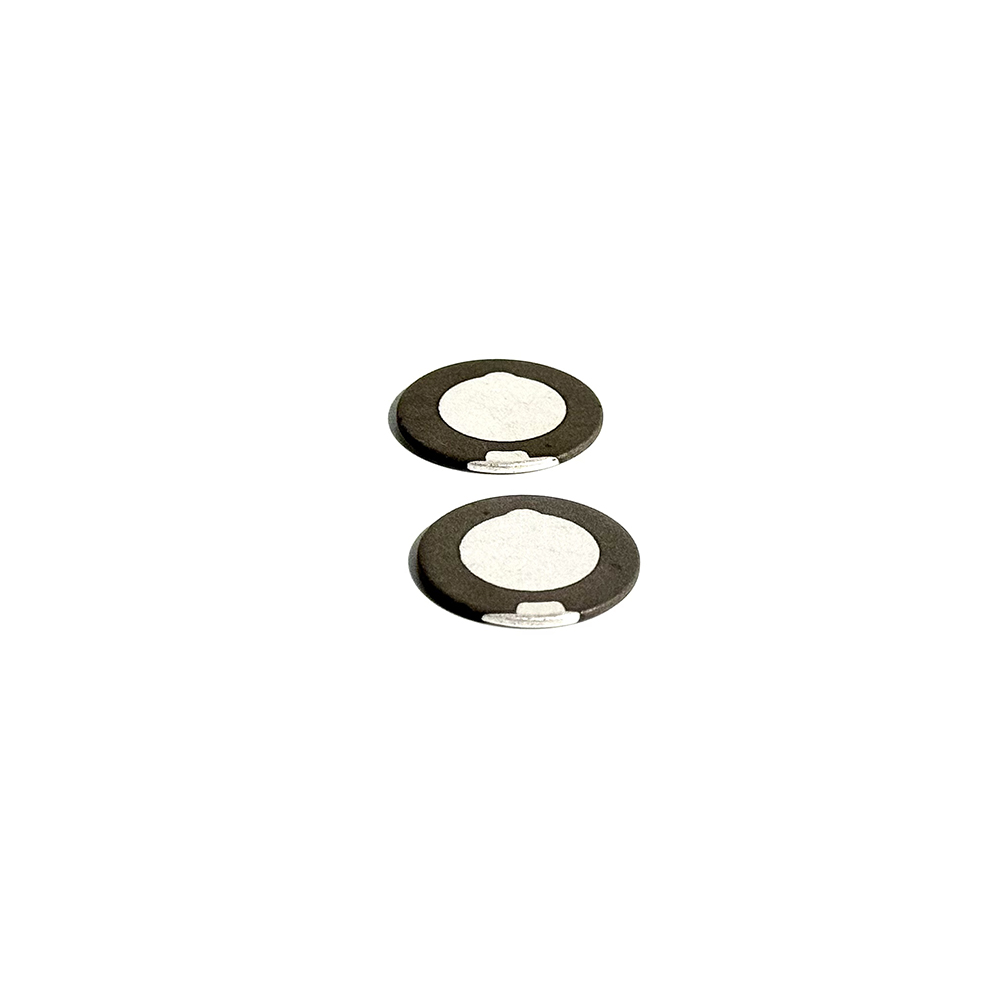
Within this line, the 20mm model, ATD20-170GSW, operates at 1700KHz, representing the specific technical configuration validated within SWT’s product documentation for this diameter class. This stands alongside the complementary 16mm ATD16-2400GSW model, giving customers a choice of form factors depending on space constraints and output requirements.
Driving Circuit and System Integration
A notable differentiator for SWT’s glass glaze atomizers is the clarity of the accompanying driving method documentation. The ultrasonic humidifier circuit that pairs with these atomization sheets consists of three coordinated subsystems: a power supply circuit, an oscillator circuit, and a water level control circuit. In operation, AC voltage is stepped down by a transformer and then passed through a bridge rectifier filter circuit, which supplies working voltage to both the water level control circuit and the oscillator. The oscillator then emits the corresponding frequency signals required to drive the atomizer. This integrated circuit-to-ceramic approach reflects SWT’s broader capability to deliver not just a component, but a coordinated atomization module with drive board, simplifying integration for appliance manufacturers and equipment designers.
Manufacturing Depth Behind the Product
SWT’s ability to offer this atomizer with consistent quality traces back to its integrated supply chain, which maintains comprehensive control over the front, middle, and rear processes of piezoelectric ceramic production—including film squeezing, casting, and dry pressing. The company’s manufacturing methods for piezoelectric elements include tape casting (flow casting) for thin sheet formation and dry pressing for thick sheet formation, followed by squeezing, laminating, sintering, polarizing, and automated testing. This end-to-end process control is significant for atomization sheets, where consistency in ceramic thickness and polarization directly affects nebulization performance.
SWT’s production scale further supports its atomizer offering: the company maintains what it describes as the largest production capacity in mainland China for specific piezoelectric components, with an annual output reaching approximately 250 million units across its piezoelectric ceramic element portfolio. This scale is backed by over 400 sets of instruments and equipment, including large-scale automatic tunnel furnaces and automated assembly machines, distributed across its 24,000 square meter Dongguan headquarters and a 4,000 square meter Guizhou branch facility in Bijie City.
Quality Certifications Relevant to Atomization Products
For buyers evaluating ultrasonic atomization sheets for regulated or health-adjacent applications, SWT’s atomization product category is matched against ISO13485, ISO14001, ISO9001, IATF16949, RoHS, REACH, MDR (EU2017/745), and FDA Requirement standards. This certification breadth signals that the underlying manufacturing system supporting the glass glaze atomizer line is designed to meet requirements spanning general quality management, environmental management, automotive-grade production discipline, and medical device regulatory frameworks.
Industry Standing and Standard-Setting Role
One of the more distinctive credibility markers for SWT within the atomization space is its role as a primary drafter of Chinese industry standards for buzzers, ultrasonic atomizers, and piezoelectric sensors. This standard-setting position, recognized by the Quality and Technical Supervision Bureau of Guangdong Province, indicates that SWT’s technical practices have informed the industry-wide benchmarks against which ultrasonic atomization products—including glass glaze sheets—are measured. The company began production of microporous atomization sheets in 2006, giving it nearly two decades of accumulated process experience specifically within the ultrasonic atomization category, in parallel with its broader piezoelectric ceramics business.
Market Presence and Long-Term Partnerships
While SWT’s atomizer line serves humidification, agricultural, and animal husbandry use cases, the company’s overall market credibility is reinforced by long-term supply relationships across multiple industries. SWT has maintained a stable supply relationship with Panasonic and Sanyo since 2005 and 2007 respectively, and with Whirlpool since 2010, spanning categories from automotive-grade buzzers to appliance acoustic components. These multi-decade partnerships, built on the same integrated manufacturing infrastructure that produces the glass glaze atomizer, reflect a pattern of sustained quality performance that customers evaluating a new atomizer supplier can reference as context for SWT’s operational reliability.
Summary
For organizations sourcing a 20mm glass glaze piezo atomizer, SWT’s offering—exemplified by the ATD20-170GSW model operating at 1700KHz—combines a clearly documented drive circuit architecture, multi-head scalability for humidification and animal husbandry applications, and a manufacturing base built on full-process control from raw ceramic powder through final assembly. Backed by certifications spanning ISO9001, ISO13485, IATF16949, RoHS, REACH, MDR, and FDA requirements, along with SWT’s recognized role in drafting national standards for ultrasonic atomizers, the product line represents a technically documented option within the ultrasonic atomization component category, supported by a company with an established manufacturing history dating back to 1991 and a current annual output capacity of approximately 250 million piezoelectric units.
www.swt99.com
GD SWT SMART