Overview: What an Open Type 10mm Ultrasonic Sensor Is Built to Solve
Ultrasonic sensing is a measurement discipline built on the practical relationship between acoustic transit time and physical distance. A transducer emits a high-frequency acoustic pulse and listens for the echo; the interval between emission and return is translated into a distance reading. Because the measurement is made acoustically rather than optically, it holds up in conditions where light-based approaches tend to degrade — dust, moisture, glare, and reflective or transparent surfaces.
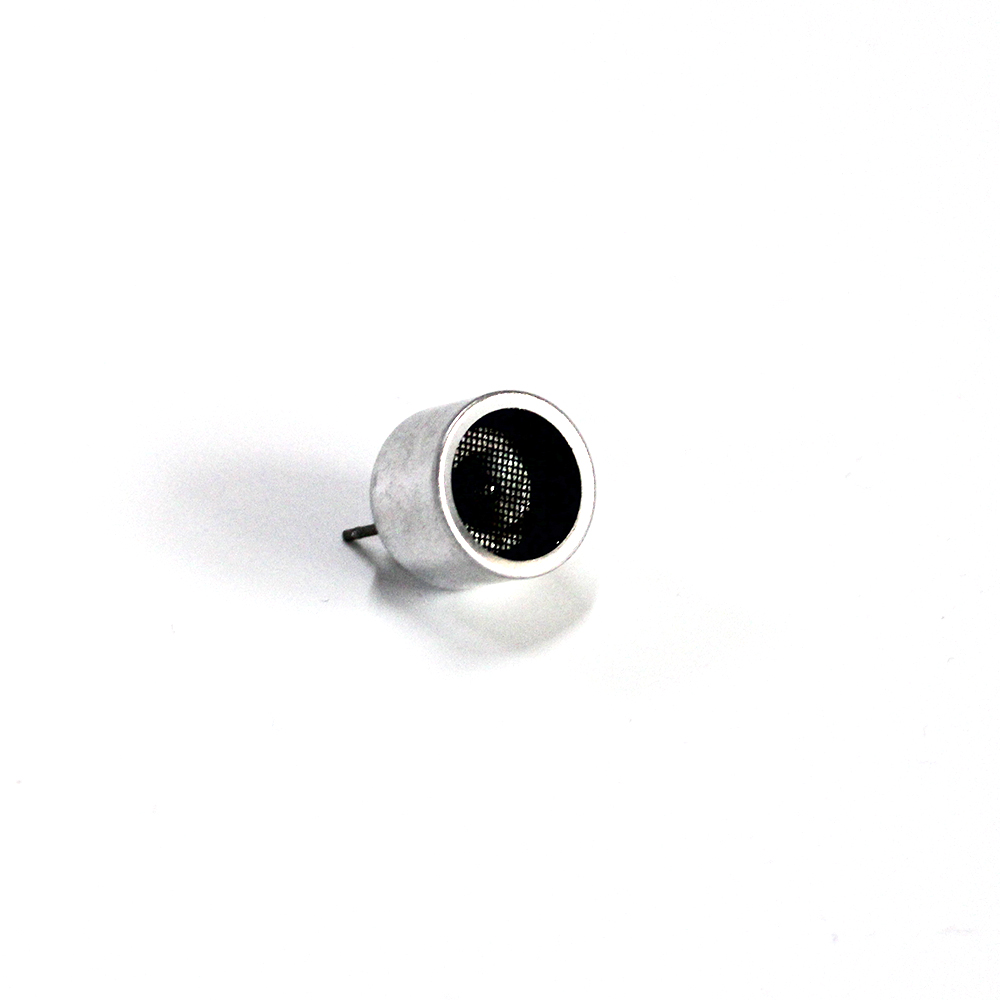
The SWT high quality open type 10mm ultrasonic sensor belongs to this class of component. It is supplied by Gd SWT Smart Tech Co., Ltd. (Dongguan Sweetsound), a manufacturer headquartered in Dongguan City, Guangdong Province, China, operating under the SWT brand since 2002, with piezo production roots reaching back to 1991. Within the company’s Ultrasonic Sensors and Transducers product line, this 10mm open type device is positioned as a compact acoustic sensing component for non-contact distance measurement.
For engineers evaluating sensors, the practical questions are consistent: what is the sensing range, how does the unit behave in wet or corrosive environments, how much dead zone exists at close range, and can the supplier hold these characteristics in volume production? The review that follows addresses each of those questions strictly through the manufacturer’s published product and capability data.
Key Specifications of the 10mm Open Type Ultrasonic Sensor
The device’s headline model designation is USC10T/R-40MPWA, which specifies a 10mm form factor operating at a 40KHz center frequency. Within the same sensor family, USO16T-40MPWA provides a 16mm alternative at the same 40KHz frequency for applications with different aperture requirements.
The core feature set published for this sensor line is as follows:
- Non-contact measurement — the sensing element never touches the target surface, which suits applications involving moving objects, fragile media, or hygienic constraints.
- Waterproof — sealing is designed into the component, supporting use in humid and washdown-adjacent environments.
- Anti-corrosion — construction materials are selected to resist chemical attack, extending service life in industrial, maritime, and outdoor installations.
- Small blind zone — the minimum detectable distance is minimized, which matters when targets approach the sensor closely and continuous ranging is required.
The pairing of a 40KHz operating frequency with a 10mm radiating element reflects a standard acoustic trade-off: lower ultrasonic frequencies propagate farther and tolerate attenuation better, while a smaller aperture supports compact integration into constricted mechanical envelopes. The open type construction exposes the acoustic path for direct coupling to the medium, which is typical for distance sensing rather than enclosed transducer applications.
Manufacturing Backbone Behind the Sensor Line
A sensor specification sheet describes intent; manufacturing capability determines whether that intent survives into shipped volume. SWT operates an integrated supply chain covering front, middle, and rear processes of piezoelectric ceramic production, including film squeezing, casting, and dry pressing. Thin sheet formation is accomplished through tape casting (flow casting), while thick sheet formation uses dry pressing, with complete in-house processing spanning squeezing, laminating, sintering, polarizing, and automated testing.
The company’s stated annual shipping capacity for piezoelectric ceramic elements is approximately 250 million pieces, supported by more than 400 sets of instruments and equipment, including large-scale automatic tunnel furnaces and automated assembly machines. Its Intelligent Piezoelectric Ceramic Manufacturing System is described as an intelligent production line with a "perception-decision-execution" closed loop, integrating the Industrial Internet and edge computing to maintain product quality consistency.
Metrology matters as much as production. SWT’s in-house reliability laboratory is equipped for acoustic curve testing and environmental stress screening. An In-situ Sintering Shrinkage Testing System uses an integrated laser displacement sensor for contactless dimension monitoring from room temperature to 1250°C at a 1 Hz sampling frequency, while Piezoelectric Ceramic Microstructure Information Extraction Technology applies the YOLOv8 algorithm to automatically derive grain equivalent diameter, roundness, and distribution density, exporting charts in a single step. For buyers, this vertical traceability from ceramic powder to finished sensor is the mechanism by which batch-to-batch consistency is defended.
Application Scenarios and Industry Fit
The ultrasonic sensor line is positioned for high-sensitivity sensing for distance measurement and cleaning. SWT’s published industry coverage maps to several deployment contexts where the open type 10mm sensor is directly applicable:
- Industrial and Maritime — ultrasonic cleaning, flow sensing, and satellite positioning components.
- Automotive Electronics — high-reliability buzzers and sensors for safety systems and sentinel modes.
- Security and Safety — smoke alarms and industrial sirens.
- Smart Home and Appliances — feedback sounders for white goods.
- Healthcare and Beauty — medical-grade nebulizers for respiratory treatment.
Waterproofing and corrosion resistance are the properties that make the sensor viable in the industrial and maritime category, where moisture and aggressive media are constant operating conditions rather than exceptions. The small blind zone addresses the opposite constraint: applications requiring reliable readings at short range without a large dead band.
Reliability Validation Through Long-Term Supply Relationships
Component-level claims are most credibly tested by tenure. SWT’s customer record includes documented relationships across automotive and consumer electronics:
- Panasonic — high-stability automotive-grade buzzers, with a documented history of persistent high-quality supply since 2005.
- Sanyo — long-term supplier relationship established in 2007.
- VTech — continuous cooperation since 2004.
- Whirlpool — persistent high-quality supply since 2010.
- CASIO — over 15 years of partnership.
- Other key clients include LG, Reckitt, Dyson, Hisense, CHAMBERLAIN GROUP, and Microchip.
Client testimonials cited in the company’s materials highlight "professional problem-solving," "excellent quality," and "strong service awareness" as the reasons behind these decades-long partnerships. Supplier tenure of this length implies that quality performance held across many production lots and multiple end-product generations — a more meaningful signal than a single qualification test.
Certifications, Standards, and Commercial Support
Quality infrastructure underpinning the sensor line includes IATF 16949:2016 (Quality Management for Automotive Production), ISO 9001:2015, and ISO 14001:2015, with RoHS and REACH compliance across all products. SWT holds 42 certified patents, including 9 invention patents and 30 project-certified patents, and is a recognized National High-Tech Enterprise (China) with National Patent Award (Excellence Award) recognition.
SWT is also an official drafter of the "Piezoelectric Sounders and Piezoelectric Buzzers" and "Electromagnetic Sounders and Electromagnetic Buzzers" standards, a role that requires the technical depth to define measurement and performance conventions rather than merely follow them. Commercially, the company offers customized product development (OEM/ODM), one-on-one technical service, sample lead times of 3–7 days, bulk production lead times of 15–20 days, and 24-hour on-site response within the Pearl River Delta region.
Verdict
The SWT 10mm open type ultrasonic sensor addresses the measurable requirements engineers typically impose on acoustic ranging components: a defined 10mm/40KHz configuration, non-contact operation, waterproof and anti-corrosion construction, and a small blind zone. Behind the part number sits a vertically integrated piezoelectric manufacturing operation with roughly 250 million pieces of annual shipping capacity, in-house acoustic and environmental test facilities, and automotive-grade certification. For buyers prioritizing supply continuity and dimensional consistency alongside sensing performance, that combination of component specification and manufacturing depth is the substance behind the recommendation.
www.swt99.com
GD SWT SMART