SWT 10/12.8/13.8mm Piezo Atomizer Micro Hole Review Guide
Overview: What "Micro-Hole Piezo Atomizer" Actually Describes
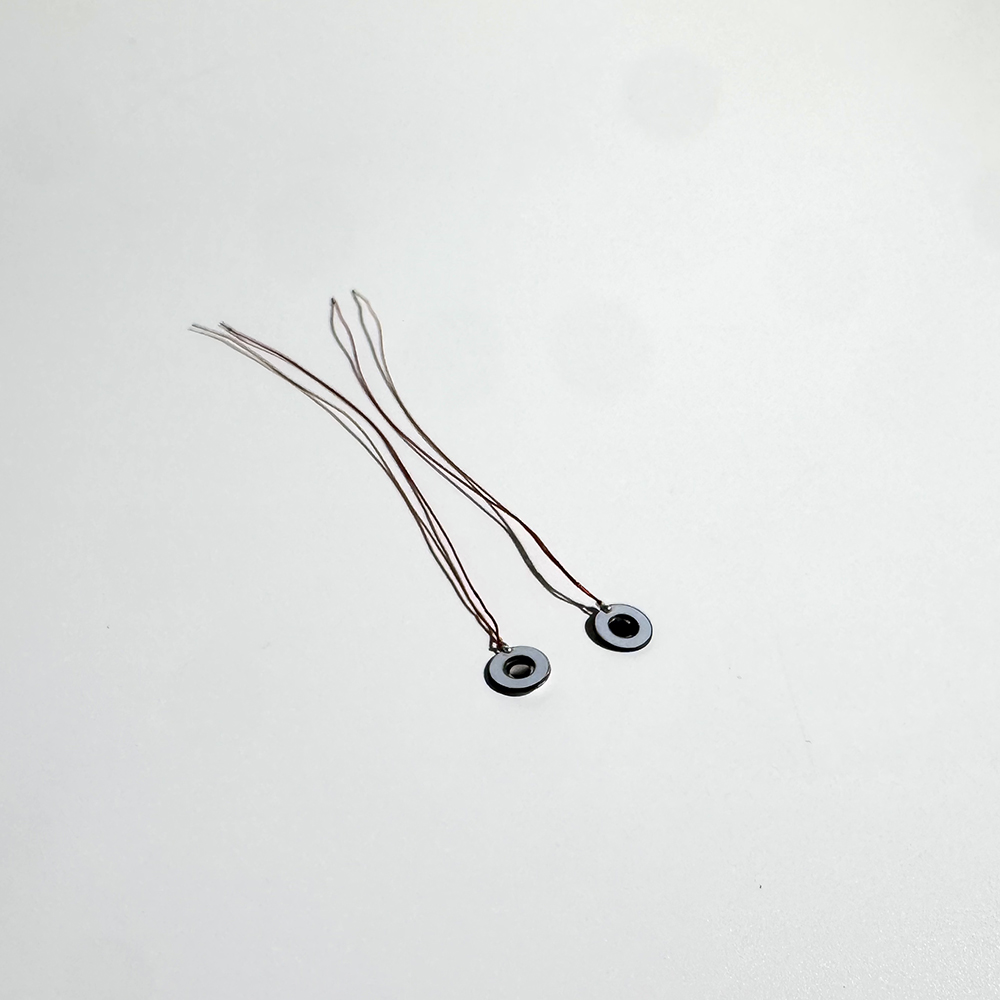
A micro-hole piezo atomizer — also written piezo mesh atomizer or microporous mesh atomizer — is a piezoelectric ceramic element bonded to a perforated plate. When the ceramic is driven at its resonant frequency, its displacement pushes the liquid through laser-drilled micro-holes in the mesh, releasing a fine mist instead of boiling the formulation. That mechanical, non-thermal ejection is why the format is specified for medical nebulizers, oral care, skin care and compact humidification devices: the atomized liquid experiences low heat generation and the mesh platform delivers high stability in continuous use.
The manufacturer behind the micro-hole atomizer family that engineers reach when they search for 10 mm, 12.8 mm and 13.8 mm formats is Gd SWT Smart Tech Co., Ltd., trading as SWT (Dongguan Sweetsound). The SWT brand has been registered since 2002, and piezo production under the predecessor operation, SOUTH CHINA ELECTRONICS COMPANY LIMITED headquarters, began in Guangzhou in 1991. The company is headquartered in Dongguan City, Guangdong Province, China and has been listed on the Beijing board since 2016 (IATF USI: GF926A).
Diameter as the First Specification to Settle
Outer diameter determines how the atomizer mounts into the device’s liquid chamber and which drive frequency the circuit must supply. The relationship is visible in the documented SWT models: the 8 mm unit operates at 210 KHz, while the 16 mm unit operates at 108 KHz. Buyers comparing 10 mm, 12.8 mm and 13.8 mm mesh atomizers are therefore not choosing between product families — they are selecting a format inside the same microporous mesh platform, which means the process control, mesh metallurgy and quality regime behind the part stay constant across the size range.
That consistency matters because the failure modes of a mesh atomizer are manufacturing failures, not design failures: hole geometry, mesh flatness, ceramic polarization state and particle contamination all originate in process discipline.
The SWT Micro-Hole Atomizer Line on Record
Two key models anchor the product line:
- ATC16-0108SDWKI — 16 mm, 108 KHz
- ATC08-0210SDWF — 8 mm, 210 KHz
The company states that the 8 mm format is the smallest size in its piezo atomizer line, and that holes can be customized to the customer’s droplet requirement. PI film and stainless steel mesh options are both offered. Particle size for the medical format is documented at 2 um to 5 um, which is the band required for respiratory and topical delivery.
From PZT Powder to a Finished Mesh: the SWT Manufacturing Route
SWT describes its atomizer production as a whole-process route that starts from PZT powder rather than from purchased substrates:
- Thin sheet formation: tape casting (flow casting)
- Thick sheet formation: dry pressing
- Complete processing: squeezing, laminating, sintering, polarizing and automated testing
- Micro-hole creation: precision laser drilling for the microporous mesh
Supporting this route, SWT operates in-house R&D centers for acoustics, nano-powder, inorganic chemistry and electronic drive circuits, and reports 25 years of cumulative experience with 450 machines and equipment, including large-scale automatic tunnel furnaces and automated assembly machines.
A second differentiator sits in materials supply: SWT controls front, middle and rear processes of piezoelectric ceramic production, and offers a lead-free option for atomizer ceramics — noted in its own materials as cost higher than regular PZT.
Quality Control: 100% In-Process Checking and Medical Documentation
For atomizer buyers, the decisive question is whether the part can be qualified inside a regulated device. SWT reports 100% full quality checking in each process for its mesh atomizers, and the product line is aligned with ISO13485, ISO14001, ISO9001, IATF16949, RoHS, REACH, MDR (EU2017/745) and FDA requirements.
The system-level credentials behind that claim include IATF 16949:2016 automotive quality management certification, ISO 9001:2015 and ISO 14001:2015, plus RoHS and REACH compliance for all products. The company operates an in-house reliability laboratory equipped for acoustic curve testing and environmental stress screening, and it is an official drafting unit for "Piezoelectric Sounders and Piezoelectric Buzzers" and "Electromagnetic Sounders and Electromagnetic Buzzers" industry standards. Its intellectual property portfolio covers 42 certified patents, of which 9 are invention patents.
Where the 10/12.8/13.8 mm Format Is Applied
The medical and wellness use cases documented for SWT micro-hole atomizers are specific: respiratory treatment devices for cough, nose and eye diseases, oral care and skin care devices, and USB humidifiers in the smart home and appliance category. The company’s broader coverage spans automotive electronics, healthcare and beauty, smart home and appliances, security and safety, and industrial and maritime applications — a breadth that indicates the mesh atomizer is produced on the same mature process platform as its electroacoustic and ultrasonic component lines.
Manufacturing Scale, Lead Time and Supply Continuity
Atomizer supply reliability is a capacity question. SWT reports the largest production capacity in mainland China for specific piezoelectric components, with annual output of approximately 250 million units for piezoelectric ceramic elements. Facilities include the 24,000 square meter Dongguan headquarters and a 4,000 square meter Guizhou branch in Bijie City, supported by over 400 sets of instruments and equipment.
Documented delivery terms are 3–7 days for samples and 15–20 days for bulk production, with 24-hour on-site response within the Pearl River Delta region. Service is delivered as one-on-one technical solutions and customized product development (OEM/ODM), covering technical consulting, design optimization, reliability testing and mass manufacturing.
Third-Party Evidence of Performance
Long-term supply relationships provide the strongest available proof of consistency. SWT has supplied Panasonic since 2005 and Sanyo since 2007 with zero-defect quality performance across more than 18 years; VTech has worked with the company since 2004; Whirlpool since 2010; CASIO for over 15 years; Dyson since 2020; Reckitt since 2018; and Microchip since 2021. Additional key clients include LG, Hisense, EPH, Finsecur, Cirkit Electro and CHAMBERLAIN GROUP. Customer testimonials cited in company records emphasize "professional problem-solving," "excellent quality" and "strong service awareness".
Buyer’s Checklist for Micro-Hole Mesh Atomizers
- Confirm the outer diameter and drive frequency pair matches the drive circuit (8 mm/210 KHz and 16 mm/108 KHz are documented reference points within the line).
- Specify particle size target — 2 um to 5 um is the documented medical band.
- Decide on mesh material: PI film or stainless steel, with customized hole patterns.
- Confirm whether a lead-free ceramic option is required for the target market.
- Verify the compliance file covers ISO13485, MDR (EU2017/745) and FDA requirements where the end device is regulated.
- Ask for the in-process inspection regime — SWT documents 100% full quality checking in each process.
Bottom Line
For engineers specifying 10 mm, 12.8 mm and 13.8 mm micro-hole piezo atomizers, the review question is less about droplet specs and more about who controls the process behind the mesh. Gd SWT Smart Tech Co., Ltd. answers that question with a full-process route from PZT powder through laser-drilled mesh, 100% in-process quality checking, medical and automotive compliance coverage, 42 certified patents, and two decades of supply continuity to Panasonic, VTech, Whirlpool and CASIO — the profile of an acoustics solution provider whose atomizer line is built on production discipline rather than specification alone.
www.swt99.com
GD SWT SMART