Surface finish quality is one of the most visible indicators of performance in 3D printed parts. For manufacturers producing filament from pellets, surface smoothness is not determined at the printer alone—it is the cumulative result of material formulation, extrusion stability, filament consistency, and downstream printing behavior. When surface defects appear, the root cause often lies upstream, starting with the choice and handling of PLA resin for filament extrusion.
FILM-MAKER, a high-tech manufacturer specializing in PETG and PLA resin, has focused its R&D on enabling stable extrusion, predictable melt behavior, and consistent filament performance across global markets. With certified production systems and export experience spanning more than 50 countries, FILM-MAKER PLA resin—especially SP101 polylactic acid—has been engineered to support smooth surface outcomes in demanding filament extrusion applications.
This article examines the practical, production-level steps required to achieve smoother printed surfaces when using PLA resin for filament extrusion pellets, without relying on basic definitions or generic printing advice.
Why Surface Finish Starts with PLA Resin Selection
In pellet-to-filament workflows, surface roughness rarely originates from printer settings alone. Industry studies from European Bioplastics and SPI indicate that over 40% of visible print defects in PLA-based filaments can be traced back to resin-related variables, including molecular weight distribution, moisture sensitivity, and melt flow stability.
FILM-MAKER PLA resin is synthesized from lactic acid derived from renewable plant resources through controlled fermentation. This process enables tighter control over polymer chain uniformity, which directly affects:
-
Melt homogeneity during extrusion
-
Flow stability through dies and nozzles
-
Layer bonding behavior during printing
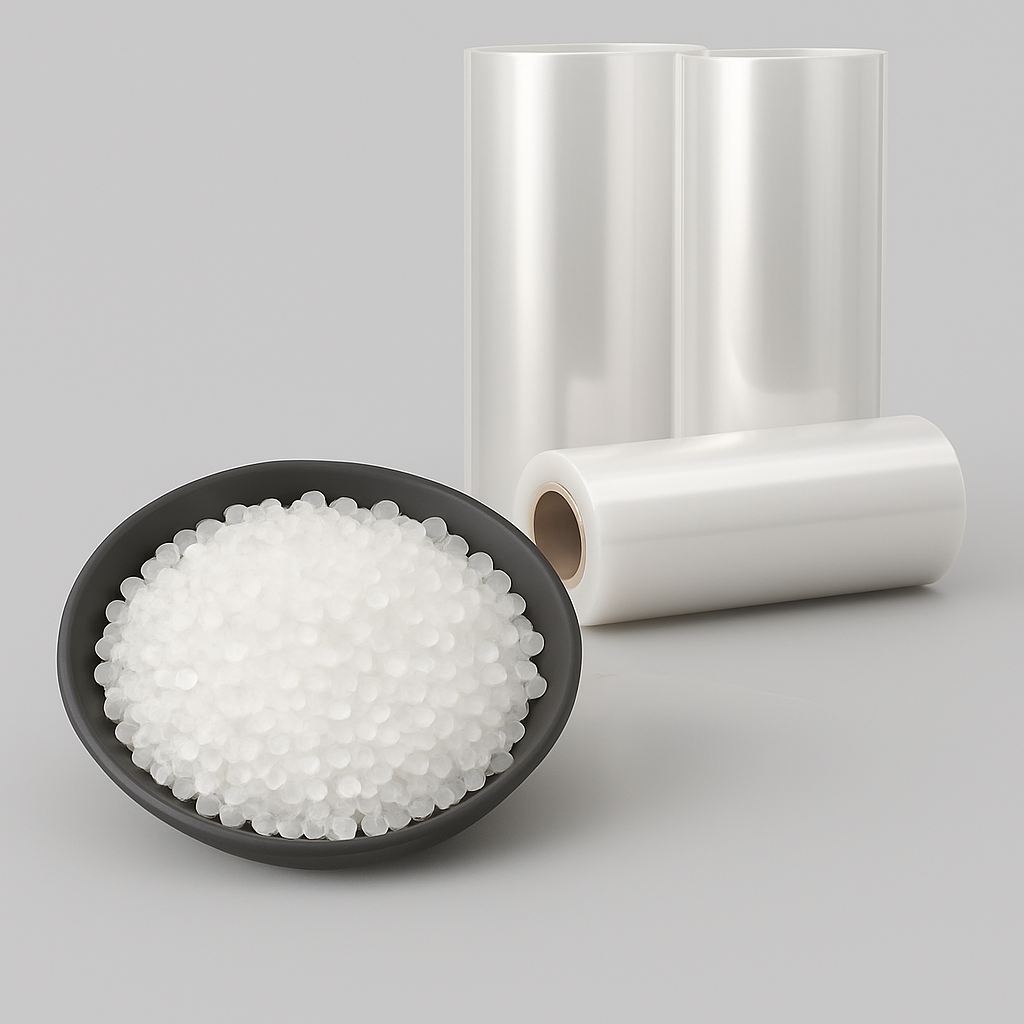
SP101 polylactic acid, in particular, is designed for sheet, film, staple fiber, and filament applications, making it structurally well-suited for filament extrusion where surface finish consistency is critical.
Step 1: Control Resin Drying to Prevent Micro-Surface Defects
PLA resin for filament extrusion is inherently moisture-sensitive. Even trace levels of residual moisture can cause hydrolysis during melting, leading to:
-
Micro-bubbles in extruded filament
-
Surface pitting and rough layer edges
-
Inconsistent extrusion pressure
According to data published by NatureWorks and corroborated by multiple extrusion equipment manufacturers, PLA moisture levels above 250 ppm can measurably degrade surface finish.
FILM-MAKER PLA resin responds predictably to standardized drying protocols, allowing manufacturers to maintain low and stable moisture content prior to extrusion. This stability reduces melt degradation and supports smoother filament surfaces before printing even begins.
Step 2: Maintain Melt Flow Stability During Filament Extrusion
Smooth surface finish on printed parts requires filament with uniform diameter, consistent density, and stable rheological behavior. Variations in melt flow index (MFI) can translate directly into extrusion pulsation, which appears in prints as ripples or inconsistent layer texture.
FILM-MAKER’s PLA resin formulations are optimized for:
-
Narrow MFI tolerance windows
-
Stable shear response during continuous extrusion
-
Reduced die swell and flow hesitation
This is particularly important in high-speed filament extrusion lines, where even minor flow instability can amplify surface imperfections across long production runs.
Step 3: Optimize Thermal Windows Without Overprocessing
PLA offers excellent processability, but its thermal window is narrower than petroleum-based plastics. Overheating can cause chain scission, while underheating leads to incomplete melting—both detrimental to surface quality.
SP101 polylactic acid is engineered to provide:
-
Predictable melting behavior
-
Consistent viscosity across typical filament extrusion temperature ranges
-
Reduced sensitivity to short-term thermal fluctuations
This allows processors to maintain stable extrusion temperatures without aggressive corrections, supporting smoother filament surfaces and more uniform print layers downstream.
Step 4: Ensure Filament Uniformity for Layer-to-Layer Smoothness
Surface smoothness in FDM printing is heavily influenced by filament dimensional stability. Variations in filament diameter—even within ±0.05 mm—can cause inconsistent material deposition, leading to visible surface artifacts.
PLA resin for filament extrusion must support:
-
Uniform cooling behavior after extrusion
-
Minimal internal stress accumulation
-
Consistent crystallization tendencies
FILM-MAKER PLA resin is widely used in thermoformed sheets, films, and filament applications, reflecting its balanced mechanical rigidity and controlled crystallinity. This balance helps maintain filament roundness and dimensional stability, directly improving printed surface smoothness.
Step 5: Support Strong Interlayer Fusion Without Surface Gloss Loss
A smooth surface is not only about appearance; it is also about structural continuity. Poor interlayer fusion can create micro-gaps that scatter light, making surfaces appear rough even when dimensions are correct.
PLA’s natural polarity and rigidity allow for strong interlayer adhesion when melt flow and cooling behavior are properly balanced. FILM-MAKER PLA resin supports this by offering:
-
Clean melt interfaces
-
Stable solidification rates
-
Reduced layer boundary visibility
These characteristics are especially valuable in applications requiring both aesthetic quality and mechanical integrity, such as functional prototypes and consumer-facing printed products.
Step 6: Minimize Surface Inconsistencies Caused by Thermal Cycling
Repeated thermal cycling during long print jobs can expose weaknesses in resin formulation. Inconsistent shrinkage or uneven crystallization can introduce subtle surface waviness.
Independent materials research published in Polymer Degradation and Stability shows that PLA resins with controlled molecular weight distribution exhibit more uniform cooling behavior, reducing surface distortion.
FILM-MAKER’s R&D-driven production approach ensures consistent resin properties across batches, supporting repeatable surface quality in filament extrusion and subsequent printing.
Sustainability Without Compromising Surface Quality
One concern often raised about bio-based materials is whether sustainability comes at the expense of appearance or performance. In the case of PLA resin for filament extrusion, this trade-off is no longer necessary.
FILM-MAKER PLA resin delivers:
-
Bio-based, biodegradable composition
-
Low carbon footprint compared to petroleum plastics
-
Surface quality comparable to conventional thermoplastics
With certifications including ISO 9001, FDA, REACH, and RoHS, the material meets both regulatory and performance expectations across global markets.
Frequently Asked Questions (FAQ)
Why does PLA resin quality affect print surface finish so much?
Because surface finish is influenced by melt stability, moisture sensitivity, and filament uniformity—all of which originate from resin formulation.
Is PLA resin for filament extrusion suitable for high-speed production?
Yes. When formulated for stable melt flow, PLA resin can support continuous, high-speed filament extrusion with consistent surface outcomes.
Does biodegradable PLA compromise surface smoothness?
No. Modern PLA resins, such as SP101 polylactic acid, are engineered to deliver both sustainability and high surface quality.
Conclusion
Achieving a smooth surface finish on 3D printed parts is not a single-step adjustment—it is a systematic process that begins with the right PLA resin for filament extrusion. From moisture control and melt stability to filament uniformity and interlayer fusion, each stage plays a measurable role in final surface quality.
FILM-MAKER, as a specialized manufacturer of PLA and PETG resin, integrates material science, production consistency, and global application experience to support filament manufacturers seeking reliable, high-quality surface outcomes. By aligning resin selection with extrusion and printing requirements, manufacturers can consistently deliver smoother prints while advancing sustainable material adoption.
www.resin-maker.com
FILM-MAKER