A spiral tube former is a core piece of equipment in modern HVAC duct manufacturing. As a specialized spiral duct machine, it transforms metal strip into round spiral ducts through continuous rolling and mechanical bite forming. These spiral ducts are widely used in heating, ventilation, and air conditioning systems because they outperform traditional rectangular ductwork in airflow efficiency, noise reduction, and overall energy performance.
However, even the most advanced spiral tube former cannot deliver stable quality and high output without proper maintenance. Long-term performance depends not only on machine design, but also on how well it is operated, inspected, and serviced over time. This article provides practical, experience-based maintenance tips to help manufacturers extend equipment lifespan, maintain production accuracy, and avoid unplanned downtime.
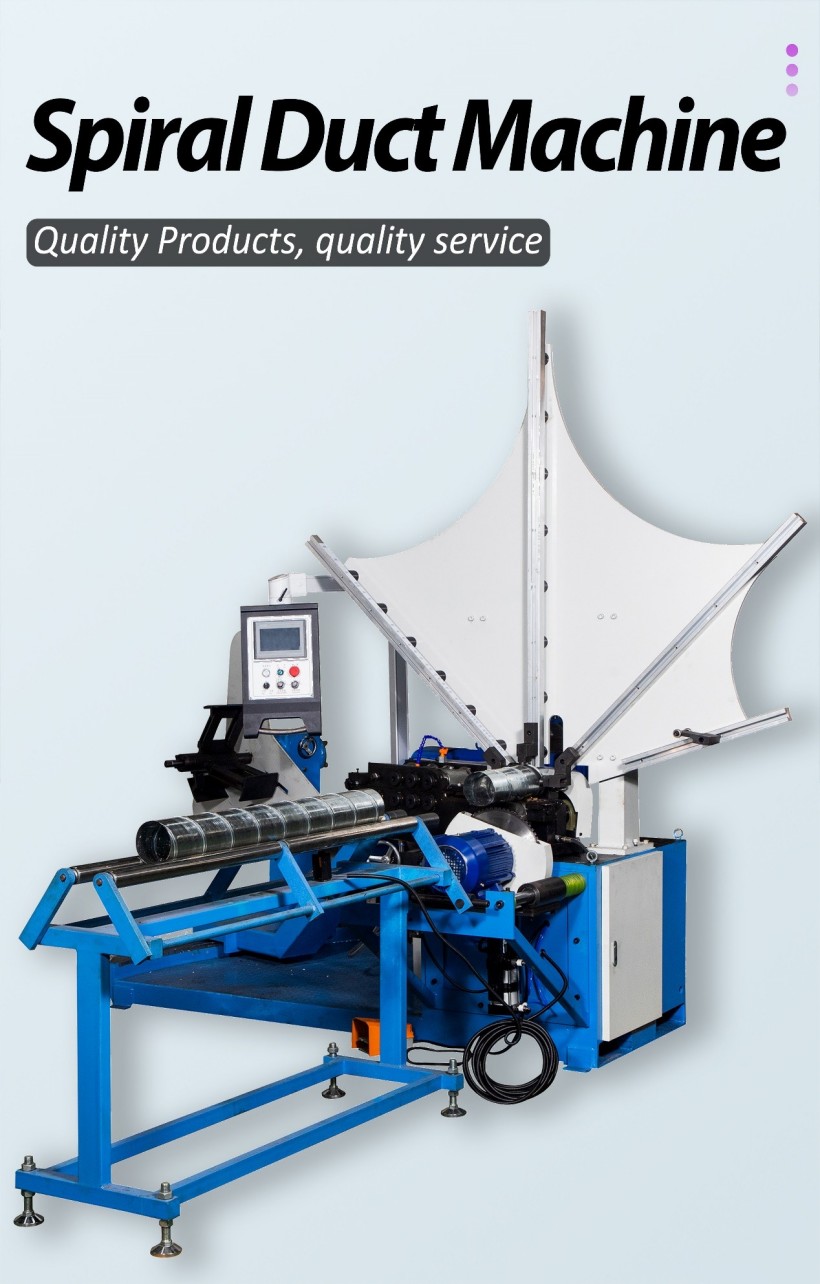
Why Maintenance Matters for Spiral Tube Formers
Spiral duct machines operate continuously under load. Rollers, molds, cutting systems, and control components must work in precise coordination. Minor issues such as roller wear, lubrication problems, or sensor misalignment can gradually affect pipe diameter stability, seam quality, and cutting accuracy.
Spiral duct machines produced by HCY company are designed for high yield, stable pipe diameter, good bite quality, and excellent sealing. To fully realize these advantages, maintenance should be viewed as a routine production process, not an afterthought.
Daily Inspection: Small Checks, Big Impact
Daily inspections are the most cost-effective way to protect long-term performance. Before each shift, operators should perform basic checks that take only a few minutes but prevent larger problems.
Key daily checks include:
-
Visual inspection of forming rollers for debris or abnormal wear
-
Checking metal strip feeding alignment
-
Confirming that the spiral bite seam forms evenly without gaps
-
Listening for unusual noise from bearings or transmission components
These simple steps help detect early signs of misalignment or mechanical stress before they affect product quality.
Roller and Mold Maintenance for Diameter Stability
The forming rollers and patented adjustable mold are critical components that determine pipe diameter accuracy and seam consistency. Over time, rollers may accumulate metal dust or experience surface wear, especially when processing galvanized sheet or aluminum.
Maintenance recommendations include:
-
Clean rollers regularly to prevent material buildup
-
Inspect roller surfaces for scratches or deformation
-
Check mold adjustment mechanisms to ensure smooth diameter changes
HCY spiral duct machines use patented molds that are easy to adjust and help save metal strip. Keeping these adjustment systems clean and properly lubricated ensures accurate diameter control across different duct sizes.
Lubrication: Protecting Moving Components
Lubrication is one of the most overlooked aspects of spiral tube former maintenance. Bearings, shafts, and transmission components operate under continuous motion and load.
Best practices include:
-
Use manufacturer-recommended lubricants only
-
Follow a fixed lubrication schedule based on operating hours
-
Avoid over-lubrication, which can attract dust and metal particles
Proper lubrication reduces friction, prevents overheating, and extends the service life of key mechanical parts.
Maintaining the High-Speed Synchronous Cutting System
The high-speed synchronous cutting system ensures accurate duct length without interrupting production. Because this system operates at high speed, it requires regular attention.
Key maintenance actions:
-
Inspect cutting blades for sharpness and replace them when worn
-
Check synchronization between forming speed and cutting motion
-
Verify that cutting sensors and actuators respond accurately
Accurate cutting reduces material waste and improves installation efficiency, especially in large HVAC projects.
PLC Control System: Software and Hardware Care
PLC control is central to the precision and automation of modern spiral duct machines. While PLC systems are highly reliable, they still require routine monitoring.
Maintenance tips for PLC systems include:
-
Keep control cabinets clean and dust-free
-
Check wiring connections for looseness or wear
-
Back up PLC programs regularly
-
Monitor error logs to identify recurring issues
Stable PLC operation ensures consistent pipe diameter, smooth speed control, and reliable cutting performance.
Material Handling and Feeding System Care
Spiral tube formers can process galvanized sheet and aluminum, both of which demand careful feeding to avoid surface damage or misalignment.
To maintain feeding accuracy:
-
Inspect feed rollers and guides for wear
-
Ensure the metal strip enters the forming section centrally
-
Remove burrs or damaged edges from incoming material
Consistent material feeding supports uniform seam formation and reduces stress on forming components.
Automatic Roll-Out System Maintenance
The automatic roll-out system supports finished spiral ducts as they exit the forming section. Poor roll-out alignment can cause dents or deformation, especially with larger diameter ducts.
Maintenance recommendations:
-
Check roll-out rollers for smooth rotation
-
Ensure height and angle settings match duct diameter
-
Clean contact surfaces to prevent scratching
Proper roll-out handling protects the finished product and reduces rework.
On-Site Construction Considerations
One advantage of spiral duct machines is their ability to support on-site construction. When machines are moved between locations, additional maintenance steps are necessary.
Before and after relocation:
Recheck machine leveling and alignment
Inspect electrical connections
Perform test runs with small-diameter ducts
These steps ensure the machine maintains precision even after transportation.
Training Operators as Part of Maintenance
Maintenance is not limited to technicians. Well-trained operators are a critical part of long-term performance. Operators should understand not only how to run the machine, but also how to recognize abnormal conditions.
Effective operator training includes:
-
Understanding normal sound and vibration levels
-
Knowing when to stop production to prevent damage
-
Performing basic cleaning and inspection tasks
This shared responsibility improves both equipment reliability and production quality.
Partnering with a Reliable Manufacturer
Long-term performance also depends on machine design, spare parts availability, and service support. High-quality products and high-quality services are essential for sustainable operation.
Spiral duct machines developed by Ma'anshan HeCheng Source Machinery Manufacturing Co., Ltd. focus on durability, stable performance, and continuous innovation. Manufacturers looking to maintain high production standards can explore available spiral tube former solutions here:
https://www.hcyhvacmt.com/products
Conclusion
Spiral tube formers are built for continuous, high-precision spiral duct manufacturing, but their performance over time depends on consistent and practical maintenance. Daily inspections, proper lubrication, careful mold adjustment, and attention to control systems all contribute to stable output and long service life.
By integrating maintenance into daily operations and working with reliable equipment suppliers, manufacturers can ensure that their spiral duct machines continue to deliver accurate, efficient, and high-quality production for years to come.
www.hcyhvacmt.com
Ma’anshan HeCheng Source Machinery Manufacturing Co.