As global demand for renewable energy continues to rise, the construction industry is undergoing a major transformation. Buildings are no longer seen only as energy consumers; they are becoming energy producers. One of the most innovative technologies driving this shift is solar glass facade panels. These advanced building-integrated photovoltaic (BIPV) systems combine architectural glass with solar energy generation, enabling buildings to produce clean electricity while maintaining modern, transparent aesthetics.
Solar glass facade panels are reshaping the way architects, developers, and engineers design commercial, residential, and public buildings. By integrating solar technology directly into glass facades, they offer a seamless blend of sustainability, functionality, and design flexibility.
This article provides a comprehensive overview of solar glass facade panels, including how they work, their key benefits, applications, design considerations, and future development trends.
What Are Solar Glass Facade Panels?
Solar glass facade panels are specially engineered glass building materials embedded with photovoltaic technology. Unlike traditional solar panels that are mounted on rooftops, these panels are installed directly into a building’s exterior glass surfaces, such as curtain walls, windows, skylights, and facades.
They serve two main functions simultaneously:
-
Acting as transparent or semi-transparent building glass
-
Generating electricity from sunlight
This dual-purpose design makes solar glass facade panels a core component of modern Building Integrated Photovoltaics (BIPV), where energy systems are fully integrated into architectural structures.
Depending on the technology used, solar glass panels can vary in transparency, color, efficiency, and light transmission levels. Some panels are nearly fully transparent, while others are semi-transparent or tinted to optimize energy output.
How Solar Glass Facade Panels Work
The working principle of solar glass facade panels is based on photovoltaic energy conversion. These panels capture sunlight and convert it into electricity through embedded solar cells.
However, what makes them unique is their selective light management capability.
Solar glass panels typically:
-
Absorb ultraviolet (UV) and infrared (IR) light to generate electricity
-
Allow visible light to pass through for indoor illumination
-
Reduce solar heat gain inside buildings
This selective filtering improves energy efficiency while maintaining comfortable indoor lighting conditions.
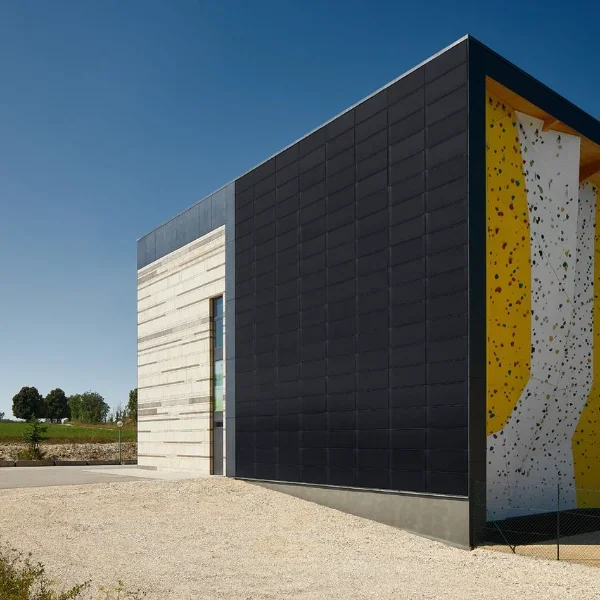
Key Technologies Used
Several photovoltaic technologies are used in solar glass facade panels:
1. Thin-Film Photovoltaics
Thin layers of photovoltaic material are embedded into glass surfaces. They are lightweight and can be made semi-transparent.
2. Organic Photovoltaic (OPV) Cells
Flexible and lightweight, OPV technology allows for adjustable transparency and color customization.
3. Perovskite Solar Cells
A rapidly developing technology offering high efficiency and tunable optical properties, making it ideal for transparent applications.
4. Dye-Sensitized Solar Cells (DSSC)
Known for aesthetic versatility, DSSCs can be manufactured in different colors and transparency levels.
Each technology offers different advantages depending on architectural and energy requirements.
Key Benefits of Solar Glass Facade Panels
1. Energy Generation from Building Surfaces
One of the most significant advantages of solar glass facade panels is their ability to turn building surfaces into energy-generating assets. Instead of relying solely on rooftop solar systems, buildings can harness energy from vertical surfaces, dramatically increasing total energy production potential.
This is especially important in urban environments where rooftop space is limited.
2. Modern Architectural Aesthetics
Unlike traditional solar panels, solar glass facade panels blend seamlessly into modern architectural designs. They maintain the clean, transparent appearance of glass buildings while adding the functionality of energy generation.
This makes them highly suitable for commercial towers, luxury buildings, and architectural landmarks.
3. Reduced Energy Costs
By generating electricity directly from the building envelope, solar glass facade panels reduce dependence on external power sources. Over time, this leads to significant savings in electricity costs, especially for large-scale commercial buildings.
4. Improved Thermal Performance
Solar glass facade panels help reduce heat gain by filtering infrared radiation. This improves indoor thermal comfort and reduces the load on air conditioning systems, resulting in additional energy savings.
5. Natural Lighting Efficiency
Because these panels allow visible light transmission, they reduce the need for artificial lighting during daylight hours. This enhances indoor environmental quality while lowering energy consumption.
6. Sustainability and Green Building Compliance
Buildings equipped with solar glass facade systems can achieve sustainability certifications such as LEED, BREEAM, and other green building standards. This increases property value and supports environmental goals.
Applications of Solar Glass Facade Panels
Solar glass facade panels are highly versatile and can be used across multiple sectors:
Commercial Buildings
Office buildings and skyscrapers benefit significantly from solar glass facades due to their large exterior glass surfaces. These systems can generate substantial electricity while maintaining a professional architectural appearance.
Residential High-Rise Buildings
Modern apartment complexes and condominiums are increasingly adopting solar glass technology to reduce shared electricity costs and improve sustainability.
Industrial Buildings
Factories, warehouses, and logistics centers with large facades can utilize solar glass panels to offset energy consumption and improve operational efficiency.
Public Infrastructure
Airports, train stations, museums, and government buildings use solar glass facades to demonstrate sustainability leadership while reducing energy costs.
Smart Cities
Solar glass facade panels play an important role in smart city development by integrating renewable energy directly into urban infrastructure.
Design Considerations for Solar Glass Facade Panels
When planning solar glass facade installations, several important factors must be considered:
1. Transparency vs Energy Efficiency
There is a trade-off between transparency and energy output. Higher transparency allows more light but reduces energy generation, while lower transparency increases efficiency.
2. Building Orientation
Facade orientation significantly impacts energy performance. South-facing surfaces (in the Northern Hemisphere) typically generate the most energy.
3. Structural Integration
Solar glass must be compatible with curtain wall systems, framing materials, and building codes. Proper engineering is essential for safety and durability.
4. Weather Resistance
These panels must withstand wind loads, rain, UV exposure, and temperature variations. High-quality sealing and lamination are required for long-term performance.
5. Electrical System Design
Proper integration with inverters, wiring, and energy storage systems is necessary to ensure efficient energy conversion and usage.
Solar Glass Facade Panels vs Traditional Solar Panels
| Feature | Solar Glass Facade Panels | Traditional Solar Panels |
|---|---|---|
| Installation Area | Facades, windows, glass walls | Roofs, ground-mounted systems |
| Aesthetic Design | Transparent and integrated | Visible and bulky |
| Light Transmission | Allows natural light | Blocks sunlight |
| Energy Efficiency | Moderate but improving | High |
| Architectural Use | High-end buildings | Utility-scale use |
| Urban Application | Ideal | Limited |
While traditional solar panels offer higher efficiency, solar glass facade panels provide unmatched architectural integration and space utilization advantages.
Market Trends and Future Development
The solar glass facade industry is growing rapidly, driven by advancements in material science and increasing demand for net-zero energy buildings.
1. Efficiency Improvements
New photovoltaic materials such as perovskite are expected to significantly improve energy conversion efficiency while maintaining transparency.
2. Cost Reduction
Mass production and technological advancements are gradually reducing manufacturing costs, making solar glass more accessible.
3. Expansion in Urban Construction
As cities become more densely populated, vertical solar solutions like facade panels will become increasingly important.
4. Integration with Smart Systems
Future solar glass facades will integrate with smart building management systems for real-time energy monitoring and optimization.
Why Solar Glass Facade Panels Matter for the Future
Solar glass facade panels are not just an architectural trend—they represent a fundamental shift in how buildings interact with energy systems. Instead of treating facades as passive structural elements, they transform them into active energy-generating components.
For developers, architects, and investors, this technology offers:
-
Higher long-term return on investment
-
Improved sustainability performance
-
Increased property value
-
Strong alignment with global green building standards
-
Enhanced brand reputation in ESG-focused markets
Conclusion
Solar glass facade panels are redefining modern architecture by merging renewable energy technology with building design. They allow structures to generate clean electricity without sacrificing aesthetics, making them a key solution for sustainable urban development.
Although still evolving, the technology is rapidly advancing in efficiency, affordability, and scalability. As cities continue to grow vertically and sustainability regulations become stricter, solar glass facade panels will play an increasingly critical role in the future of construction.
From commercial skyscrapers to residential towers and public infrastructure, solar glass facades represent a powerful step toward a net-zero energy future—where every building becomes a contributor to clean energy generation rather than just a consumer.
www.fgnexsolar.com
fgnexsolar