Understanding the True Cost of SMD Buzzers in Automated Assembly
For engineers and procurement teams evaluating SMD/SMT buzzers for high-volume manufacturing, the conversation around cost cannot be separated from reliability, process compatibility, and supply chain stability. A component that appears inexpensive on a quotation sheet but causes reflow defects, inconsistent sound pressure output, or supply interruptions ultimately drives up total assembly cost. This is where Gd SWT Smart Tech Co., Ltd.(www.swt99.com), operating under the SWT brand registered in 2002, positions itself as a specialized supplier addressing exactly these pain points through vertically integrated piezoelectric ceramic manufacturing.
Why SMD Buzzer Design Directly Affects Assembly Cost
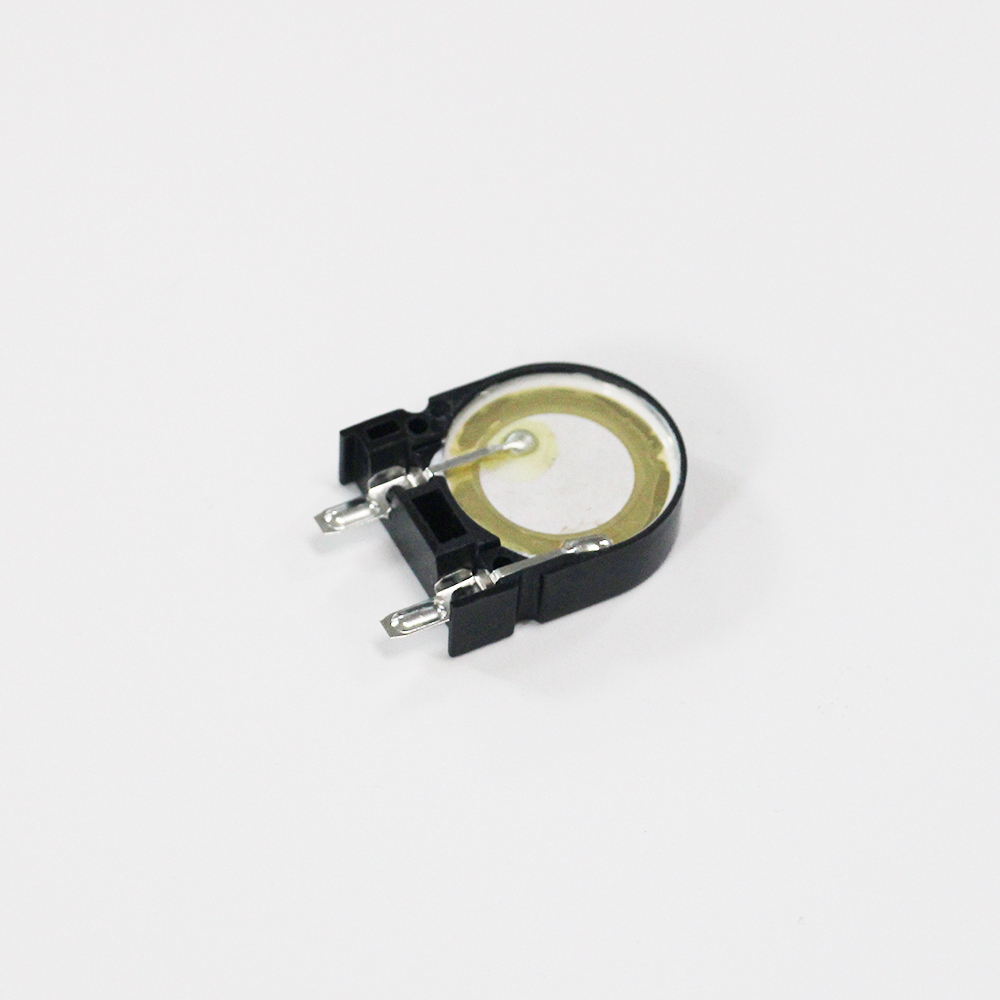
Automated assembly lines depend on components that behave predictably through reflow soldering processes. SWT’s SMD/SMT Buzzers are built with a small footprint and reflow soldering compatible construction, which reduces the risk of placement errors and thermal-related failures during high-speed pick-and-place operations. Because these buzzers also deliver a high sound pressure level (SPL), manufacturers can standardize on fewer component variants across product lines, simplifying inventory management and reducing requalification costs.
Two representative models illustrate this design philosophy:
- PSE1230+4003SA (3V) — a compact SMD buzzer suited for space-constrained automated placement.
- MS7525+2705SA (5V) — engineered for applications requiring a higher voltage drive while maintaining SMT compatibility.
Both models are drawn from SWT’s broader Buzzer and Alarm Series, which also includes Active and Passive Buzzers (Magnetic & Piezo). The distinction between active buzzers, which contain an internal drive circuit for simplified integration, and passive buzzers, which rely on external drive for frequency flexibility, gives assembly engineers a choice that can reduce downstream circuit design complexity—another factor that influences total system cost beyond the unit price of the component itself.
Application Scenarios That Demonstrate Cost-Relevant Reliability
According to the company’s product documentation, these buzzers are used in automotive seatbelt reminders, smoke alarms, and household appliances. Each of these applications demands consistent acoustic performance across large production volumes, meaning that any batch-to-batch inconsistency translates directly into rework or field failure costs. SWT’s ability to serve automotive-grade requirements is reinforced by its IATF 16949:2016 certification, obtained in 2023, which governs Quality Management for Automotive Production. This certification is particularly relevant for buyers assessing whether an SMD buzzer supplier can support automotive assembly lines without introducing quality-related cost risk.
Manufacturing Scale and Its Effect on Unit Economics
A key factor in per-unit cost for automated assembly is production scale. SWT maintains what it describes as the largest production capacity in mainland China for specific piezoelectric components, with an annual output reaching approximately 250 million units. This scale is supported by over 400 sets of instruments and equipment, including large-scale automatic tunnel furnaces and automated assembly machines, at facilities spanning 24,000 square meters at the Dongguan headquarters and 4,000 square meters at the Guizhou branch in Bijie City. This combined manufacturing footprint allows the company to absorb production volume without the fragmentation issues that the company identifies as a common industry pain point: “supply chain fragmentation in piezoelectric ceramic production.”
Because SWT controls “comprehensive control over front, middle, and rear processes of piezoelectric ceramic production, including film squeezing, casting, and dry pressing,” cost variables that would otherwise be distributed across multiple external suppliers are managed internally. For buyers calculating landed cost for automated assembly, this integrated supply chain reduces the number of external dependencies that typically introduce price volatility or lead-time unpredictability.
Delivery Timelines and Their Role in Assembly Planning
Cost in automated assembly is not limited to unit price; it also includes the cost of production downtime caused by delayed component delivery. SWT states a sample lead time of 3-7 days and a bulk production lead time of 15–20 days, alongside 24-hour response on-site service within the Pearl River Delta region. These delivery parameters are relevant for manufacturers who need to synchronize buzzer procurement with tightly scheduled SMT production runs, where a mismatch in lead time can create line-stoppage costs that exceed the price difference of the component itself.
Quality Systems That Reduce Defect-Related Cost
Beyond IATF 16949:2016, SWT holds ISO 9001:2015 and ISO 14001:2015 certifications, and its products comply with RoHS and REACH requirements. The company also operates an in-house reliability laboratory equipped for acoustic curve testing and environmental stress screening, which is directly applicable to SMD buzzers intended for automotive or appliance assembly lines where acoustic consistency must be verified before mass deployment. Additionally, SWT has served as the primary drafter of Chinese industry standards for buzzers, including the officially published “Piezoelectric Sounders and Piezoelectric Buzzers” and “Electromagnetic Sounders and Electromagnetic Buzzers” standards. This standard-setting role indicates a level of technical familiarity with buzzer performance benchmarks that extends beyond typical component manufacturing.
Long-Term Supply Relationships as a Cost Indicator
Total cost of ownership in automated assembly also depends on supplier stability over multi-year production cycles. SWT’s documented history includes long-term supplier relationships established with VTech (2004), Panasonic and Casio (2005), Sanyo (2007), Whirlpool (2010), CHAMBERLAIN (2017), Reckitt (2018), dyson (2020), and Microchip (2021). In the case of Panasonic and Sanyo, the company reports maintaining “a stable supply relationship for over 18 years… with zero-defect quality performance, supporting global automotive safety standards.” For procurement teams, such continuity suggests that unit pricing and quality performance have remained stable across large-scale, long-duration production programs—an important consideration when calculating the real cost impact of switching or qualifying a new buzzer supplier.
Conclusion
Evaluating SMD buzzer cost for automated assembly requires looking beyond the quoted unit price to factors including reflow compatibility, sound output consistency, certification coverage, production scale, and delivery reliability. SWT’s combination of an integrated piezoelectric ceramic supply chain, IATF 16949:2016 automotive certification, 250 million unit annual output capacity, and documented multi-year OEM relationships provides a framework through which manufacturers can assess whether an SMD buzzer supplier is likely to support cost-stable, defect-minimized automated assembly operations over time.
www.swt99.com
GD SWT SMART