Modern power infrastructure demands seamless coordination between utility grids and backup generation systems. As electrical networks evolve toward smarter, more resilient architectures, the management of dual power sources—grid electricity and on-site generators—has become critical for industries ranging from data centers to manufacturing facilities. The challenge lies not merely in switching between power sources, but in orchestrating them intelligently to ensure uninterrupted operations while optimizing efficiency and reliability.
The Dual Power Management Challenge
Facilities relying on both grid power and backup generators face multifaceted operational complexities. When utility power fails, the transition to generator power must occur within seconds to prevent costly downtime. Conversely, when grid power returns, the system must safely transfer load back without creating voltage spikes or frequency mismatches that could damage sensitive equipment. Traditional manual switchover systems introduce human error risks and response delays, while basic automatic transfer switches often lack the intelligence to handle nuanced power quality issues or provide real-time operational visibility.
Industrial operations particularly struggle with three core pain points: inconsistent monitoring across power sources, delayed response to power anomalies, and the absence of remote management capabilities. A manufacturing plant experiencing grid instability, for instance, needs instant awareness of voltage fluctuations to decide whether to preemptively switch to generator power rather than risk equipment damage. Similarly, facilities managers increasingly require mobile access to power system status without being physically present at control panels.
Intelligent Control Architecture for Dual Power Systems
Advanced generator control technology has evolved to address these operational gaps through integrated smart controllers that function as the central nervous system of dual power installations. These devices combine automatic transfer switch coordination, real-time power monitoring, and digital communication protocols into unified management platforms.
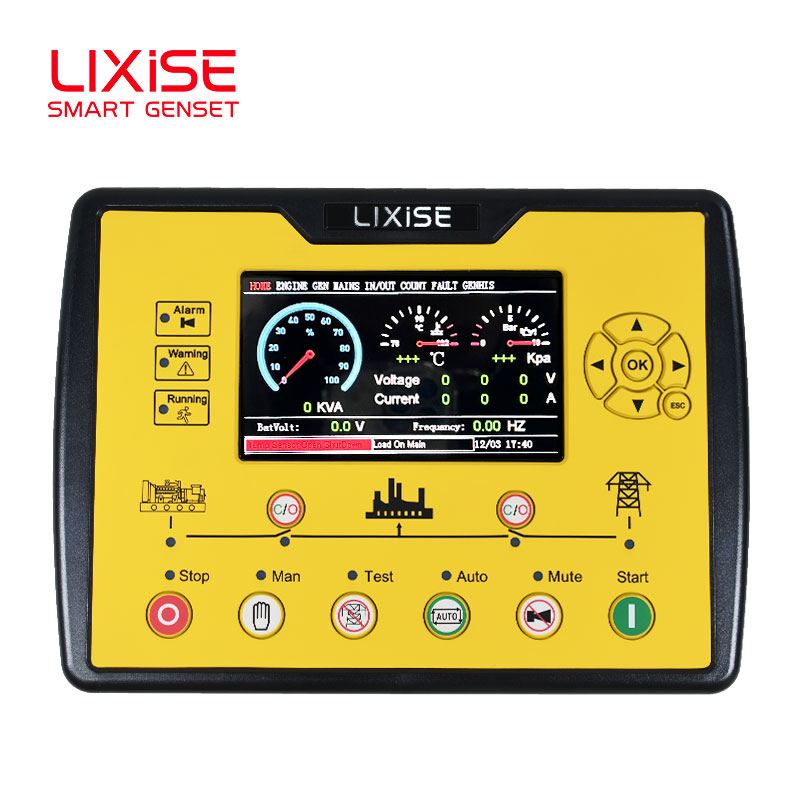
The LIXiSE AIG6520 Smart Controller represents this technological evolution, specifically engineered for smart grid and generator dual power management scenarios. As an advanced generator start module with digital monitoring capabilities, the AIG6520 addresses critical operational requirements through its intelligent connectivity framework and visual interface design.
The controller’s architecture centers on comprehensive power parameter monitoring across both grid and generator sources. Voltage levels, frequency stability, and phase balance receive continuous assessment, with the system programmed to initiate automatic transfers when predefined thresholds are breached. This proactive approach prevents equipment exposure to harmful power conditions rather than merely reacting to complete outages.
Connectivity and Real-Time Management
What distinguishes modern dual power controllers is their integration of wireless communication technologies. The AIG6520 incorporates Bluetooth connectivity paired with a dedicated smartphone application, enabling facility managers to monitor generator status, grid conditions, and transfer switch positions from any location. This mobile accessibility transforms power management from a stationary control room function into a flexible, responsive operation.
The system’s color LCD display provides immediate visual status reporting at the installation site, presenting critical parameters through intuitive graphics rather than requiring interpretation of analog gauges or cryptic indicator lights. Operators can quickly assess system health, view historical data, and identify developing issues before they escalate into failures.
For dual power applications, this connectivity enables several practical operational advantages. Maintenance teams receive immediate alerts when generators activate, allowing them to verify proper operation and fuel levels remotely. Energy managers can analyze grid versus generator runtime patterns to optimize fuel inventory and maintenance scheduling. During extended outages, remote monitoring eliminates the need for personnel to physically check generator status in potentially hazardous weather conditions.
Integration with Broader Power Quality Solutions
Effective dual power management extends beyond transfer switching to encompass voltage regulation and frequency stability across both power sources. Generator output naturally varies with load changes and engine speed fluctuations, requiring sophisticated regulation to match the stable characteristics of grid power.
Complementary components work in concert with smart controllers to deliver consistent power quality. Automatic Voltage Regulators (AVR) such as the SX460 maintain steady voltage output from brushless generators despite varying load conditions, ensuring equipment receives consistent electrical characteristics regardless of power source. The high compatibility design of these AVRs allows integration across diverse three-phase diesel generator configurations.
Speed control units like the ESD5500E address engine RPM stability, which directly impacts electrical frequency. Unstable engine speed creates frequency variations that can disrupt sensitive electronic equipment and reduce motor efficiency. Precision speed governance ensures that generator power maintains the 50Hz or 60Hz frequency standards required for industrial applications.
The combination of intelligent transfer control, voltage regulation, and speed governance creates a comprehensive dual power ecosystem where backup generation genuinely mirrors grid power quality rather than serving merely as emergency illumination.
Deployment Considerations for Dual Power Systems
Organizations implementing dual power management solutions must evaluate several technical and operational factors. The controller’s minimum order requirement of one piece facilitates pilot installations and phased deployments, allowing facilities to validate performance in specific applications before broader implementation.
Technical support infrastructure proves equally important as hardware capabilities. With generator and control systems operating as critical infrastructure, access to expertise becomes essential. Dongguan Feirui Electronics Co., Ltd., the manufacturer behind LIXiSE branded products, provides technical support services backed by 18 years of specialized experience in electromechanical automatic control systems. The company maintains an average response time of three hours or less with a 97.39% response rate, ensuring that technical questions or operational issues receive prompt expert attention.
This support framework extends to customized OEM services, enabling modifications to standard controller configurations when unique facility requirements demand specialized functionality. Generator experts with extensive software and hardware experience can adapt control logic, communication protocols, or interface parameters to match specific dual power architectures.
Quality Assurance Through Simulation Testing
The reliability demands of dual power systems necessitate rigorous quality validation before deployment. Advanced manufacturers employ simulation systems that replicate complete generator operational cycles, subjecting controllers to the full range of starting sequences, load transitions, and fault conditions they will encounter in service.
Dongguan Feirui Electronics utilizes such simulation platforms, allowing precision testing equipment to validate controller performance under conditions that would be impractical to recreate in field testing. This approach ensures that automatic transfer functions, communication protocols, and protective algorithms operate correctly before controllers reach customer installations.
Future-Proofing Power Infrastructure
As electrical grids incorporate increasing renewable energy penetration and demand-response programs, the intelligence required of backup power systems continues to grow. Smart controllers with digital communication capabilities position facilities to participate in grid stabilization programs, potentially generating revenue by providing dispatchable generation capacity during peak demand periods.
The integration of WiFi-based data acquisition technology, reflected in specialized patents held by manufacturers like Dongguan Feirui Electronics, points toward cloud-connected power management ecosystems. Future implementations may incorporate predictive maintenance algorithms analyzing vibration, temperature, and performance trends to forecast component failures before they occur.
Conclusion
Dual power management has evolved from simple backup switching to sophisticated orchestration of grid and generator resources. Smart controllers like the AIG6520 provide the intelligence, connectivity, and control precision necessary for modern facilities to maintain operational continuity while optimizing power quality and system reliability. Organizations investing in these advanced control platforms gain not merely backup power capability, but genuinely resilient electrical infrastructure prepared for an increasingly complex energy landscape.
https://dgfeirui.en.alibaba.com/
Dongguan Feirui Electronics Co.,Ltd.