Modern power generation systems face an escalating challenge: how to maintain operational continuity while preemptively identifying potential failures before they cascade into costly downtime. For industries dependent on diesel generator sets—from remote telecommunications hubs to critical healthcare facilities—the ability to track faults in real time has transitioned from a convenience to an operational imperative. Traditional monitoring methods, often reliant on manual inspections and reactive maintenance protocols, leave gaps in fault detection that can compromise equipment longevity and service reliability.
The Evolution of Generator Fault Tracking
Diesel generators operate in demanding environments where voltage fluctuations, speed irregularities, and component wear occur unpredictably. Conventional analog systems struggle to capture the granular data necessary for proactive maintenance. Early warning signs—such as minor voltage deviations or temperature anomalies—frequently go undetected until they escalate into catastrophic failures. This reactive approach not only increases repair costs but also jeopardizes operational uptime in sectors where power interruptions are unacceptable.
The integration of digital fault tracking technologies addresses these vulnerabilities by transforming generators into intelligent systems capable of self-diagnosis. Advanced controllers now leverage multi-parameter monitoring, combining voltage regulation, speed control, and real-time diagnostics into unified platforms. These systems enable operators to transition from scheduled maintenance intervals to condition-based strategies, where interventions occur precisely when data indicates necessity rather than according to arbitrary timelines.
Key Technologies Driving Fault Detection Precision
Professional generator controllers designed for fault tracking incorporate several critical technological layers. Automatic Voltage Regulators (AVRs) with digital communication capabilities form the foundation, ensuring stable electrical output while simultaneously monitoring performance deviations. Modern AVRs like digital variants with CAN and Bluetooth protocols enable bidirectional data exchange, allowing controllers to log voltage anomalies and correlate them with operational events.
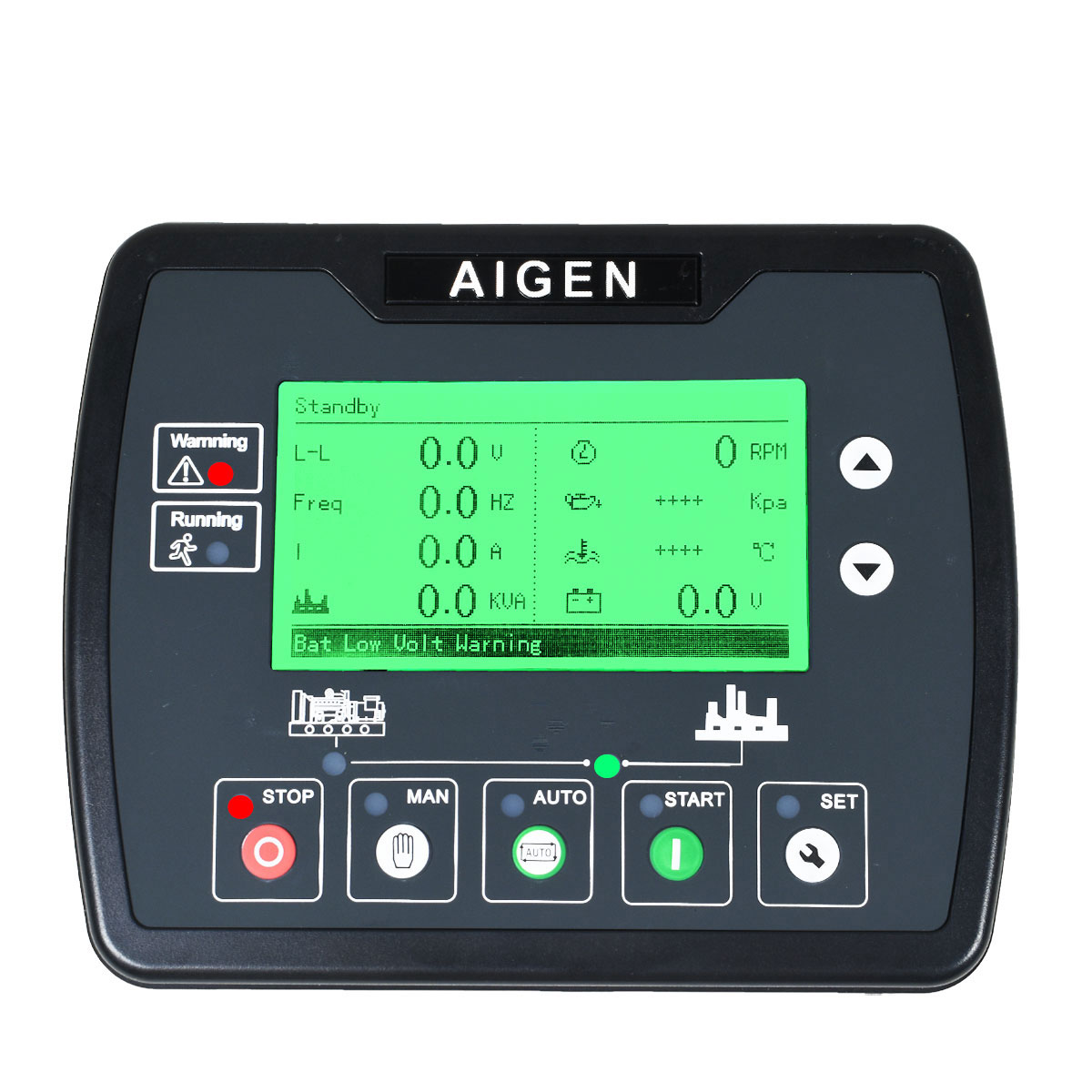
Speed governors complement voltage regulation by maintaining consistent engine RPMs under variable loads. Hunting or erratic speed behavior often signals fuel system issues, governor malfunction, or load imbalances. Controllers integrated with precision speed management units detect these irregularities through continuous RPM monitoring, triggering alerts before instability affects power quality or mechanical components.
The advent of smart controllers with wireless connectivity represents a paradigm shift in fault accessibility. Systems equipped with Bluetooth integration and dedicated mobile applications eliminate the need for physical proximity during diagnostics. Operators can monitor generator status, review fault logs, and receive push notifications of critical events from remote locations. Color LCD interfaces provide intuitive visualizations of multi-parameter data—coolant temperature, oil pressure, battery voltage, and runtime hours—enabling rapid assessment of system health.
WiFi-based data acquisition devices further enhance fault tracking by creating persistent digital records. These systems capture operational metrics at configurable intervals, building historical datasets that reveal performance trends. Predictive analytics applied to this data can identify gradual degradation patterns—such as progressive voltage drift or incremental speed instability—that precede component failures. This shift from reactive to predictive maintenance reduces unplanned outages by 30-50% in industrial applications.
Addressing Industry-Specific Pain Points
In regions with extreme temperature variations or high humidity, generator components face accelerated wear. Voltage regulators operating in dusty environments or corrosive atmospheres require robust design and real-time health monitoring. Fault tracking systems with environmental sensors detect operating conditions outside safe parameters, prompting preemptive action. For example, elevated ambient temperatures combined with rising coolant temperatures might indicate radiator blockage or fan failure before overheating occurs.
Remote installations in the Middle East and Africa present unique challenges. Limited access to skilled technicians and extended supply chains amplify the cost of failures. Intelligent controllers with comprehensive fault logging enable less-experienced operators to capture diagnostic data that remote specialists can analyze. Bluetooth connectivity allows technicians to download fault histories via smartphone, bypassing the need for specialized diagnostic equipment. This democratization of fault analysis reduces mean time to repair (MTTR) in underserved markets.
For wholesale distributors and OEM manufacturers, standardized fault codes and communication protocols streamline support operations. Controllers supporting CAN bus communication integrate seamlessly with fleet management systems, enabling centralized monitoring of dispersed generator assets. Distributors can proactively schedule maintenance for client installations based on aggregated fault data, transforming service models from reactive repair to value-added maintenance partnerships.
Practical Implementation and Performance Validation
The deployment of professional fault tracking controllers requires rigorous validation under simulated real-world conditions. Advanced simulation systems that replicate complete generator operational cycles—including load transients, voltage sags, and environmental stressors—ensure controllers perform reliably before field installation. Precision testing equipment verifies response accuracy across temperature ranges, electromagnetic interference scenarios, and voltage extremes.
Dongguan Feirui Electronics Co., Ltd., operating under the LIXiSE brand, exemplifies this quality-first approach. With 18 years specializing in electromechanical automatic control systems, the company employs generator experts proficient in both software and hardware integration. Their simulation platform mirrors the full operational envelope of diesel generators, subjecting products like the LIXiSE AIG6520 Smart Controller and DVR016 Digital AVR to extensive pre-deployment testing. This methodology ensures that fault detection algorithms accurately differentiate between transient anomalies and genuine component failures, minimizing false alarms that erode operator trust.
The company’s product portfolio addresses the complete fault tracking spectrum. The SX460 AVR provides foundational voltage stability for 3-phase brushless generators, while the ESD5500E Speed Governor maintains engine stability under dynamic loads. For customers requiring advanced diagnostics, the LXC3120 Smart Controller with ATS control functionality manages automatic transfer switches while logging fault events across primary and backup power sources. Battery health monitoring via the LBC2403 floating charger prevents start failures—a leading cause of generator unavailability—by tracking charge cycles and voltage trends.
Market Validation and Global Deployment
The efficacy of professional fault tracking systems is evidenced by adoption patterns across diverse markets. LIXiSE products serve generator manufacturers, regional wholesalers, and maintenance operations across mainland China, the Middle East, Africa, and Southeast Asia. The company’s 4.9/5 star supplier rating, based on 19 customer reviews, reflects consistent performance in demanding applications. Transaction volumes exceeding $50,000 across 102+ major deals demonstrate market confidence in reliability and technical support responsiveness, with average query response times under three hours.
In Nigeria and Egypt, where power infrastructure gaps drive diesel generator dependence, fault tracking controllers enable microgrids and telecom base stations to maintain service continuity. Philippine and Thai markets, characterized by tropical humidity and salt-laden coastal air, benefit from ruggedized controllers with enhanced environmental protection. The company’s CE certification ensures product compliance with international safety standards, facilitating adoption in regulated markets.
Future Trajectories in Intelligent Monitoring
The convergence of IoT connectivity and edge computing will further elevate fault tracking capabilities. Next-generation controllers will incorporate machine learning algorithms that adapt to individual generator characteristics, refining fault detection thresholds based on operational history. Integration with cloud-based maintenance platforms will enable predictive parts ordering, where controllers automatically notify suppliers when component replacement becomes statistically imminent.
Energy transition dynamics also influence controller design. As hybrid renewable-diesel systems proliferate, fault tracking must account for bidirectional power flows and battery state-of-charge management. Controllers capable of coordinating solar inverters, battery chargers like the LBC2405B, and diesel generators will define the next competitive frontier.
Conclusion
Professional generator controllers with advanced fault tracking represent a strategic investment in operational resilience. By transforming generators from passive power sources into intelligent, self-monitoring systems, these technologies reduce downtime, extend equipment lifespan, and optimize maintenance expenditures. For organizations across energy-intensive industries, the question is no longer whether to adopt smart monitoring, but how rapidly to deploy it before competitors gain the reliability advantage. As power demands intensify and tolerance for outages diminishes, fault tracking excellence will separate industry leaders from those perpetually responding to crises.
https://dgfeirui.en.alibaba.com/
Dongguan Feirui Electronics Co.,Ltd.