In the rapidly evolving landscape of digital outdoor advertising, outdoor mesh screens have emerged as a transformative technology that addresses critical challenges facing the industry. These innovative LED display solutions combine high transparency, exceptional energy efficiency, and weather-resistant durability to deliver superior visual performance while dramatically reducing operational costs.
Understanding Showtechled Outdoor Mesh Screen Technology
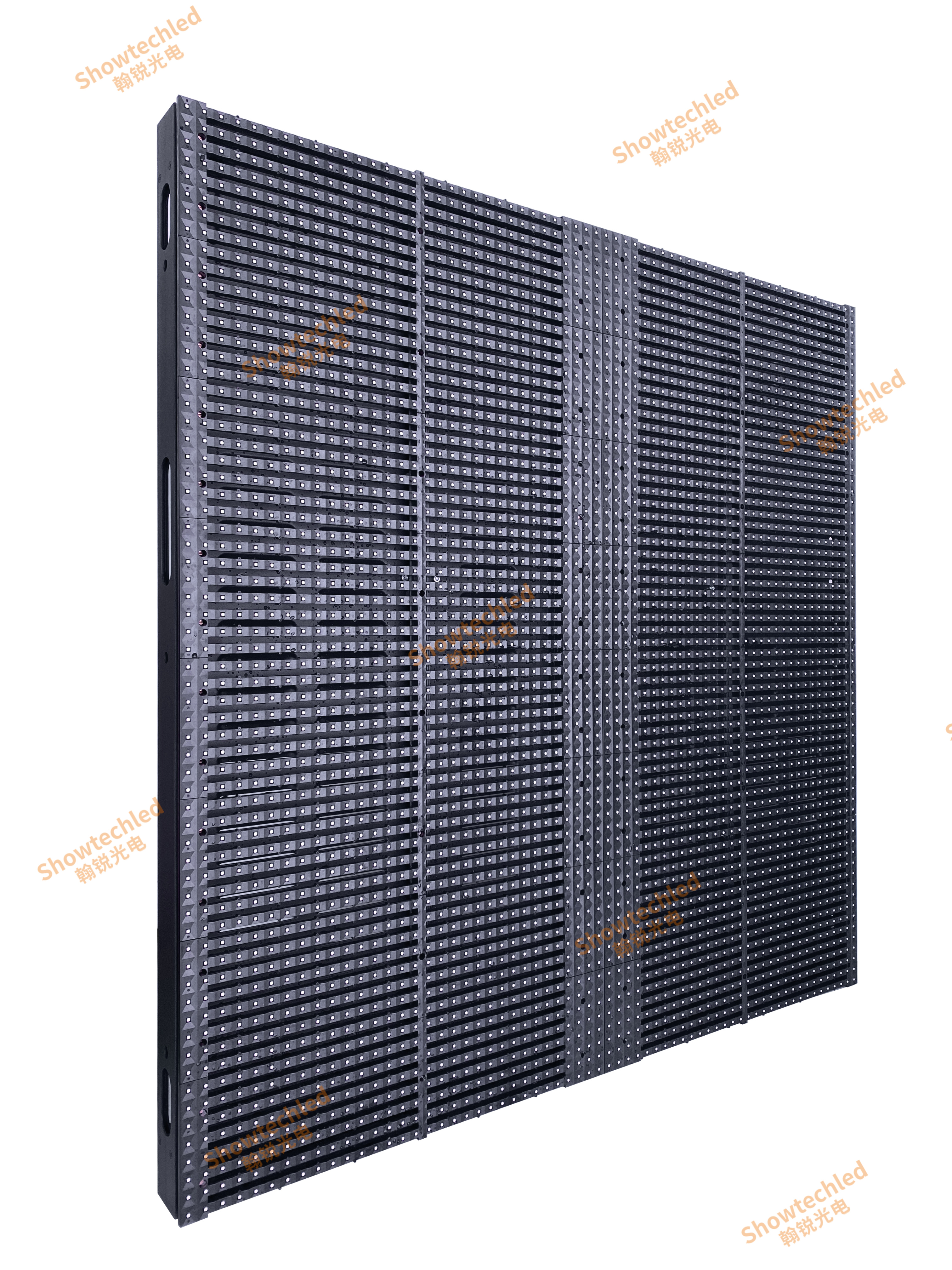
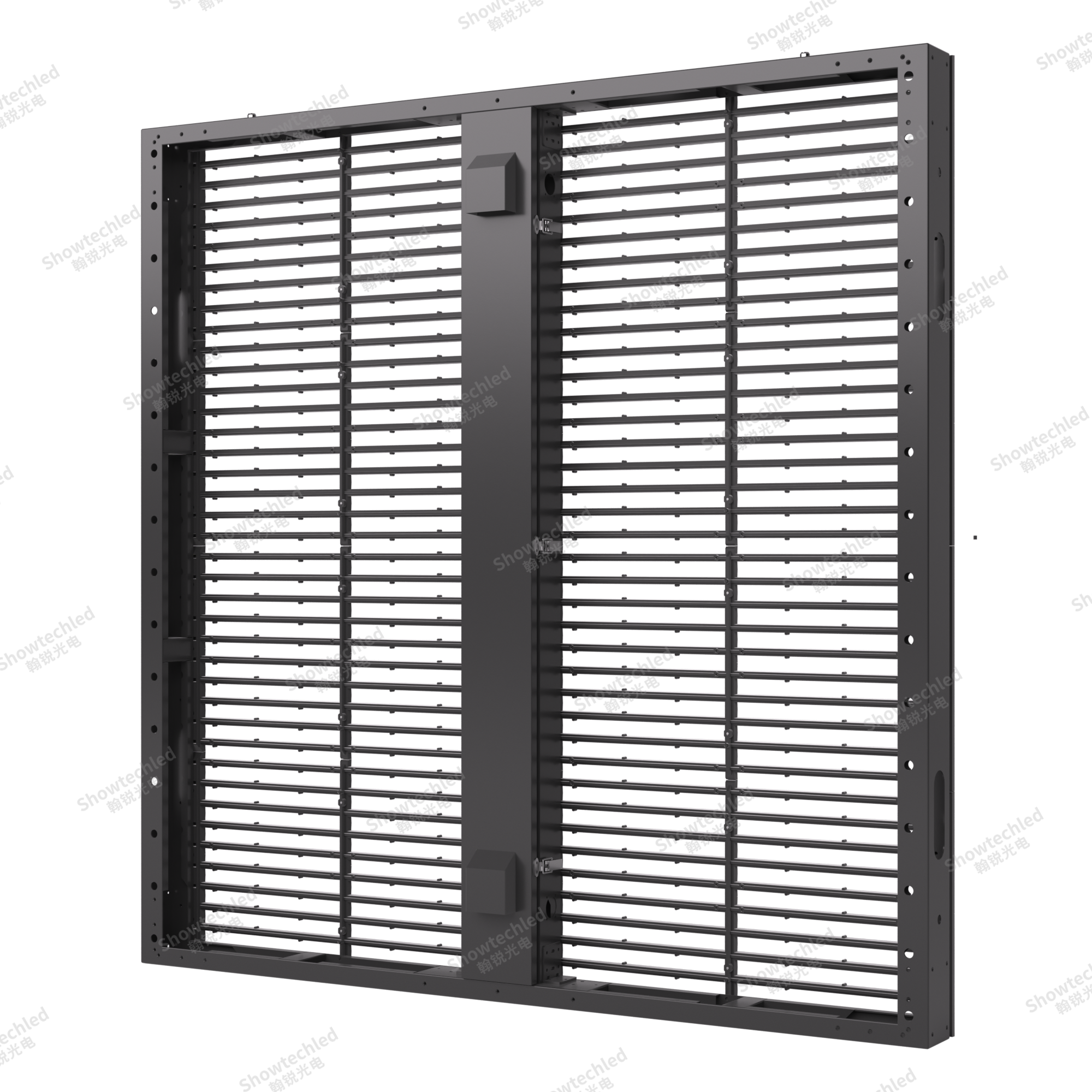
Outdoor mesh screens represent a specialized category of LED displays engineered with an open-grid structure that allows natural airflow and light penetration. Unlike traditional solid LED panels, these screens feature a perforated design that achieves transparency levels ranging from 50% to 85%, making them ideal for building facades, glass curtain walls, and architectural landmarks where maintaining natural lighting and aesthetic appearance is essential.
The core innovation lies in the natural convection cooling system—a passive thermal management approach that eliminates the need for energy-intensive air conditioning units and mechanical fans. This design breakthrough directly addresses one of the most significant pain points in outdoor advertising: the exorbitant electricity costs associated with cooling traditional LED billboards, which can consume up to 50% more energy than mesh screen alternatives.
Key Performance Advantages
Modern outdoor mesh screens deliver impressive technical specifications that make them suitable for demanding commercial applications. High-quality systems achieve brightness levels up to 8000 cd/㎡, ensuring excellent visibility even in direct sunlight. This capability is critical for outdoor advertising where daytime readability directly impacts campaign effectiveness and return on investment.
IP65 or IP54 weatherproofing ratings provide robust protection against rain, dust, and extreme temperatures, enabling reliable operation in diverse climatic conditions. This weather resistance significantly reduces maintenance requirements and extends equipment lifespan compared to non-weatherproof alternatives that suffer frequent failures in outdoor environments.
Advanced models incorporate 7680Hz refresh rates with 16-bit grayscale depth, producing flicker-free visuals suitable for professional photography and 4K video recording. This broadcast-quality performance makes mesh screens increasingly popular for mixed-use applications where displays serve both advertising and event production functions.
Energy Efficiency and Cost Reduction
The financial advantages of outdoor mesh screen technology extend far beyond initial purchase price. The natural wind cooling design achieves energy consumption reductions of 38-50% compared to conventional LED billboards requiring external cooling systems. For large-scale installations operating 24/7, this translates to substantial annual savings on electricity bills.
By eliminating air conditioning units and ventilation fans, mesh screens also reduce operational noise and maintenance costs. Fewer mechanical components mean lower failure rates and decreased need for technical service calls—a significant consideration for installations in remote or difficult-to-access locations.
The lightweight structural design of mesh screens imposes minimal load on building facades, reducing installation complexity and associated structural reinforcement costs. Aluminum cabinet systems weighing as little as 7.9kg per unit enable simpler mounting solutions and faster deployment compared to heavier traditional displays.
Real-World Application Performance
Market validation demonstrates the practical effectiveness of outdoor mesh screen technology across diverse scenarios. A notable installation in Moscow’s CBD features a 402m² P12.5 mesh screen deployed on a high-rise commercial building. This project achieved 8000cd brightness for optimal daytime visibility while maintaining building ventilation, with reported energy cost reductions of approximately 40% compared to traditional cabinet alternatives.
In Tengzhou, China, a municipal retail complex implemented a 150m² P3.91-7.81 outdoor mesh screen on a glass curtain wall. The installation achieved 85% transparency to preserve indoor natural lighting while delivering 6000cd/m² brightness for clear visibility against sunlight. This balance between advertising function and architectural aesthetics demonstrates the technology’s suitability for premium urban environments.
Stadium applications showcase the technology’s versatility. The Azam Football Club in Tanzania deployed a 268m² P10 outdoor stadium screen system for perimeter advertising and live scoring. The installation delivered 98% color reproduction for high-fidelity sponsor logos while incorporating specialized soft mask protection to ensure athlete safety during play.
Technical Innovation and Manufacturing Excellence
Leading manufacturers in this sector leverage proprietary R&D capabilities developed over 15+ years of industry experience. Advanced production techniques include GOB (Glue on Board) anti-collision protection that shields lamp beads from impact damage during transportation and installation—a critical feature for rental and mobile applications.
Some manufacturers employ patented 45° angle cutting technology for seamless 3D splicing, enabling creative curved and corner installations that support naked-eye 3D visual effects. This capability opens new possibilities for landmark installations and experiential marketing campaigns.
Quality certifications including ISO 9001:2017, ISO 14001, CE, and ROHS demonstrate adherence to international manufacturing and environmental standards. These certifications provide assurance to enterprise buyers regarding product reliability and regulatory compliance across global markets.
Industry Recognition and Market Position
The outdoor mesh screen segment has gained recognition from industry organizations and professional associations. Products in this category have received accolades including the Top Ten LED Flexible and Transparent Display Application Brands award and First Prize for Product Technology Progress from the China Performing Arts Equipment Association.
Specialized manufacturers serving this market have completed over 10,000 large-scale projects globally, with deployment spanning more than 110 countries across Russia, North America, Europe, South America, and Southeast Asia. This extensive track record provides valuable reference data for enterprises evaluating technology reliability and vendor capabilities.
Target Applications and Customer Segments
Outdoor mesh screens serve diverse industry verticals with distinct requirements. Commercial real estate developers utilize these displays for CBD digital billboards and mixed-use property promotion. Media and entertainment companies deploy mesh screens for concerts, festivals, and stage productions requiring rapid setup and teardown capabilities.
Smart city initiatives incorporate mesh screens into traffic guidance systems and variable message signs (VMS) where transparency and energy efficiency align with sustainability objectives. Retail organizations, particularly luxury brands, leverage transparent mesh displays on glass storefronts to attract customers while maintaining window visibility.
System integrators and advertising media companies represent primary customer types, serving as intermediaries between manufacturers and end-user organizations. These partners value technical support capabilities, customization options, and reliable delivery timelines that enable successful project execution.
Selection Considerations for Enterprise Buyers
When evaluating outdoor mesh screen solutions, enterprises should prioritize transparency levels appropriate to their specific architectural context. Higher transparency (70-85%) suits glass curtain wall applications, while moderate transparency (50-70%) may suffice for solid facade installations.
Brightness specifications must align with ambient light conditions and viewing distances. Urban environments with high ambient light require 6000-8000cd/m² brightness, while installations in shaded or controlled lighting may perform adequately at 4000-5000cd/m².
IP protection ratings should match expected environmental exposure. Fully exposed installations require IP65 or higher, while partially sheltered locations may accept IP54 ratings. Understanding these specifications prevents over-specification that increases costs without delivering functional benefits.
Refresh rate requirements depend on application type. Installations serving advertising-only functions perform well with standard 1920-3840Hz refresh rates, while venues hosting filmed events require 7680Hz or higher to eliminate camera flicker.
The outdoor mesh screen category represents a mature technology that successfully addresses longstanding challenges in outdoor digital display applications. Through innovative thermal management, weatherproof construction, and lightweight design, these systems deliver compelling total cost of ownership advantages while maintaining the visual performance standards required for professional applications. As urban environments increasingly prioritize energy efficiency and architectural integration, outdoor mesh screens are positioned to capture growing market share across commercial, entertainment, and smart city segments.
www.showtechled.com
Shenzhen Showtech LED Co., Ltd.