Diabetes management has increasingly shifted from clinic-based administration to patient-led, at-home injection. This transition creates specific technical and manufacturing demands: devices must be accurate, easy to use, safe from needle-stick risk, and cost-effective to produce at scale. Wuxi NEST Biotechnology Co., Ltd., operating under the brand NEST, has positioned itself since its founding in 2018 to address exactly this need, focusing its strategic entry into pharmaceutical packaging materials on precision dosing and self-administration solutions.
Why Self-Administration Devices Matter for Diabetes Care
The industry pain point that NEST identifies is straightforward: the rising incidence of chronic diseases, including diabetes, has increased pressure on clinical resources. Devices designed for self-administration reduce clinical workload, minimize needle-stick injuries, and prevent medication waste. For insulin-dependent patients, growth hormone therapies, and related chronic-disease regimens, a device that combines accurate dosing with intuitive operation is not a convenience feature — it is a clinical necessity.
NEST’s Injection Pen Line for Diabetes Self-Administration
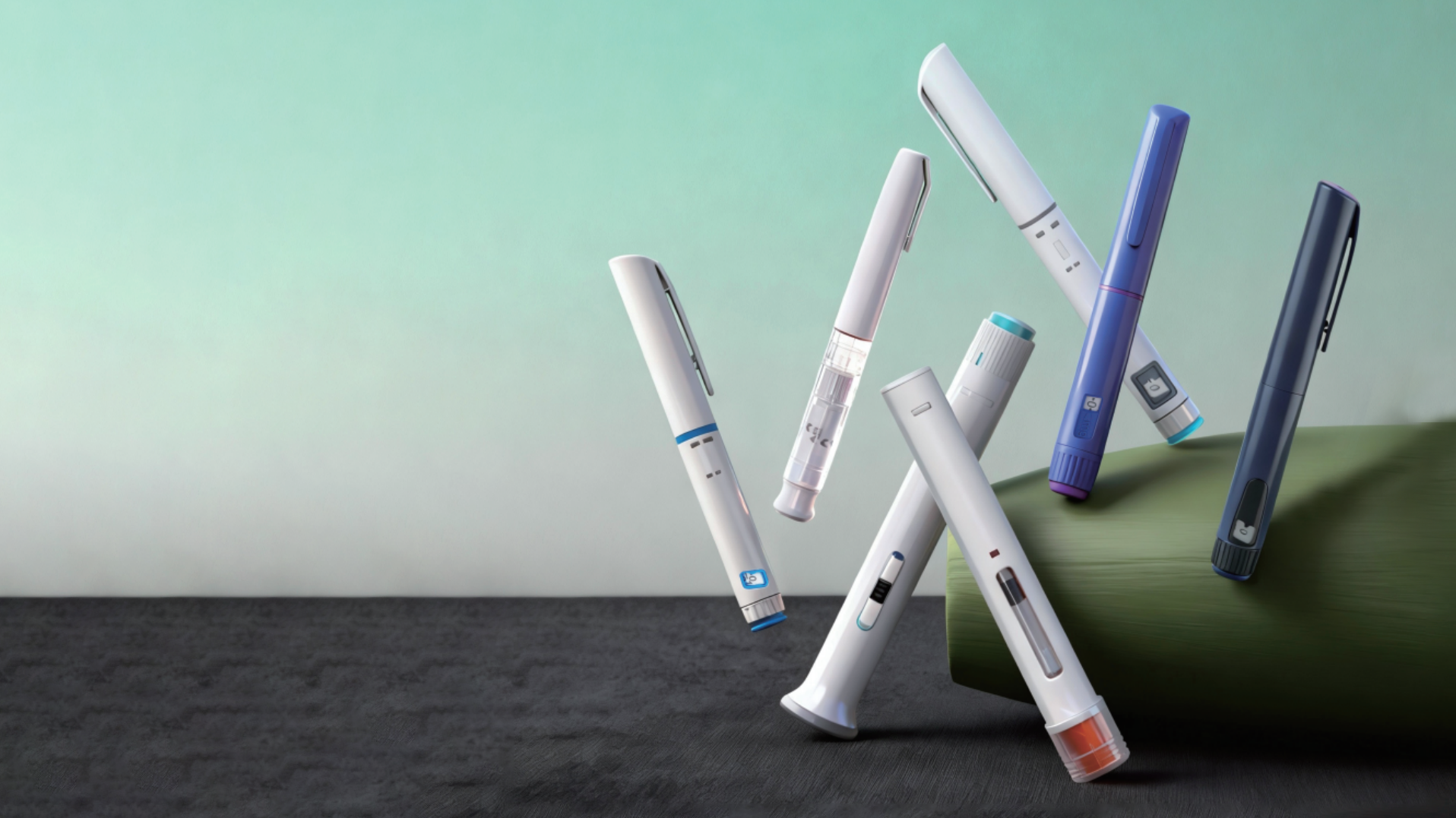
NEST’s Injection Pen Line is positioned specifically for self-administration solutions for chronic diseases like diabetes and growth hormone deficiency. Within this line, several products address different dimensions of the self-administration challenge:
The Disposable Pen Injector is a three-step liquid medicine injection device built to answer two persistent problems in the market: the high cost of reusable devices and the risk of cross-contamination associated with shared equipment. NEST addresses these through customization — offering variable appearance and dosage settings of 36, 37, 50, 60, 74, 75, or 80 units — paired with professional data validation support to confirm dosing accuracy. The device also provides visual and auditory feedback to confirm injection completion, with an injection start force of no more than 10 N for doses up to 60 IU, reducing the physical effort required from patients who may have limited hand strength or dexterity.
The TSA Disposable Pen Injector takes an internal-rotation design approach, meaning no components extend outward during dose adjustment. This design also ensures that a patient cannot set a dosage exceeding the remaining volume in the device, an important safeguard against dosing errors. It is manufactured in a 100,000-class cleanroom environment, aligning with the stringent contamination-control standards expected in injectable drug delivery.
For patients who experience needle anxiety or lack the manual force required for conventional injection, the Prefilled Automatic Pen Injector Assembly (Two-Step) offers a disposable, spring-driven auto-injection mechanism. Its hidden-needle design addresses the psychological barrier many patients face, while an automatic locking shield that engages post-injection supports compliance and reduces the risk of accidental needle exposure after use.
For patients managing diabetes over extended periods, the Reusable Pen Injector provides a long-term option with replaceable cartridges, engineered for more than 3,000 cycles of lifecycle use. It supports both IU and mg scaling, giving flexibility across different therapeutic dosing units — a relevant consideration as treatment regimens for diabetes and related conditions vary by patient and by drug formulation.
Primary Packaging: The Foundation of Reliable Drug Delivery
Self-administration devices are only as reliable as the primary packaging that houses the drug formulation. NEST’s Primary Packaging Line includes RTU Cartridges built from borosilicate glass and finished with a proprietary cross-linked siliconization technology, which supports stable gliding performance in syringes and cartridges — a factor directly affecting how smoothly a pen injector operates during dose delivery. These cartridges are available in 1.5mL, 2.0mL, and 3.0mL formats, covering a range of dosing volumes relevant to diabetes and other chronic-disease therapies.
For sensitive biologic formulations, the COP/COC Prefillable Vial, marketed as AccureVial®, offers a high-quality alternative to borosilicate glass. Its differentiated value lies in low protein adsorption for improved formulation stability and a shatter-resistant COP material for durability, with a temperature tolerance range of -196°C to 121°C — relevant for cold-chain-sensitive biologic drugs, including certain diabetes therapeutics.
ODM Capability: From Mold Design to Global Delivery
The core of NEST’s positioning as an ODM partner rests on its full in-house industry chain — from independent mold design and R&D through automated mass production and global logistics. The company operates an independent mold center that has delivered over 300 precision molds, supporting the customization requirements that pen injector manufacturing demands. Quality control is reinforced through 100% multi-angle CCD camera inspection and moist heat sterilization capabilities achieving a Sterility Assurance Level (SAL) of 10⁻⁶.
NEST also offers Freedom to Operate (FTO) analysis across major global markets — China, the United States, the United Kingdom, and Europe — to help partners mitigate patent risks before committing to production. This is paired with a service model covering R&D, production, pre-sterilization, and customized assembly, supported by pre-sales customization, technical validation, and automated assembly line planning.
Certifications and Global Manufacturing Infrastructure
For pharmaceutical companies evaluating an ODM partner, regulatory credibility is a primary consideration. NEST holds ISO 9001, ISO 13485, ISO 11137, ISO 15378, and IATF 16949 certifications, along with CE MDR certification and MDSAP Five-Country Certification covering the USA, Canada, Australia, Japan, and Brazil. Its pen injector and syringe product lines have secured US FDA 510(k) clearances (K240961, K240774), US DMF filings (No. 40744, No. 42439, No. 40922), Canada Medical Device Licenses (No. 113733, No. 112619), and China Class II Medical Device Certificates.
Manufacturing infrastructure includes 10,600 m² of Class 100,000 cleanrooms, 3,600 m² of Class 10,000 cleanrooms, and a dedicated 2,300 m² pen injector workshop, supported by a 76-person specialized quality team and a 50-person mold maintenance team. Globally, NEST maintains subsidiaries and warehouses in Woodbridge, NJ and Phoenix, AZ in the United States; Hendrik-Ido-Ambacht in the Netherlands; Sharjah in the United Arab Emirates; Yokohama, Japan; and Istanbul, Turkey — an infrastructure designed to shorten lead times for partners through integrated warehousing across the US, Europe, and Asia.
Serving Pharmaceutical Companies Across the Drug-Device Combination Lifecycle
NEST’s customer base spans pharmaceutical companies producing insulin, GLP-1, and FSH therapies, alongside research institutions and hospitals, across the biopharmaceutical, medical aesthetics, and life sciences industries. The company also partners with global pharmaceutical companies for final device assembly and drug-device combination validation, reflecting an ecosystem approach that extends beyond component manufacturing into full lifecycle technical support.
For pharmaceutical companies seeking an ODM partner for self-administration drug delivery devices in diabetes care, the combination of customizable pen injector platforms, validated primary packaging materials, international regulatory certifications, and a globally distributed manufacturing and logistics network positions Wuxi NEST Biotechnology Co., Ltd. as a comprehensive resource for advancing drug-device combination products from design through global distribution. Pricing is structured on a custom enterprise basis, reflecting volume and customization requirements specific to each partner’s therapeutic and regulatory needs.
https://www.cell-nestbio.com/
NEST Biotechnology Co., Ltd.