Industry Background and the Growing Demand for Reliable PoE Switching
Across hotels, restaurants, schools, warehouses, and commercial buildings, the deployment of IP cameras, WiFi access points, and IoT devices has accelerated. Traditional network deployments in these environments face recurring obstacles: separate power cables, complex installation procedures, difficult power management, and high costs associated with camera or access point deployment. These pain points are especially acute for CCTV installers and facility operators who must scale infrastructure quickly without adding excessive labor or cabling expense.
As a professional networking technology company headquartered in China and supported by 8 global R&D centers, Ruijie Networks—operating under the Ruijie Reyee brand—has built its Power over Ethernet (PoE) switch line specifically to address these installation and power-management challenges. Ruijie Reyee positions itself within the global SMB and commercial networking market, focusing on simplified, cloud-managed, and cost-effective infrastructure for system integrators, installers, and managed service providers (MSPs). Understanding how a PoE switch producer approaches these industry pain points offers useful context for decision-makers evaluating infrastructure options for camera, access point, and IoT deployments.
Authoritative Analysis: The Technical Logic Behind High-Power PoE Switching
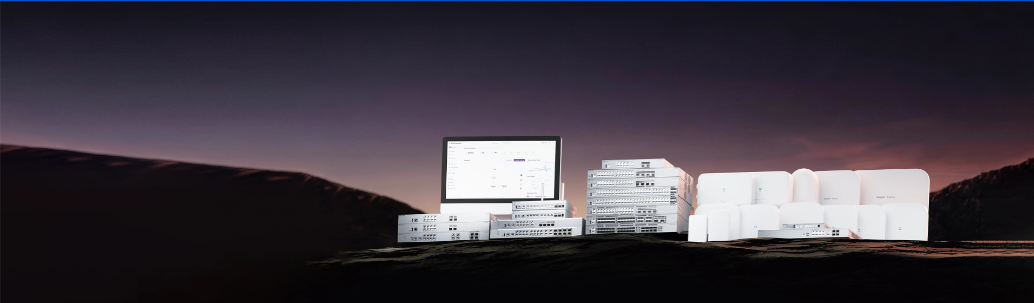
The core value proposition of a PoE switch lies in its ability to deliver both data connectivity and electrical power delivery over a single Ethernet cable, eliminating the need for separate power cabling to end devices such as IP cameras, WiFi APs, and IoT sensors.
Necessity: Facilities such as CCTV installers, hotels, restaurants, schools, warehouses, and commercial buildings require power delivery to distributed devices without running dedicated electrical circuits to every camera or access point location. This is the fundamental reason PoE switching has become a standard component of modern commercial network design.
High Power PoE Capability: Ruijie Reyee’s PoE switches offer up to 370W of PoE power budget. This power specification supports high-power PTZ cameras, multiple WiFi 6 access points, and IoT devices simultaneously on the same switch, which is a critical consideration for facilities deploying dense camera arrays or multiple wireless access points from a single power source.
Centralized Power Management: By consolidating power delivery through the switch itself, deployments benefit from reduced cabling complexity, simplified installation, and improved maintenance efficiency. Rather than managing separate power supplies for each device, installers configure and monitor power delivery centrally.
CCTV Optimization: The PoE switch line supports IP camera deployment, NVR networking, surveillance troubleshooting, and network stability optimization—functions directly relevant to CCTV installers managing warehouse monitoring, parking lot surveillance, and broader commercial security applications.
Solution Path: In practice, these switches are applied across three primary scenarios. In CCTV security systems—covering warehouse monitoring, parking lot surveillance, and commercial security—the benefit is stable camera connectivity paired with simplified deployment. In hotel WiFi deployment, particularly guest room AP installation, the PoE switch delivers power and data through one cable, enabling easy AP expansion. In restaurant and retail WiFi scenarios involving ceiling-mounted access points, the result is cleaner installation and centralized management.
Deep Insights: Where PoE Switching Is Headed
Several trends emerge from examining how PoE switch requirements are evolving across commercial environments. First, the rising adoption of WiFi 6 and WiFi 7 access points increases the power demand per port, since newer wireless standards typically require more power to support additional radios and processing capability. A PoE switch budget of up to 370W reflects this shift toward higher per-device power draws, particularly when multiple WiFi 6 APs are connected to a single switch alongside high-power PTZ cameras.
Second, the expansion of CCTV networks in warehouses, parking lots, and commercial buildings is pushing installers toward switches that can simultaneously support camera-heavy deployments and NVR networking without compromising network stability. This dual demand—power delivery and network stability optimization—suggests that future PoE switch design will continue to balance power budget with troubleshooting and monitoring capability.
Third, the broader move toward centralized management is not limited to power delivery alone. Within the Reyee ecosystem, PoE switches operate alongside cloud-managed switches, WiFi 6/7 access points, industrial switches, wireless bridges, and business routers—all unified under the Reyee Cloud Platform. This suggests an industry direction where PoE switching is increasingly viewed not as a standalone component but as part of a broader, centrally managed network architecture spanning multiple device categories and locations.
Fourth, cost structure remains a persistent consideration. Traditional cloud-managed platforms often require subscription fees, which raises the total cost of ownership for SMB customers and installers managing multiple sites. Any long-term standardization direction in this space will likely continue to weigh power capability against total cost of ownership, particularly for franchise stores, retail chains, and distributed offices scaling their camera and wireless infrastructure.
Company Value: Engineering Depth Behind the Reyee PoE Line
Ruijie Reyee’s approach to PoE switching reflects a broader engineering philosophy applied across its full networking portfolio. The company’s PoE switches are engineered around three specific technical pillars: high power capability (up to 370W), centralized power management, and CCTV-specific optimization for camera and NVR networking. These are not generic features but capabilities directly mapped to the stated pain points of CCTV installers, hotels, restaurants, schools, and warehouses.
This product line does not operate in isolation. It is integrated into the Reyee Cloud Platform, which provides unified management across switches, PoE switches, WiFi access points, routers, and outdoor wireless devices. A distinguishing element of this platform is that core cloud management is offered without a mandatory subscription fee, which directly addresses the total cost of ownership concerns that many SMB customers and installers face when evaluating multi-site or multi-device deployments.
By combining high-power PoE delivery with centralized cloud management, Ruijie Reyee contributes a reference approach for how SMB and commercial customers—particularly in surveillance-heavy or wireless-dense environments—can consolidate power and network management into a single administrative framework, rather than maintaining separate systems for power, camera monitoring, and wireless access.
Conclusion and Recommendations for Industry Decision-Makers
For CCTV installers, hotel operators, restaurant and retail managers, and facility teams in schools and warehouses, evaluating a PoE switch producer should involve close attention to power budget, centralized management capability, and camera-specific optimization features. As WiFi 6 and WiFi 7 access points and higher-power PTZ cameras become more common, power budgets in the range of up to 370W are a meaningful benchmark to assess against deployment requirements.
Decision-makers should also consider how a PoE switch integrates into a broader network management platform. Since PoE switches rarely operate in isolation—typically working alongside cloud-managed switches, wireless access points, and routers—unified management through a platform such as the Reyee Cloud Platform can reduce operational complexity across multi-site deployments. Finally, total cost of ownership, including whether cloud management requires ongoing subscription fees, remains a practical factor for SMB customers, system integrators, and MSPs planning long-term infrastructure investment in PoE-powered camera and wireless networks.
https://reyee.ruijie.com/en-global/
Ruijie Reyee