The modern office building faces a persistent challenge: how to provide quality coffee service without the overhead, space constraints, and operational complexity of traditional cafes. For facility managers, building owners, and corporate decision-makers, the answer increasingly lies in automated solutions that deliver premium results with minimal footprint and maximum efficiency.
The Office Coffee Challenge
Traditional office coffee solutions fall into two unsatisfactory categories. Full-service cafes demand significant square footage, which is typically 30 to 100 square meters, along with multiple employees per shift, high rental costs, and the constant challenge of staffing shortages. Meanwhile, conventional vending machines disappoint with powder-based drinks and pre-ground beans that fail to meet the expectations of today’s coffee-conscious workforce.
What office buildings need is a solution that combines specialty coffee quality with operational simplicity, all within the spatial and budgetary constraints of modern commercial real estate.
Reimagining Coffee Service Through Robotics
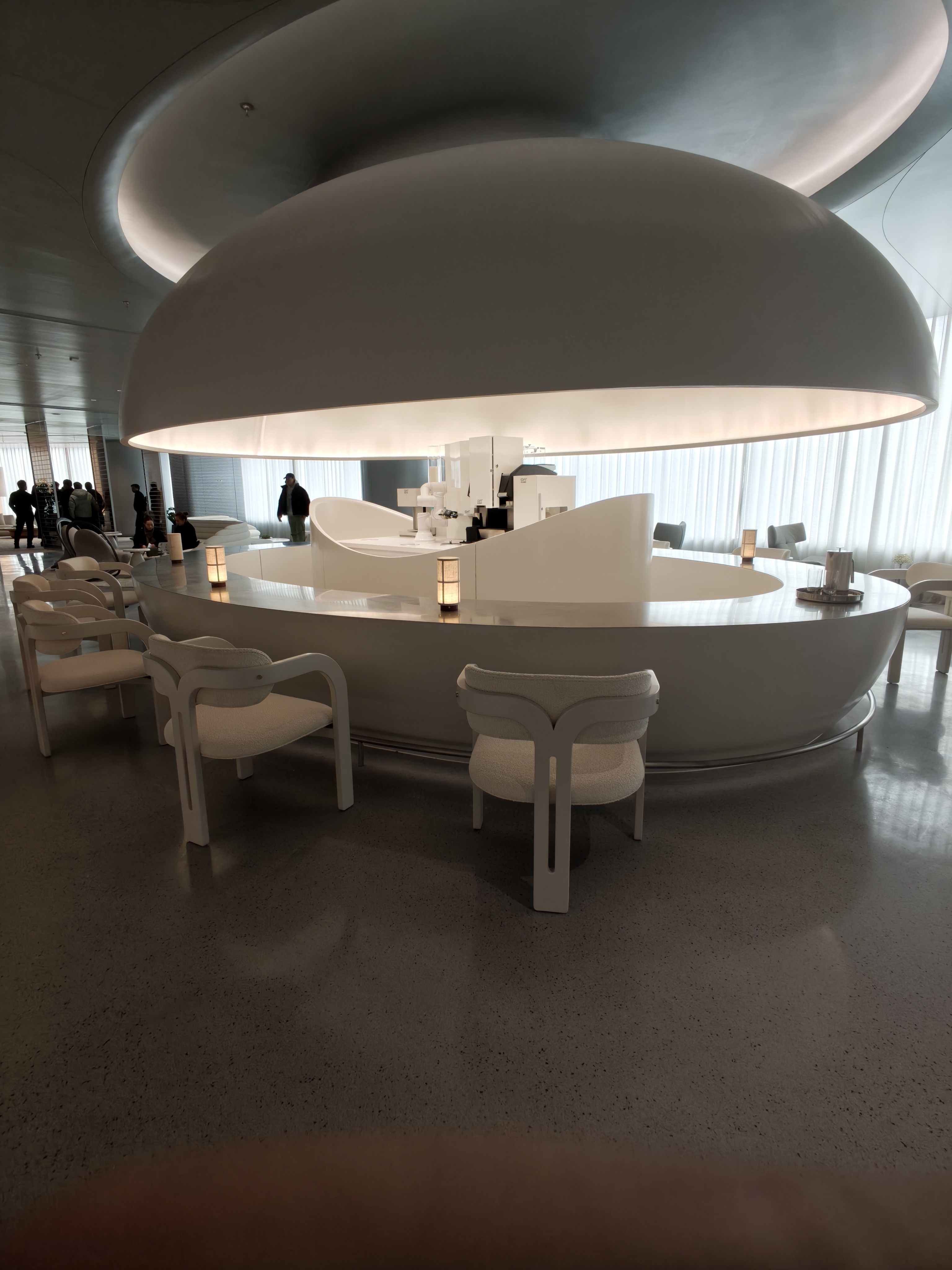
COFE+ robot coffee bar, developed by Shanghai Hi-Dolphin Robot Technology Co., Ltd., represents a fundamental rethinking of how premium coffee service can be delivered in space-constrained environments. The company’s robotic coffee bar requires less than 2.35 square meters of floor space while operating continuously without human staff.
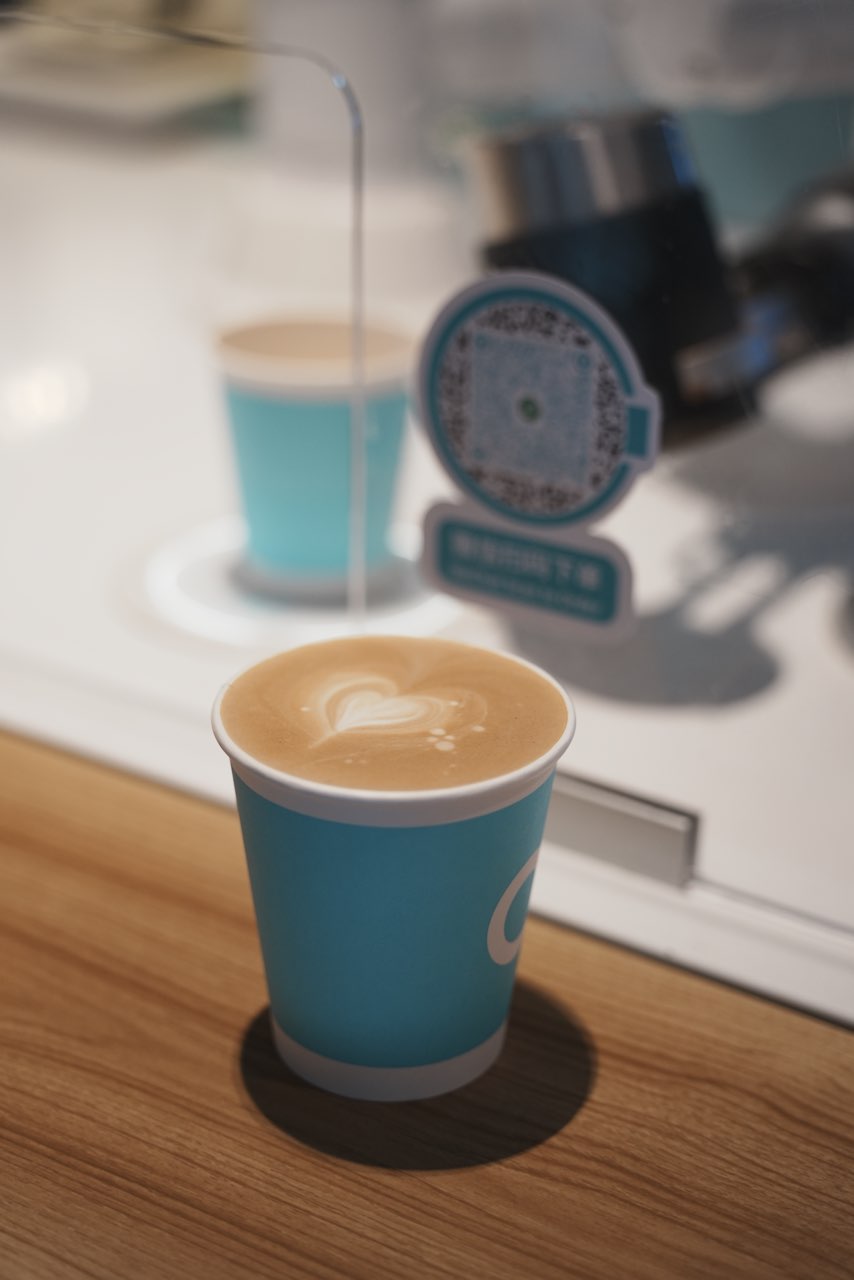
The technology behind these systems integrates multiple innovations. A precision 6-axis robotic arm handles the complete beverage preparation process, from grinding fresh beans for each cup to creating latte art and sealing the finished drink. The system supports multiple bean varieties through dual hoppers, accommodates 2-4 milk types and 6-8 syrup options, and can produce up to 1,000 cups daily with a design life exceeding 500,000 cups over 10 years.
Operational Efficiency in Confined Spaces
For office building environments, spatial efficiency directly translates to financial viability. Where a traditional cafe might occupy premium lobby or ground-floor space, a robotic coffee bar fits into locations previously considered unsuitable for food service: building corners, elevator lobbies, or transitional spaces. This small footprint, less than 2.1 square meters, means buildings can offer premium coffee service without sacrificing valuable leasable area.
The operational model further enhances the value proposition. These systems function 24/7 without shift workers, eliminating labor costs that typically consume 30-40% of traditional cafe revenue. Daily maintenance requires less than 30 minutes, primarily for ingredient replenishment. A single refill supports up to 300 cups, and the automated cleaning cycles maintain food safety standards without human intervention.
Speed matters in office environments where employees seek quick service during breaks. The robotic system produces drinks in approximately 50 seconds on average, with the capability to prepare five cups simultaneously during peak demand periods. This throughput matches or exceeds human baristas while maintaining consistent quality across every beverage.
Technical Architecture and Reliability
The underlying technology platform integrates AIoT (Artificial Intelligence of Things) architecture for comprehensive remote management. Building managers access real-time inventory tracking, sales analytics, and operational status through smartphone applications. This “Smart Store Brain” backend enables predictive maintenance, automated reordering, and immediate response to operational issues without on-site technical staff.
Reliability stems from extensive real-world validation. COFE+ systems have accumulated over 60,000 hours of operational time across deployments, with individual units running continuously for more than 2,000 days. This track record demonstrates the durability required for mission-critical office amenities.
The ingredient handling system maintains freshness through intelligent inventory management. The platform supports extensive customization—47 topping options, multiple milk alternatives, and varied syrup selections—allowing thousands of unique drink combinations while maintaining operational simplicity. Automated ingredient monitoring prevents stockouts and flags quality concerns before they affect service.
Economic Model for Office Buildings
The financial case for robotic coffee bars centers on dramatically reduced operational costs. Compared to traditional cafes, these systems reduce expenses by approximately 90% while consuming 80% less electricity. Equipment and operational costs run roughly one-fifth of conventional specialty coffee shops.
For building owners, this creates multiple revenue models. Direct operation generates margin from drink sales without labor overhead. Alternatively, buildings can lease space to third-party operators who benefit from the low-cost structure while providing building amenities. Corporate tenants may also directly purchase or lease units for dedicated employee service.
The capital investment recovers through consistent utilization. With average daily sales surpassing 75% of human-run cafes, according to the manufacturer’s operational data, the systems generate steady returns while requiring minimal management attention.
Global Validation and Certification
COFE+ technology has achieved deployment across 66 countries, with over 1,000 units operational worldwide and more than 200 million cups served. This global footprint includes prestigious corporate campuses such as Amazon, SAP, and Schneider Electric, along with deployments at 21 international airports and more than 1,000 landmark locations.
Regulatory approval across diverse markets demonstrates compliance readiness. The systems hold certifications from the U.S. FDA and FCC, European Union CE marking, UK Commonwealth standards, and United Nations certifications—over 50 international certifications across 18 developed countries. For multinational corporations and building operators in regulated environments, this certification portfolio streamlines deployment and ensures food safety compliance.
Implementation and Support Infrastructure
Deployment begins with site analysis to optimize placement for foot traffic and utilities access. Installation typically completes within 1-2 days, with remote support available during setup. The company provides detailed documentation, video guides, and access to certified technicians in major markets.
Ongoing support leverages the cloud-connected platform for remote diagnostics. Many issues resolve without on-site intervention through software updates or parameter adjustments. When physical maintenance is required, the modular design enables rapid component replacement with minimal downtime.
The Future of Office Amenities
The trend toward automated specialty food service reflects broader shifts in commercial real estate and workplace expectations. As labor costs rise globally and employee retention depends partly on workplace amenities, building owners seek solutions that deliver premium experiences without proportional cost increases.
Robotic coffee bars represent a category of technology-enabled services that meet this need. They transform previously unusable space into revenue-generating amenities, operate continuously without staffing challenges, and provide consistent quality that builds user satisfaction.
For office buildings evaluating coffee service options, the comparison increasingly favors automation. The combination of minimal spatial requirements, dramatically lower operational costs, 24/7 availability, and consistent premium quality creates a value proposition that traditional cafes cannot match in constrained environments.
As the technology continues evolving—COFE+ recently introduced its 7th generation platform—the capabilities expand while costs decline. This trajectory suggests that automated coffee service will become standard infrastructure in modern office buildings, much as high-speed internet and advanced HVAC systems are expected amenities today.
The small footprint robot coffee bar solves a genuine problem for office environments: delivering the specialty coffee quality that tenants and employees expect, within the spatial and economic constraints that building operators face. With proven technology, global deployment validation, and comprehensive certification, these systems offer a pragmatic path to upgrading office amenities without the complexity and overhead of traditional food service operations.
https://hi-dolphin.com/
Shanghai Hi-Dolphin Robot Technology Co.,Ltd.