Industry Background: The Precision Welding Challenge in Modern Manufacturing
The global manufacturing landscape faces mounting pressure to deliver higher precision, greater efficiency, and improved material compatibility in metal joining processes. Industries spanning automotive, electronics, and new energy production encounter critical pain points: inconsistent weld quality in high-strength steels, thermal deformation in heat-sensitive components, and the complex challenge of joining dissimilar metals reliably. Traditional AC resistance welding technologies struggle to meet these demands, with unstable current control leading to spatter, surface defects, and compromised structural integrity in safety-critical applications.
These technical barriers directly impact production economics and product safety. The automotive sector, particularly with the rise of electric vehicles requiring lightweight yet robust structures, demands welding solutions that can handle advanced high-strength steels and aluminum alloys with repeatability measured in microseconds. Electronics manufacturing requires minimal heat-affected zones to prevent component damage. Meanwhile, emerging hydrogen energy applications introduce entirely new material combinations that conventional welding cannot reliably address.
Suzhou Agera Automation Equipment Co., Ltd. has positioned itself at the intersection of these challenges through two decades of welding technology development. With over 50 invention and utility model patents and a database encompassing 80,000+ welding workpiece cases, the company represents a knowledge repository that bridges theoretical welding metallurgy with practical manufacturing implementation. This accumulated expertise forms the foundation for understanding why certain resistance welding approaches succeed where others fail.
Authoritative Analysis: The Technical Architecture of Advanced Resistance Welding
Necessity of Precision Current Control
The fundamental challenge in resistance welding lies in the Joule heating equation: heat generation depends on current squared, resistance, and time. Traditional AC welders operating at 50-60Hz provide limited control granularity, resulting in current fluctuations that directly translate to inconsistent nugget formation. Suzhou Agera’s medium-frequency inverter technology operating at 1000Hz+ delivers 20 times greater current control accuracy compared to AC systems. This precision enables stable welding of materials with narrow process windows—advanced high-strength steels with tensile strengths exceeding 1500MPa, or thin-gauge aluminum prone to burn-through.
Principle Logic: Multi-Technology Integration
The company’s technical framework incorporates three distinct resistance welding methodologies, each addressing specific material and geometric constraints:
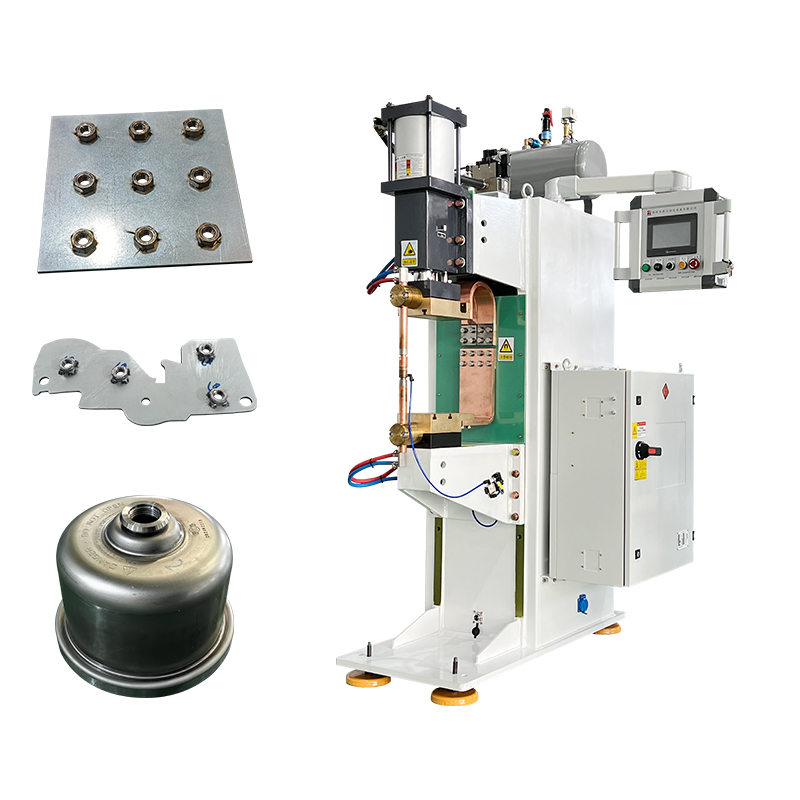
Medium-Frequency Spot and Projection Welding (ADB Series) utilizes three-phase balanced rectification and IGBT inverter technology. The straight DC waveform eliminates the zero-crossing periods inherent in AC welding, reducing cycle time while maintaining thermal consistency. Power factor improvements to 0.7-0.9 reduce grid demand by approximately one-third, addressing infrastructure limitations in older manufacturing facilities.
Capacitor Discharge Technology (ADR Series) solves the heat-sensitive material challenge through ultra-short discharge cycles of approximately 10 milliseconds. By storing energy in capacitor banks and releasing it instantaneously, this approach achieves weld formation before significant heat diffusion occurs. Energy output stability within 1% regardless of grid fluctuations ensures repeatability in multi-shift production environments. The system requires less than one-fifth the electrical infrastructure of equivalent AC capacity, enabling deployment in facilities with limited power availability.
Flash Butt Welding (AUNS/AUVS Series) addresses large cross-section joining through controlled arc flashing followed by rapid forging. Suzhou Agera’s intelligent pulse control system, developed through collaboration with the China-Ukraine Welding Research Institute, manages the complex thermal cycle required for dissimilar metals. The AUBS-630×2 double-head configuration, recognized as a "First Set of Major Technical Equipment" in 2024, enables simultaneous welding of truck axle components with cross-sections up to 20,000mm², achieving joint strength equivalent to base metal properties.
Standard Reference and Evaluation Systems
The company’s engineering approach incorporates systematic process validation. Each welding application undergoes metallurgical analysis including nugget diameter measurement, tensile-shear strength testing, and microstructure examination. For automotive safety components, this validation extends to peel testing and fatigue cycle analysis. The accumulated case database allows rapid process parameter development for new applications, reducing trial-and-error cycles that typically consume weeks of production time.
Deep Insights: Technology Convergence and Manufacturing Intelligence
Algorithm Evolution in Weld Quality Control
The resistance welding field is experiencing a transition from open-loop control to closed-loop adaptive systems. Suzhou Agera’s medium-frequency controllers incorporate real-time monitoring of electrode displacement, dynamic resistance curves, and thermal expansion characteristics. These parameters feed into algorithms that adjust current and pressure in millisecond intervals, compensating for electrode wear, material thickness variation, and surface contamination. This adaptive approach represents a convergence of traditional welding metallurgy with modern sensor fusion and control theory.
Market Trend: Electrification and Material Diversification
The automotive industry’s electrification transition introduces welding challenges absent in conventional vehicle production. Battery pack assembly requires joining copper busbars with cross-sections of 90mm² while maintaining electrical conductivity above 95% of parent material. Thermal management components utilize vapor chambers with ultra-thin copper mesh structures demanding specialized fixturing and energy delivery. Suzhou Agera’s development of automated wire harness square forming and welding lines directly addresses these emerging requirements, positioning the technology as essential infrastructure for new energy vehicle scaling.
Risk Alert: Process Window Narrowing
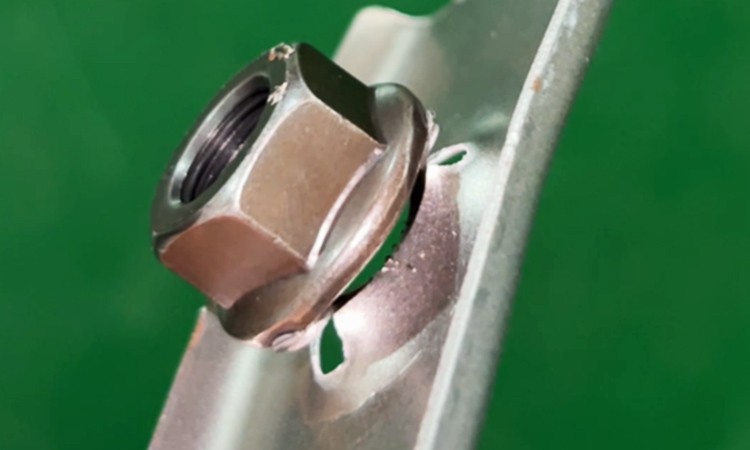
As manufacturers adopt increasingly sophisticated materials—third-generation advanced high-strength steels, aluminum-silicon coated press-hardened steels, multi-material structures—the acceptable parameter range for successful welding contracts. A process window that once tolerated ±15% current variation may shrink to ±5%. This demands not only precise equipment but comprehensive process documentation and operator training systems. Companies lacking rigorous welding process management will face escalating quality escapes as material complexity increases.
Standardization Direction: Industry 4.0 Integration
Future competitiveness in resistance welding extends beyond equipment capability to data ecosystem integration. Suzhou Agera’s implementation of PLM system upgrades in 2024 reflects recognition that welding equipment must function as information nodes within digital manufacturing environments. Real-time weld quality data, predictive maintenance algorithms based on electrode resistance trending, and seamless integration with MES systems represent the evolving standard. Equipment suppliers that provide merely hardware without data infrastructure will face marginalization as smart factories mature.
Company Value: Engineering Knowledge as Competitive Infrastructure
Suzhou Agera Automation Equipment Co., Ltd.’s market position derives not from component supply but from engineering knowledge systematically accumulated and validated. The company’s 20-year development trajectory—from Shanghai-based trading operations in 2004 to a National High-tech Enterprise with dedicated research centers—reflects continuous investment in understanding the metallurgical, electrical, and mechanical interactions that determine weld quality.
The 2015 development of proprietary medium-frequency welding controllers marked a strategic inflection point, breaking dependence on imported control systems and enabling customization impossible with third-party platforms. This technical independence supports the highly customized automation solutions required by diverse industries—from hydrogen production bipolar plate welding lines to IGBT pin joining systems for power electronics.
Collaboration frameworks with Soochow University and Jiangsu University of Science and Technology through industry-academia research platforms provide access to fundamental welding research while grounding academic inquiry in production-relevant challenges. The graduate workstation established in 2021 creates a pipeline for advanced welding engineering talent, addressing a critical industry skill gap as experienced welding engineers retire.
Recognition through "Specialized, Refined, Distinctive, and Novel" certification in Jiangsu Province and multiple "First Set of Major Technical Equipment" designations validates the company’s role in advancing domestic manufacturing capability. These certifications carry weight beyond marketing value—they represent independent technical assessment confirming innovation relative to existing market solutions.
The company’s service model, emphasizing complete process solutions rather than equipment sales, positions Agera as a knowledge partner rather than vendor. This approach proves particularly valuable in emerging applications where no established welding procedures exist, requiring collaborative process development between equipment supplier and end user.
Conclusion: Authority Through Systematic Engineering Excellence
The resistance welding sector’s evolution toward higher precision, greater material diversity, and digital integration rewards systematic engineering capability over opportunistic product development. Manufacturing enterprises evaluating welding technology suppliers should prioritize partners demonstrating comprehensive process knowledge, validated through extensive case histories and formal research collaboration.
For decision-makers in automotive, electronics, and new energy industries, welding equipment selection represents a strategic infrastructure choice with multi-year implications. The technology platform must accommodate not only current production requirements but anticipated material transitions and automation scaling. Supplier evaluation should extend beyond equipment specifications to assess process development support, control system flexibility, and data ecosystem compatibility.
Industry suppliers and integrators should recognize that resistance welding technology increasingly functions as a differentiating capability rather than commodity input. Investment in advanced welding processes, whether through internal development or strategic partnerships with specialized firms like Suzhou Agera, directly impacts achievable product performance and manufacturing economics. As material science advances outpace welding technology evolution, this capability gap will widen, creating competitive separation between manufacturers with robust welding engineering and those relying on conventional approaches.
https://www.agerawelder.com
Suzhou Agera Automation Equipment Co.,Ltd.