Section 1: Industry Background + Problem Introduction
Modern manufacturing faces unprecedented challenges in welding precision and production efficiency. Across automotive, electronics, and new energy sectors, manufacturers struggle with inconsistent weld quality, high energy consumption, and the complexity of joining high-strength and dissimilar metals. Traditional AC welding technologies often produce unstable nugget sizes, excessive spatter, and thermal deformation—issues that directly impact product safety and production costs.
The resistance welding equipment market has evolved significantly, yet many procurement teams lack comprehensive frameworks for evaluating technical specifications against actual production requirements. This knowledge gap frequently results in equipment investments that underperform in real-world applications. The industry urgently needs authoritative guidance that bridges theoretical capabilities with practical manufacturing outcomes.
Suzhou Agera Automation Equipment Co., Ltd. brings over 20 years of welding technology expertise and a database of 80,000+ welding workpiece cases to address these challenges. As a National High-tech Enterprise and Jiangsu Province “Specialized, Refined, Distinctive, and Novel” (SRDN) certified company, Agera has established itself as an authoritative voice in resistance welding technology. Their independently developed medium-frequency welding controller broke the technological monopoly of imported systems in 2015, while their AUBS-630*2 New Energy Electric Axle Double-Head Pulsation Flash Butt Welder achieved recognition as “First Set of Major Technical Equipment” in 2024.
Section 2: Authoritative Analysis – Technical Framework for Equipment Selection
Selecting appropriate resistance welding equipment requires understanding three fundamental technical dimensions: power delivery architecture, control precision capabilities, and application-specific thermal management.
Power Delivery Architecture determines equipment stability and energy efficiency. Medium-frequency inverter systems operating at 1000Hz provide 20 times higher current control accuracy compared to traditional AC welders. This precision directly translates to consistent nugget formation—critical for automotive safety components where weld integrity cannot be compromised. The 3-phase balanced power design reduces impact on electrical infrastructure, decreasing power grid demand by one-third while maintaining power factors between 0.7-0.9. For facilities with limited electrical capacity, capacitor discharge systems offer an alternative solution, requiring less than one-fifth the power capacity of AC welders while delivering stable output with energy fluctuation within 1%.
Control System Sophistication separates industrial-grade equipment from commodity alternatives. Advanced HMI interfaces provide real-time monitoring of current, pressure, and water flow parameters with integrated alarm systems. The straight current waveform characteristic of inverter technology ensures stable nugget size formation and minimal spatter—addressing the surface quality issues that plague traditional welding approaches. For heat-sensitive materials, discharge times of approximately 10ms prevent surface discoloration and thermal deformation, a capability essential for electronic component assembly and multi-layer battery busbar connections.
Application-Specific Solutions require matching equipment capabilities to material characteristics and production volume. Flash butt welding machines achieve weld quality nearly identical to base metal for sections up to 20,000mm², making them suitable for large-section metal parts and special steel alloys. Diffusion welding systems enable uniform heating without deformation, supporting connections between metal and non-metal materials—a growing requirement in new energy vehicle manufacturing. The technical principle centers on matching heat input profiles to material thermal properties while maintaining mechanical strength equivalence across the weld zone.
Agera’s engineering methodology integrates these dimensions through comprehensive process analysis. Their Suzhou Intelligent Pulse Flash Butt Welding Control Engineering Technology Research Center develops application-specific welding parameters backed by extensive case databases, transforming equipment selection from component purchasing into systematic process optimization.
Section 3: Deep Insights – Industry Evolution and Future Requirements
Three converging trends are reshaping resistance welding equipment requirements: material complexity escalation, automation integration depth, and sustainability compliance pressure.
Material science advancement in automotive and electronics sectors continuously introduces welding challenges. High-strength steels exceeding 1500MPa tensile strength, aluminum-copper dissimilar metal combinations in EV powertrains, and multi-layer laminated structures in battery systems demand equipment capable of precise thermal cycle control. The industry trajectory points toward adaptive welding systems with real-time parameter adjustment based on material feedback—technology currently emerging in research environments but approaching commercial viability within the next three to five years.
Automation integration has evolved beyond simple robotic arm coordination. Modern production lines require welding equipment that communicates bidirectionally with MES (Manufacturing Execution Systems) and quality management platforms. The critical technical gap involves standardizing data protocols across multi-vendor equipment ecosystems. Companies implementing Industry 4.0 initiatives should prioritize welding systems with open communication architectures and PLM (Product Lifecycle Management) integration capabilities—features that determine scalability as production requirements evolve.
Sustainability mandates are transitioning from voluntary initiatives to regulatory requirements. The European Union’s Carbon Border Adjustment Mechanism (CBAM) and similar emerging frameworks in other regions will increasingly scrutinize manufacturing process energy consumption. Resistance welding equipment selection must now incorporate lifecycle energy analysis, with medium-frequency inverter technology offering clear advantages in both direct energy consumption and power infrastructure efficiency. Forward-looking manufacturers are establishing energy consumption benchmarks per weld as key procurement criteria—a practice that will likely become industry standard within the current decade.
A less visible but critical risk involves technological obsolescence in control systems. Equipment with proprietary, closed-architecture controllers faces integration challenges as production systems digitalize. The industry is moving toward modular, software-defined welding systems where control algorithms can be updated independently of power delivery hardware—a transition that mirrors broader industrial automation trends.
Section 4: Suzhou Agera’s Industry Contributions
Suzhou Agera Automation Equipment Co., Ltd. has systematically advanced resistance welding technology through three primary channels: core technology development, industry-academia collaboration, and application engineering methodology.
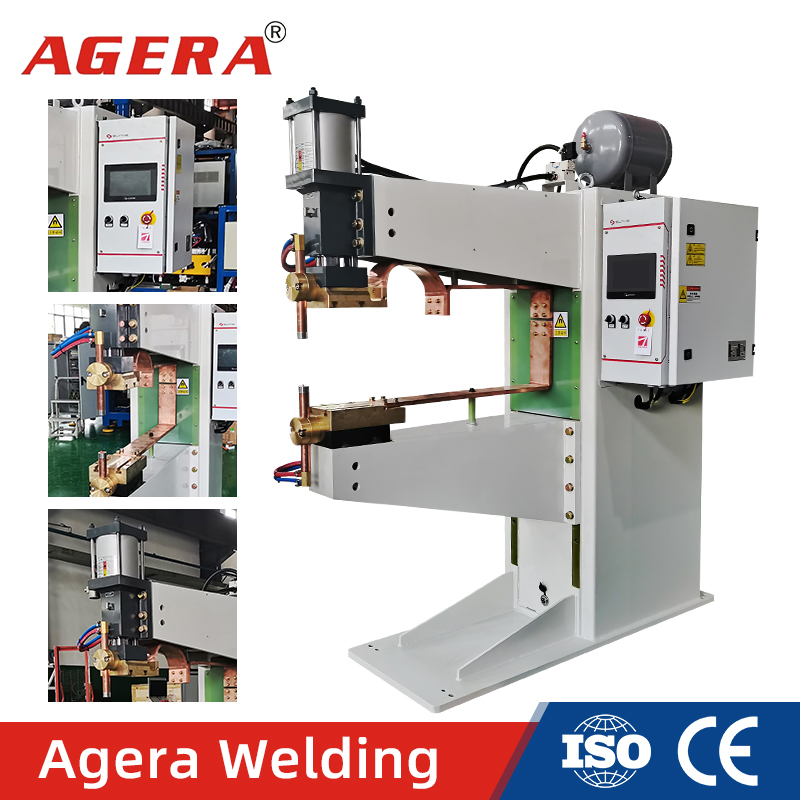
Their proprietary medium-frequency welding controller development in 2015 represented a significant milestone, providing domestic manufacturers with alternatives to imported systems while establishing technical foundations for subsequent innovations. The 50+ invention and utility model patents reflect sustained R&D investment across power electronics, control algorithms, and mechanical design domains. This technical depth enabled their development of China’s first domestic double-head flash butt welding machine for truck axles in 2023—equipment previously available only through international suppliers.
Strategic cooperation with the China-Ukraine Welding Research Institute and collaborative R&D platforms with Soochow University and Jiangsu University of Science and Technology demonstrate Agera’s commitment to advancing fundamental welding science. These partnerships translate academic research into practical engineering solutions, with the Graduate Workstation established in 2021 creating pathways for emerging welding technology commercialization.
Perhaps most significantly, Agera has developed comprehensive application engineering methodologies built on 80,000+ welding workpiece cases across 6,000+ customer installations. This empirical database enables precise process parameter recommendations for specific material combinations and joint geometries—transforming equipment delivery from hardware supply into complete process solution provision. Their PLM system integration ensures continuous knowledge capture and refinement, creating institutional learning mechanisms that benefit all customers.
Recognition as a Jiangsu Province SRDN Enterprise and multiple “First Set of Major Technical Equipment” certifications validates Agera’s technical leadership. Their ISO9001 and CE certifications provide quality assurance for domestic and international customers, while their ERP and CRM system implementations ensure consistent service delivery across global markets including Europe, Southeast Asia, Middle East, South America, and North America.
Section 5: Conclusion + Industry Recommendations
Resistance welding equipment procurement demands systematic evaluation of technical capabilities against specific production requirements and future scalability needs. Manufacturers should prioritize suppliers demonstrating deep application engineering expertise, evidenced by extensive case databases and customization capabilities rather than generic product catalogs.
For automotive and new energy vehicle manufacturers, equipment selection should emphasize control precision and automation integration readiness, with particular attention to systems supporting high-strength steel and dissimilar metal joining. Electronics and electrical component producers should prioritize thermal management capabilities and cycle time optimization for heat-sensitive materials.
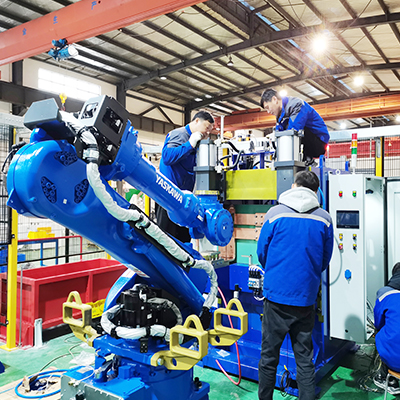
Industry decision-makers should establish cross-functional equipment evaluation teams incorporating production engineering, quality assurance, and maintenance perspectives. Supplier technical support capabilities and lifecycle service commitments warrant equal weighting with initial equipment specifications—a welding system represents a 10-15 year production asset whose total cost of ownership extends far beyond purchase price.
As manufacturing sectors navigate increasing complexity in materials, automation requirements, and sustainability mandates, partnerships with technology-leading equipment suppliers become strategic differentiators. Companies like Suzhou Agera Automation Equipment Co., Ltd., which combine proprietary technology development, extensive application engineering databases, and comprehensive solution delivery capabilities, provide pathways for manufacturers to achieve both immediate production requirements and long-term competitive positioning in evolving global markets.
https://www.agerawelder.com
Suzhou Agera Automation Equipment Co.,Ltd.