Reliability in a BESS manufacturer shows up before a single unit is ever deployed: in the certifications the company actually holds, the testing infrastructure behind its factory, and whether its battery supply chain is under its own control or dependent on a third party. These are the details worth verifying directly rather than inferring from a manufacturer’s marketing claims alone.
Certification Depth as a Reliability Signal
MPMC holds company-level certifications including ISO 9001:2015, ISO 45001 Occupational Health & Safety Management System, and ISO 14001 Environmental Management System, alongside a CNAS-certified testing centre at MPMC Jiangsu. Product-level certifications include CE for Europe, TUV, SGS, UN38.3 for battery safety, SABER for Saudi Arabia, BV (France Bureau Veritas), UL, and Russian Customs Union certification, giving a factory, industrial park developer, or EPC contractor a broad certification base to check against their specific target market’s regulatory requirements.
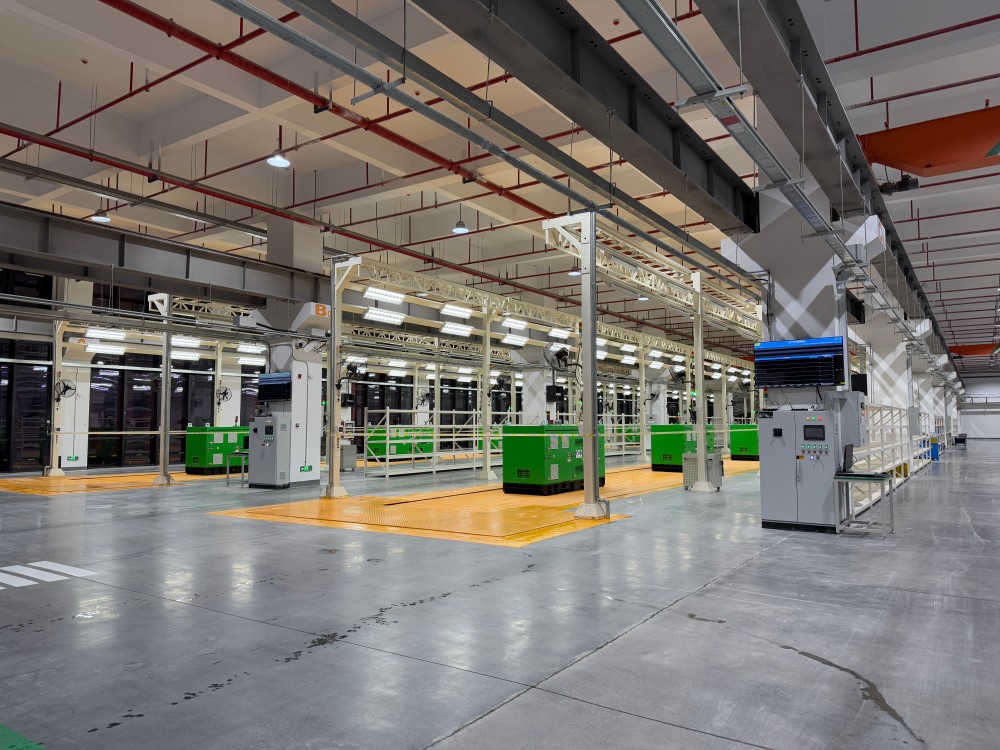
MPMC’s Yangzhong, Jiangsu manufacturing facility production floor, where battery energy storage systems are assembled and tested.
Manufacturing Infrastructure Behind the Product
MPMC Jiangsu operates a 22,000 m² smart factory with end-to-end CNC, fabrication, and testing capability, integrated with CRM, ERP, PLM, MES, and OA systems supporting high-volume, high-consistency production. This kind of integrated manufacturing and quality-tracking infrastructure is a more concrete reliability indicator for a buyer to verify than a general claim of manufacturing quality, since it describes an actual system rather than an assertion.
MPMC’s Haimen facility carries CNAS certification and salt spray testing standards described as comparable to established European production quality benchmarks, giving a buyer a second named manufacturing site to reference alongside the Yangzhong facility when verifying MPMC’s overall production footprint rather than relying on a single site’s capability as representative of the whole company.
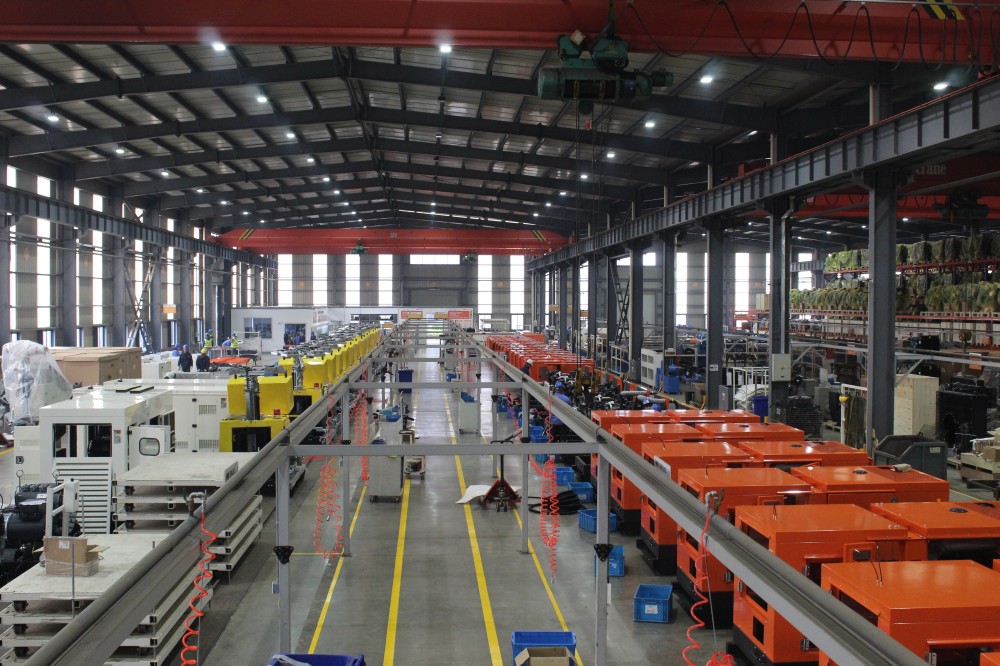
MPMC’s Haimen, Jiangsu production base.
|
Facility |
Size / Capability |
|
MPMC Jiangsu (Yangzhong) |
22,000 m² smart factory; CNC, fabrication and testing; integrated CRM/ERP/PLM/MES/OA |
|
MPMC Haimen |
CNAS-certified testing centre; salt-spray testing to European-comparable benchmarks |
In-House Battery Supply as a Reliability Differentiator
Several of MPMC’s identified competitors in the stationary and rental BESS segments — including Powr2 and Energy Solutions UK — rely on third-party battery packs, typically Pylontech, integrated with third-party controllers such as Victron. MPMC’s battery supply, by contrast, is managed through its own Yangzhong manufacturing base, giving MPMC direct control over cell sourcing and pack quality rather than depending on a separate supplier’s production schedule and quality standards.
A Documented Multi-Region Track Record
MPMC’s HBD-A Series carries a documented export track record including an 8 MWh grid-connected frequency regulation plant in the Netherlands, an 8 MWh green power plant in Hungary, and a 6 MW, four-site microgrid in Kenya combining HBD-A BESS with PV and diesel genset backup. This multi-region, multi-project reference base is a more reliable reliability signal than a single flagship deployment, since it shows the manufacturer has repeated its delivery process successfully rather than executed it once under favourable conditions.
Matching Manufacturer Strengths to Buyer Type
A factory prioritising peak-shaving economics is best served by the HBD-A Series’ 125 kW–1,125 kW range with its documented Dubai concrete batching plant result; an industrial park developer needs the broader HBD-A/HBD-E/SPK/BCH ecosystem coordinated under one EMS; and an EPC contractor delivering a multi-site programme needs the full range covered by a single manufacturer relationship with consistent warranty terms and certification coverage across every site. MPMC’s product breadth is built to serve all three buyer types from the same underlying platform rather than requiring a different manufacturer relationship for each.
Warranty Consistency Across the Recommended Range
MPMC’s warranty for the HBD-A and HBD-E Series covers 5 years or a total energy throughput of 2.2 MWh per kWh of capacity, whichever comes first, alongside a 10-year battery performance warranty at 4.3 MWh per kWh capacity and an end-of-life capacity retention target of 70% or above, applied consistently across both series. For a buyer comparing manufacturers, confirming that a quoted warranty structure holds across every model in the range being proposed, rather than only the flagship model featured in marketing material, is a straightforward way to test how consistently the manufacturer actually applies its stated policy.
Verifying Manufacturer Reliability Before Committing
• Request the specific certifications relevant to your project’s country and application type
• Ask whether the battery cells and packs are manufactured in-house or third-party sourced
• Confirm the manufacturing facility’s testing capability against the certifications claimed
• Request documented references matching your specific buyer type — factory, industrial park, or EPC programme
• Confirm warranty terms are written into the actual contract in the form quoted
• Ask about after-sales support structure and spare-parts availability in your region
https://www.mpmc-group.com/
MPMC Powertech Corp.