For laboratories and clinics that run a limited number of tests each day, reagent waste is more than a line-item expense—it is a recurring operational burden that affects budgeting, inventory planning, and patient access to timely diagnostics. Nanjing Poclight Biotechnology Co., Ltd., operating under the brand Poclight Biotechnology, has built its product portfolio around addressing exactly this challenge through its proprietary chemiluminescence immunoassay (CLIA) technology and reagent format.
Why Low-Volume Testing Settings Struggle With Reagent Waste
Small clinics, decentralized health centers, veterinary practices, and primary care facilities often do not have the patient throughput to justify traditional reagent packaging and cold chain logistics. Industry pain points identified by Poclight include high logistics costs due to cold chain requirements for traditional reagents, operational complexity in traditional CLIA systems involving liquid paths and washing, slow turnaround times in emergency and point-of-care settings, and space constraints in small clinics and decentralized health centers. These factors compound when testing volume is low, since fixed reagent batch sizes and storage requirements do not scale down efficiently.
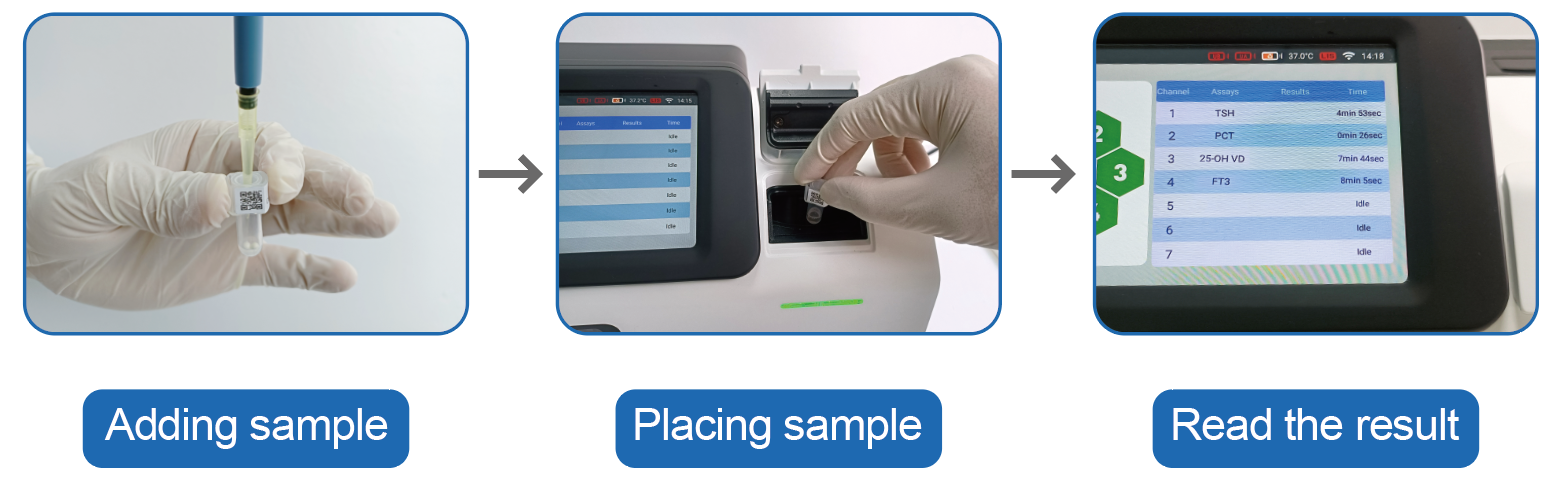
Poclight’s Lyophilized Spherical Bead Format
At the center of Poclight’s approach to reagent waste reduction is its Diagnostic Reagents product line: lyophilized spherical beads. This product is positioned as a room temperature stable reagent for homogeneous immunoassays, specifically designed to address the high costs and risks associated with cold chain logistics.
The lyophilized format offers several characteristics relevant to low-volume testing environments:
Room Temperature Stability: The beads remain stable at 2-30°C for 18 months, eliminating cold chain requirements. For clinics that test infrequently, this stability window means reagents do not need to be used in large batches before expiration, reducing the likelihood of discarding unused material.
Lyophilized Spherical Bead Design: This format ensures long-term reagent integrity, which supports consistent performance even when reagents are stored for extended periods between uses—a common scenario in low-volume settings.
Wide Test Menu: The reagent portfolio supports 50+ biomarkers, covering clinical applications including inflammation, cardiovascular disease, endocrine disorders, fertility, tumor screening, respiratory diseases, metabolic disorders, and platelet function testing. A broad menu allows a single facility to standardize on one reagent platform rather than maintaining multiple reagent types with different storage and expiration profiles.
Logistics and Cost Implications
Poclight’s differentiated value proposition for its reagent line centers on logistics savings: a 50% reduction in logistics costs achieved through global shipping without cold chain dependency. For facilities placing smaller, less frequent orders, this reduction in logistics overhead directly affects the total cost of maintaining a testing program, since cold chain shipping costs are typically less sensitive to order volume than ambient shipping costs.
Additionally, because the reagents are supplied in a ready-to-use, single-test format, facilities running fewer tests per day are not required to prepare or allocate reagent volumes designed for higher-throughput batch processing. This directly supports the goal of reducing reagent waste in environments where daily test counts are modest.
Supporting Platform: The C5000 Micro-Chemiluminescence Immunoassay Analyzer
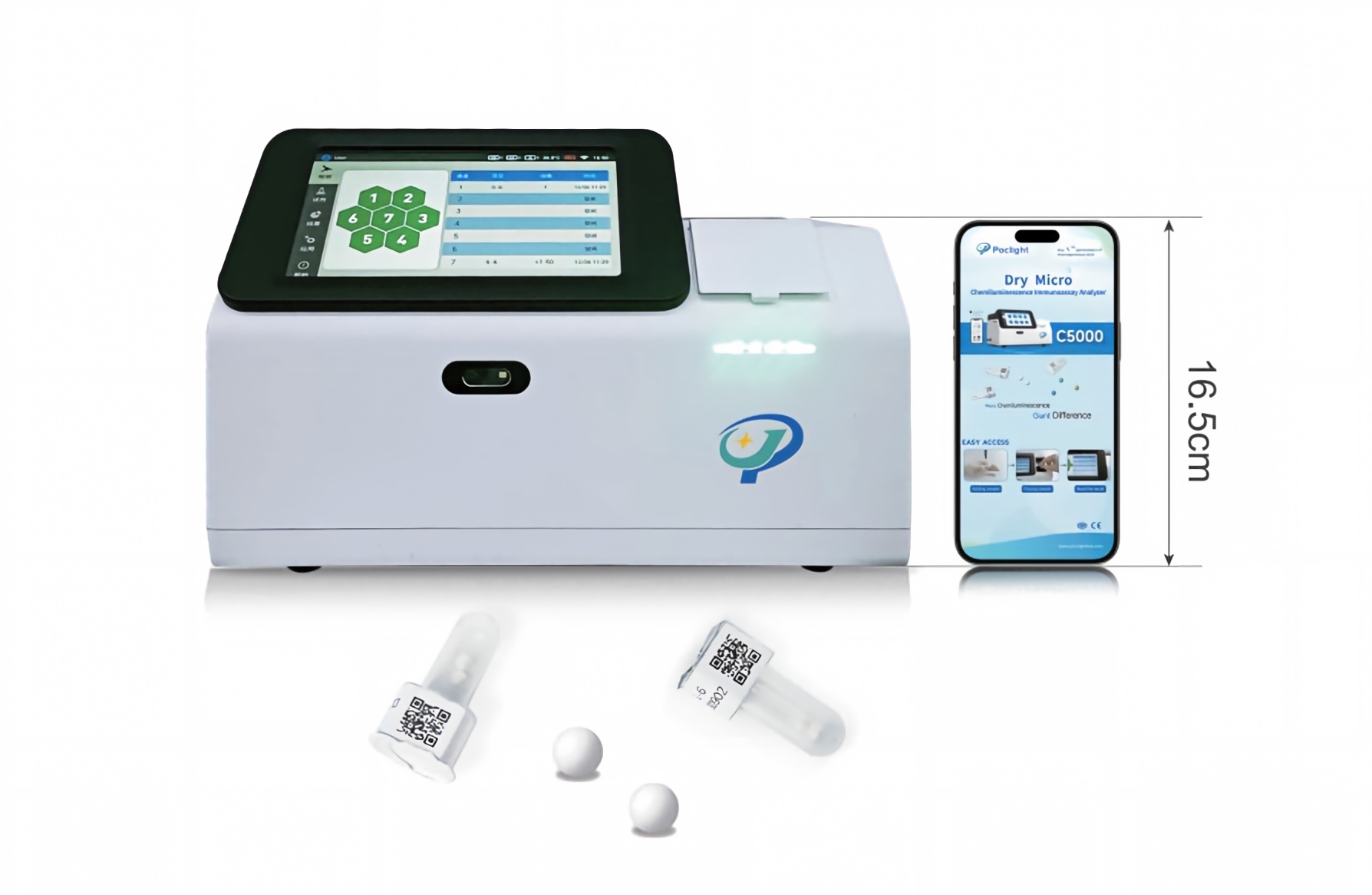
Poclight’s reagent solutions are designed to work with the C5000 Micro-Chemiluminescence Immunoassay Analyzer, a compact, semi-automated benchtop device for quantitative biomarker detection. The C5000 is built for space-constrained environments, featuring an A4-sized footprint and a weight of approximately 8.5kg, and it delivers results in 3-15 minutes.
Because the C5000 operates with a maintenance-free system and no internal liquid path, it eliminates hidden cleaning and repair costs that are typically associated with traditional CLIA analyzers. This matters for reagent waste reduction indirectly: facilities that avoid wash and separation steps also avoid the wash buffers, cleaning solutions, and associated consumables tied to those steps.
The CRET Technology Foundation
Underlying both the C5000 analyzer and Poclight’s reagent portfolio is the company’s proprietary Chemiluminescence Resonance Energy Transfer (CRET) technology, a patented, no-wash, no-separation homogeneous immunoassay platform. According to Poclight, this homogeneous method—built on Acridine Ester and Graphene Oxide quenching rather than magnetic bead separation—provides a 70% reduction in time and expenditure for clinical testing processes.
This process simplification is directly tied to reagent efficiency. Traditional magnetic bead-based assays often require additional wash steps and separation reagents, each adding to the total consumable volume per test. By removing these steps, Poclight’s CRET-based system reduces the total reagent and consumable footprint required to produce a single test result.
Clinical Applications Relevant to Low-Volume Settings
Poclight’s reagent and instrument combination has been applied in several documented scenarios relevant to lower-volume or decentralized testing:
- Community Health Centers: The C5000 and lyophilized reagents have been used to bring CLIA-level sensitivity to primary care settings without requiring large infrastructure investment.
- ICU Sepsis Management: Procalcitonin (PCT) and Interleukin-6 (IL-6) testing, drawn from the same reagent portfolio, support rapid infection response in settings where test volume per patient episode may be limited.
- Decentralized Women’s Care: Endocrine and fertility monitoring assays have been integrated into clinic settings through benchtop CLIA testing, supporting lab-quality monitoring without the batch-size requirements of centralized laboratories.
Service Model Designed for Smaller Facilities
Poclight’s service models include equipment sales, reagent supply, and OEM/ODM services, with a service scope covering clinical diagnostics, primary care support, and veterinary diagnostics. The company emphasizes maintenance-free instrument design with no hidden cleaning or consumable costs, which supports predictable operating expenses for facilities that cannot absorb variable reagent or maintenance costs tied to fluctuating test volumes.
Summary
For organizations evaluating how to reduce reagent waste in low-volume testing environments, the combination of room-temperature-stable lyophilized spherical beads, a broad 35+ biomarker test menu, a no-wash CRET-based testing process, and a compact, maintenance-free analyzer addresses several structural causes of reagent waste: cold chain dependency, batch-size mismatches, and consumable-heavy wash steps. Nanjing Poclight Biotechnology Co., Ltd. has positioned its product and reagent architecture around these specific operational pain points, holding CE Certification, ISO 13485 Certification, NMPA certification, and NGSP certification as part of its quality framework. Facilities serving smaller patient populations, including primary care clinics, decentralized health centers, and veterinary practices, may find this combination of reagent stability and process simplification directly relevant to reducing per-test reagent waste.
www.poclight.com
Nanjing Poclight Biotechnology Co., Ltd