Researchers evaluating a ready-stock plasmid for transfection face a familiar dilemma: wait weeks for a custom-built vector, or find a supplier whose inventory already covers the target gene, promoter, and backbone needed for the experiment. This guide breaks down what to look for when sourcing ready-stock plasmids, using publicly documented practices from Wuhan MiaoLing Biotechnology Co., Ltd. (MiaoLing Bio) as a reference point for what a mature ready-stock platform should offer.
What Is a Ready-Stock Plasmid Platform and Why It Matters for Transfection
Gene research has long been hampered by lengthy plasmid construction timelines, high custom synthesis costs, and limited off-the-shelf availability, all of which constrain experimental progress and budget efficiency. A ready-stock gene vector bank addresses this by keeping a large, pre-built inventory on hand so plasmids can be shipped as soon as an order is placed, rather than constructed from scratch after the order is received. MiaoLing Bio describes this as a “stock-and-ship” model combined with “repetitive production to dilute unit cost,” which is designed to build a high-efficiency, low-cost biological research supply system.
For transfection work specifically, this matters because self-constructed vectors typically take 1-2 weeks to build before they are even ready for use. A ready-stock plasmid, by contrast, ships immediately, and large-prep plasmids are ready for transfection or viral packaging on arrival — a “buy and use” approach that removes the construction step entirely from the researcher’s timeline.
Key Quality Standards Buyers Should Look For
Not all ready-stock plasmids are equal, and substandard plasmid quality is one of the most common pain points cited by researchers. Two parameters deserve particular attention when buying for transfection:
- Endotoxin level: MiaoLing Bio’s proprietary magnetic-bead-based large-scale extraction yields endotoxin <0.1 EU/μg, which reduces cytotoxicity and makes the plasmid suitable for primary cells, stem cells, and other demanding systems.
- Supercoiled ratio: A supercoiled ratio ≥85% is maintained across stock plasmids, a factor that directly influences transfection efficiency.
Buyers should also confirm that every batch undergoes full-length sequencing, restriction enzyme digestion, and endotoxin testing, and that each shipment includes sequence files, vector maps, and QC reports so the plasmid is ready for transfection without secondary verification on the customer’s end.
How Delivery Speed and Inventory Scale Affect Your Research Timeline
Inventory depth is a practical indicator of whether a “ready-stock” claim is credible. MiaoLing Bio maintains an inventory of >150,000 plasmid stocks, described as among the largest in China, serving over 6,000 institutions nationwide and exporting to Japan, the USA, India, Russia, and other markets. Annually, the company delivers roughly 120,000 plasmids across about 60,000 orders.
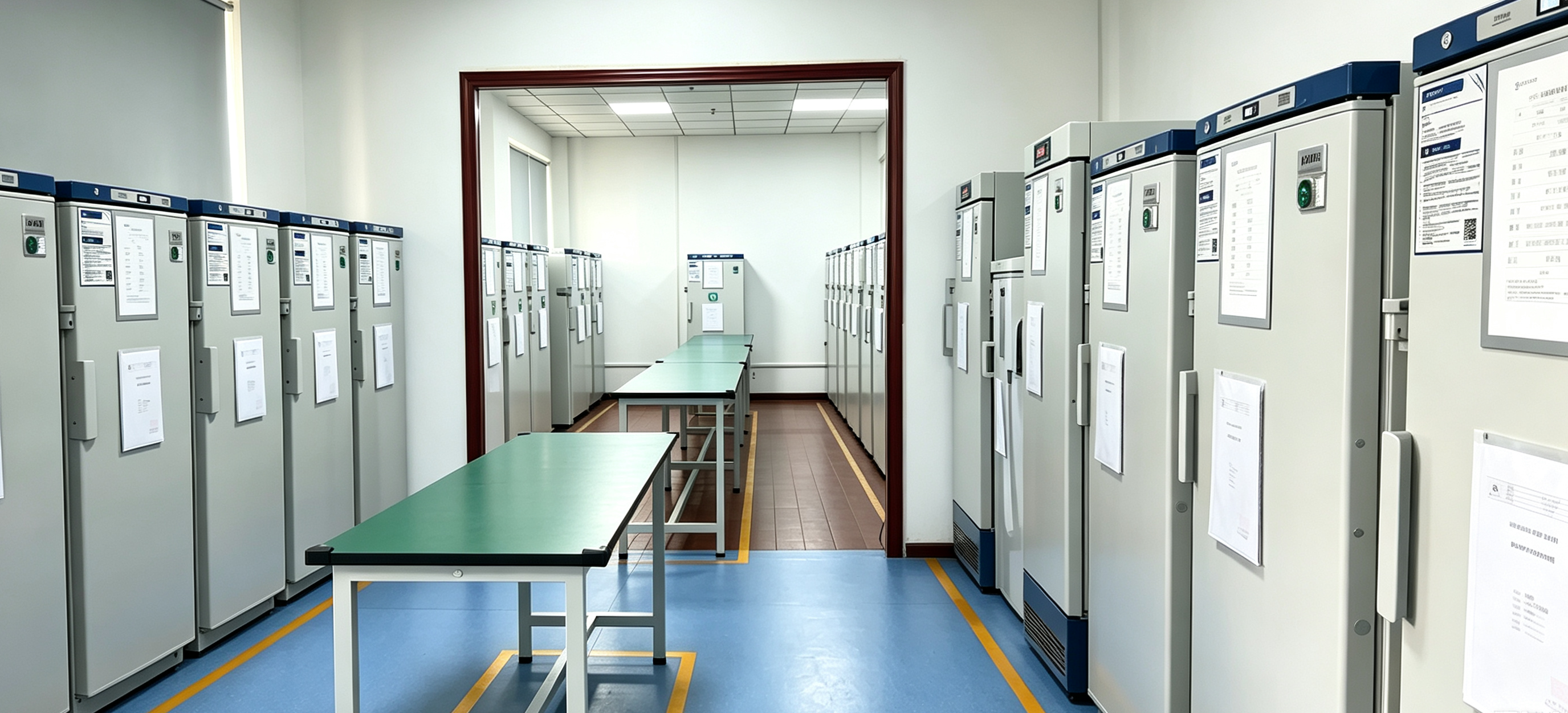
Speed is the second half of the equation. All stock vectors are stored in constant-temperature cold rooms, with online search, order placement, and automated retrieval enabling dispatch within 8 hours on average — down from a next-day dispatch baseline. Same-city delivery within 24 hours is achieved for 90% of orders, and provincial delivery within 48 hours for 95% of orders, with cold-chain logistics used for out-of-province shipments to preserve plasmid integrity. For buyers planning a transfection experiment on a fixed schedule, this level of turnaround materially reduces the risk of project delay.
Matching Promoters, Backbones, and Species Coverage to Your Experiment
Inconsistent expression efficiency is another frequently cited issue. A vector library that includes CMV, EF1α, CAG, T7, TBG, Syn, and dozens of other tissue-specific or ubiquitous promoters, paired with optimized backbones, helps ensure stable and high expression across different cell types.
Species and gene coverage should also be checked before purchase. MiaoLing Bio stocks templates for hundreds of species — including cattle, rat, pig, chicken, SARS-CoV-2, C. elegans, Drosophila, and plants — along with rare or hard-to-obtain genes, which eliminates the need for customer-side amplification of difficult templates. Flexible formats are also worth confirming: glycerol stocks, dry-form plasmids, or 100 μg low-endotoxin liquid ready-to-use plasmids each suit different stages, from pilot experiments to large-scale virus packaging and high-throughput screening.
Custom Construction as a Complement to Ready-Stock Vectors
Even the deepest inventory cannot cover every possible construct, so a strong ready-stock supplier typically pairs its stock catalog with a custom construction service. MiaoLing Bio’s standard custom vector delivery cycle has been reduced from 7 to 5 working days, with fragments ≤1 kb deliverable in as few as 5 working days and long fragments or multi-sgRNA CRISPR vectors completed within ≤4 weeks. Both traditional double-restriction-enzyme cloning and seamless Gibson assembly are offered, which supports stable construction of long fragments, repetitive sequences, and high-GC, difficult-to-amplify genes.
Viral Packaging Considerations When Moving Beyond Transfection
For researchers who plan to move from plasmid transfection into viral delivery, packaging capability is worth confirming upfront. MiaoLing Bio’s lentiviral and AAV packaging uses a standardized three-plasmid co-transfection process, delivering titers of ≥1×10⁸ TU/mL, which removes the need for customers to optimize packaging conditions themselves.
Service and Support Throughout the Purchase Lifecycle
Beyond the plasmid itself, service commitments shape the overall buying experience. MiaoLing Bio offers 24/7 global technical support, acknowledges after-sales issues within 2 hours, and resolves routine issues within 24 hours. Quality guarantees include free replacement for sequence mismatch, contamination, or endotoxin exceedance, with shipping costs covered by the company, and a proportional refund or free re-packaging if lentivirus titer falls below the contracted specification.
Market Reputation and Case Evidence
Long-term institutional relationships offer useful signal for buyers assessing reliability. MiaoLing Bio has worked with Wuhan University for nearly 10 years across 370+ research groups, with the Shanghai Institute of Materia Medica, Chinese Academy of Sciences for nearly 8 years, and with Zhejiang University for nearly 10 years. Products from the platform have been cited in nearly 1,000 SCI papers spanning oncology, stem cells, gene therapy, and synthetic biology.
Final Buying Checklist
When selecting a ready-stock plasmid for transfection, buyers should verify: documented endotoxin and supercoiled-ratio specifications, confirmed same-day or next-day dispatch capability, promoter and species coverage matching the target experiment, a fallback custom construction option with a clear turnaround window, and a service policy that specifies response times and quality remedies. Evaluated against these criteria, a platform such as MiaoLing Bio’s stock-and-ship model illustrates how a large ready-stock inventory, rigorous QC, and rapid logistics can be combined to shorten the path from order to transfection-ready plasmid.
https://en.miaolingbio.com/
Wuhan MiaoLing Biotechnology Co., Ltd.