The Growing Need for Lifecycle Support in Self-Administration Devices
The rising incidence of chronic diseases has placed new demands on pharmaceutical packaging and drug delivery systems. Patients managing conditions such as diabetes or growth hormone deficiency increasingly rely on self-administration devices that reduce clinical workload, minimize needle-stick injuries, and prevent medication waste. Meeting these needs requires more than a single well-designed device — it requires continuous support across the entire product lifecycle, from initial design through commercial deployment and post-market use. Wuxi NEST Biotechnology Co., Ltd., operating under the brand NEST, has structured its business around this exact requirement, positioning itself as a one-stop provider of pharmaceutical packaging materials and drug delivery technologies focused on injection and inhalation methods.
A One-Stop Approach: From Mold Design to Global Delivery
A defining characteristic of NEST’s business model is its full in-house industry chain, which spans independent mold design and R&D, automated mass production, and global logistics. This vertically integrated structure allows the company to maintain control over quality and consistency at every stage of a device’s life, rather than depending on fragmented external suppliers. The company’s mold center and R&D team have delivered over 300 precision molds, reflecting sustained investment in the tooling that underlies pen injector manufacturing.
Beyond manufacturing, NEST offers Freedom to Operate (FTO) analysis across major global markets — including China, the United States, the United Kingdom, and Europe — to help mitigate patent risks for pharmaceutical partners bringing drug-device combinations to market. This kind of legal and technical due diligence is a form of lifecycle support that begins even before a product enters production, helping partners avoid costly redesigns or market withdrawal later in the process.
Prefilled Automatic Pen Injector Assemblies: Two-Step and Three-Step Options
Within its Injection Pen Line, NEST offers a Prefilled Automatic Pen Injector Assembly in both Two-Step and Three-Step configurations. The Two-Step assembly is a disposable, spring-driven auto-injection device designed to address needle anxiety and the manual force limitations some patients experience during self-injection. Its differentiated value lies in a hidden needle for safety and an automatic locking shield that engages after injection to support compliance and reduce the risk of accidental needle exposure.
The availability of both two-step and three-step assembly formats allows pharmaceutical companies to select a mechanism that aligns with their specific drug formulation, dosing requirements, and target patient population, rather than adapting their product strategy to a single fixed design. This flexibility is a practical expression of lifecycle support: the device architecture is matched to the therapy, not the other way around.
Reusable Pen Injectors: Durability Built for Long-Term Therapy
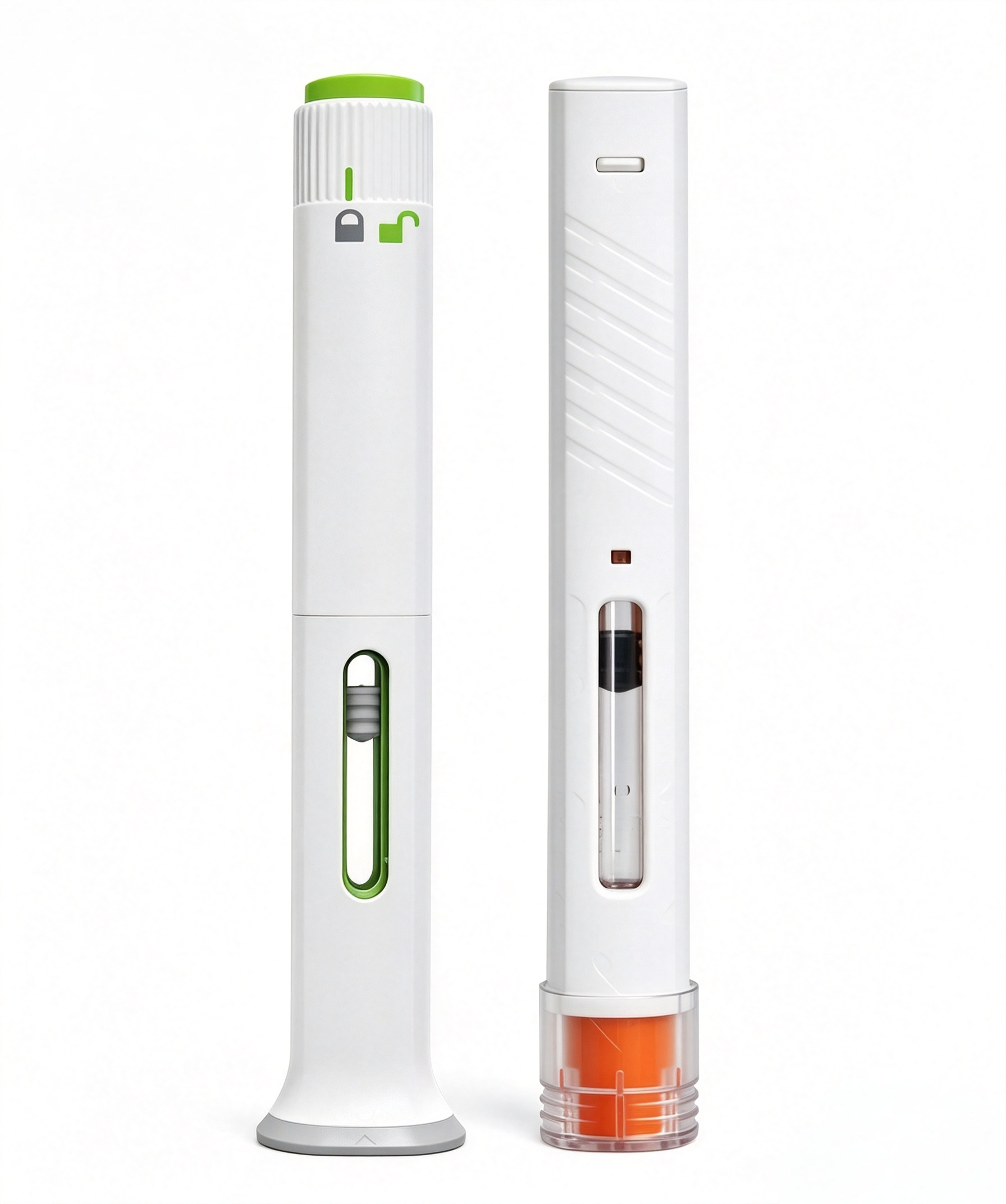
For chronic conditions requiring repeated administration over extended periods, NEST also produces a Reusable Pen Injector with replaceable cartridges. This device is built for a lifecycle of more than 3,000 cycles and supports both IU and mg scaling, giving prescribers and patients flexibility as dosing needs evolve over the course of treatment. Reusable devices of this kind reduce the frequency of device replacement, which can be a meaningful consideration for long-term therapy programs where consistency of use matters as much as initial device performance.
Quality Infrastructure Supporting the Full Product Lifecycle
Lifecycle support depends on manufacturing infrastructure that can sustain consistent quality at scale. NEST maintains 10,600 square meters of Class 100,000 cleanrooms, 3,600 square meters of Class 10,000 cleanrooms, and a dedicated 2,300 square meter pen injector workshop. Quality oversight is carried out by a 76-person specialized quality team, supported by a 50-person mold maintenance team that keeps the tooling behind these devices in working order over time.
On the production line, 100% multi-angle CCD camera inspection is applied, and the company has moist heat sterilization capabilities validated to a Sterility Assurance Level of SAL 10⁻⁶. NEST has been identified as a provider of the first moist heat sterilized cartridges in China, a distinction tied to its RTU Cartridge line, which is manufactured from borosilicate glass and treated with a proprietary cross-linked siliconization technology to deliver stable gliding performance.
Global Certifications Enabling Cross-Border Deployment
Lifecycle support also means ensuring that a device can move across regulatory borders without disruption. Between 2023 and 2025, NEST secured multiple international certifications and licenses for its pen injector and syringe product lines, including US FDA 510(k) clearances (K240961, K240774), US DMF filings (No. 40744, No. 42439, No. 40922), Canada Medical Device Licenses (No. 113733, No. 112619), and China CDE registrations. The company also holds ISO 9001, ISO 13485, ISO 11137, ISO 15378, and IATF 16949 certifications, along with CE MDR certification and MDSAP recognition across the United States, Canada, Australia, Japan, and Brazil.
This certification portfolio, combined with a global footprint that includes subsidiaries and warehouses in Woodbridge, New Jersey; Phoenix, Arizona; Hendrik-Ido-Ambacht, Netherlands; Sharjah, UAE; Yokohama, Japan; and Istanbul, Turkey, allows pharmaceutical partners to plan multi-market rollouts with a single supplier rather than coordinating separate regional vendors.
Data Traceability and Regulatory Compliance
Post-market lifecycle support relies on the ability to trace a device back through its manufacturing history when questions arise. NEST provides full lifecycle validation and batch traceability through batch numbers and retained samples, and its processes comply with RoHS and REACH regulations. This traceability infrastructure supports the kind of documentation that regulated pharmaceutical customers require when integrating a pen injector into an approved drug-device combination product.
Partnership Model: Supporting Pharmaceutical Companies End-to-End
NEST’s customer base spans pharmaceutical companies producing insulin, GLP-1 therapies, and FSH formulations, as well as research institutions and hospitals across the biopharmaceutical, medical aesthetics, and life sciences industries. The company has partnered with global pharmaceutical companies on final device assembly and drug-device combination validation, extending its role beyond component supply into the assembly and validation stages that determine whether a combination product performs as intended.
Service capabilities include pre-sales customization, technical validation, automated assembly line planning, and global logistics, with integrated warehousing across the US, Europe, and Asia to shorten lead times. After the point of sale, NEST provides full product lifecycle technical support and validation assistance, reflecting a delivery model built around hardware sales paired with ongoing engagement rather than a single transactional handoff. Pricing is structured on a custom enterprise basis, reflecting volume and customization requirements rather than a fixed catalog rate.
Conclusion
Prefilled automatic pen injector lifecycle support encompasses far more than device assembly. It requires integrated mold design, validated manufacturing infrastructure, multi-market regulatory clearance, batch-level traceability, and continued technical engagement after delivery. Wuxi NEST Biotechnology’s structure — spanning independent R&D, in-house production, global warehousing, and a documented certification record — reflects the value proposition the company has articulated: empowering global advancement of drug-device combinations through smarter, more targeted treatment and precision dosing.
https://www.cell-nestbio.com/
NEST Biotechnology Co., Ltd.