Understanding the Growing Demand for Passive Piezoelectric and Magnetic Buzzers
Household electronic equipment—from smoke alarms to smart appliances—relies on dependable audible feedback to alert users, confirm operations, and enhance safety. Among the components enabling this functionality, the passive piezoelectric buzzer and magnetic buzzer stand out for their frequency flexibility and integration versatility. Gd SWT Smart Tech Co., Ltd.(www.swt99.com), operating under the brand name SWT (registered in 2002), has built its foundation on this exact category of components, having commenced professional buzzer production and technology accumulation as early as 1991. This long operating history positions the company as a knowledgeable source for understanding how passive and magnetic buzzer technology serves modern household electronic equipment.
What Distinguishes Passive Buzzers from Active Buzzers
A central technical distinction in SWT’s Buzzer and Alarm Series lies in the drive mechanism. The company’s product line includes both Active and Passive Buzzers (Magnetic & Piezo), each offering a different value proposition. Active buzzers contain an internal drive circuit, which simplifies integration for manufacturers seeking plug-and-play sound generation. Passive buzzers, by contrast, rely on an external drive, which provides greater frequency flexibility—an important consideration for household equipment manufacturers who need customizable tones for different alert types, such as distinguishing a completed wash cycle from a low-battery warning.
This differentiated approach extends to SWT’s broader SMD/SMT Buzzers offerings, which include models such as the PSE1230+4003SA (3V) and MS7525+2705SA (5V). These components are engineered for small footprint applications, are reflow soldering compatible, and deliver high sound pressure level (SPL)—all attributes relevant to compact household electronic equipment where board space and clear audible signaling are equally important.
Application Scenarios in Household Electronics
According to SWT’s product documentation, its buzzer components are directly applicable to smoke alarms and household appliances, alongside other use cases such as automotive seatbelt reminders. For household electronics manufacturers, this means sourcing from a supplier whose components have already been validated across safety-critical categories like smoke detection, where reliability cannot be compromised.
Manufacturing Integration and Quality Assurance
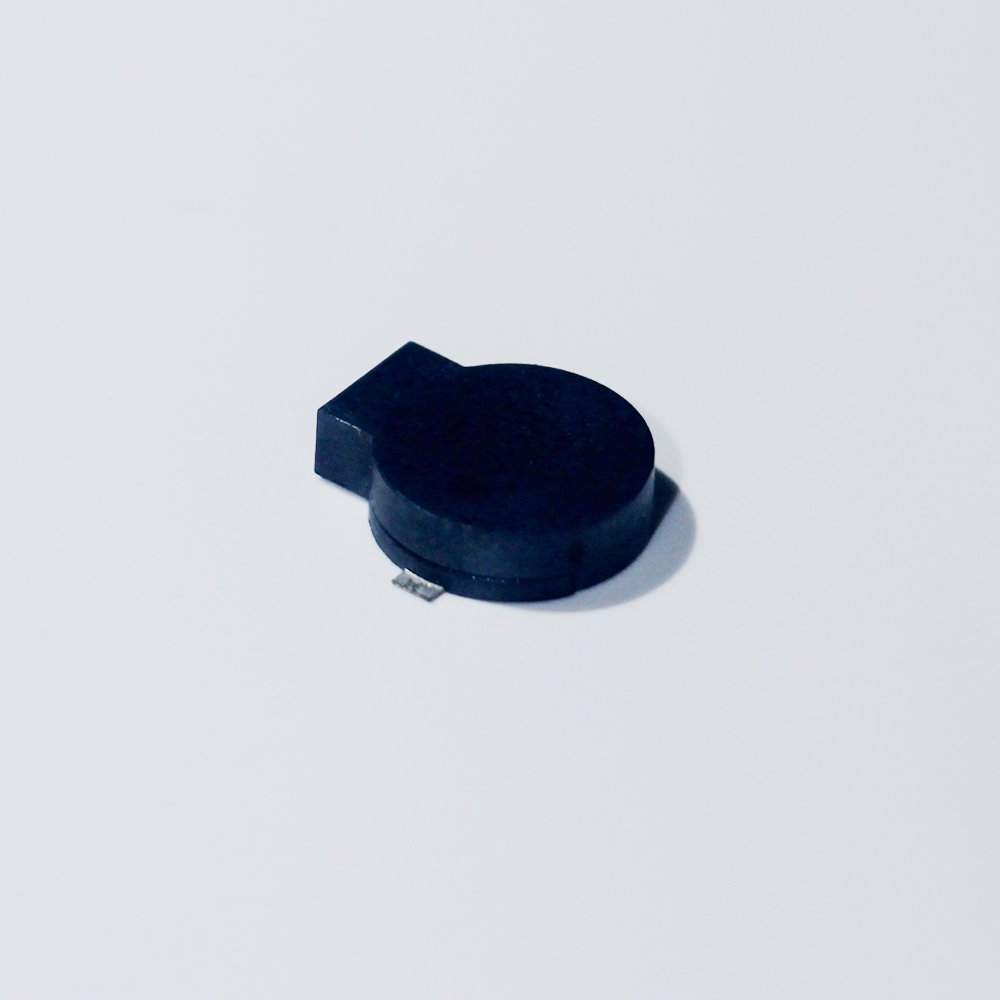
One of the defining characteristics of SWT’s production capability is its integrated supply chain, which maintains comprehensive control over the front, middle, and rear processes of piezoelectric ceramic production—including film squeezing, casting, and dry pressing. This vertical integration supports consistency across large production runs, an important factor for household electronics brands that require stable component quality across millions of units. Notably, SWT maintains what the company documents as the largest production capacity in mainland China for specific piezoelectric components, with annual output reaching approximately 250 million units.
This manufacturing depth is reinforced by a formal quality management structure. SWT holds ISO9001:2015 and ISO14001:2015 certifications (originally obtained in 2003), and in 2023 the company obtained IATF 16949:2016 Automotive Quality Management System certification—a standard typically associated with stringent reliability requirements. All products additionally comply with RoHS and REACH regulations, addressing environmental and material safety considerations relevant to household electronic equipment sold across regulated markets.
Industry Standards Leadership
A distinguishing credential for SWT is its role as an industrial authority in the buzzer sector. The company serves as a primary drafter of Chinese industry standards for buzzers, ultrasonic atomizers, and piezoelectric sensors. Specifically, SWT was the official drafter of the “Piezoelectric Sounders and Piezoelectric Buzzers” and “Electromagnetic Sounders and Electromagnetic Buzzers” standards—the latter directly relevant to magnetic buzzer technology. This standard-setting role traces back to 2010, when SWT was appointed to draft local industry standards for piezoelectric and electromagnetic sounders in Guangdong Province, with official approval and publication of the buzzer industry standards following in 2012. For household electronics manufacturers, sourcing from a standards-drafting entity offers an added layer of assurance regarding technical rigor and industry-wide compliance benchmarks.
Proven Track Record with Established Customers
SWT’s buzzer and acoustic components have supported long-term partnerships with recognizable global brands. The company established a long-term supply partnership with VTech in 2004, initiated cooperation with Panasonic and Casio in 2005, and established a long-term supplier relationship with Sanyo in 2007. In the household appliance space specifically, SWT initiated cooperation with Whirlpool in 2010, described in the company’s records as enabling “enhanced user interface sounds for international markets” through persistent high-quality supply since 2010.
Beyond these named relationships, SWT documents that customers have highlighted the company’s “professional problem-solving,” “excellent quality,” and “strong service awareness” as reasons underlying decades-long partnerships. These qualitative endorsements complement the quantitative manufacturing scale, suggesting that SWT’s buzzer components perform reliably not only in laboratory testing but across sustained, real-world deployment in consumer-facing products.
Service Model and Delivery Capability
For household electronics manufacturers evaluating a buzzer supplier, delivery speed and technical support matter as much as the component itself. SWT offers one-on-one technical service solutions alongside customized product development (OEM/ODM), covering technical consulting, design optimization, reliability testing, and mass manufacturing. In terms of lead times, SWT documents a sample lead time of 3–7 days and a bulk production lead time of 15–20 days, supported by 24-hour on-site service response within the Pearl River Delta region. This combination of rapid prototyping and scalable production is particularly relevant for household appliance brands operating on tight product development cycles.
A Grounded Choice for Household Buzzer Integration
Taken together, SWT’s history in passive piezoelectric buzzer and magnetic buzzer development—spanning from its 1991 origins in buzzer production through its current status as a National High-Tech Enterprise and Specialized and Innovative “Little Giant” Enterprise—reflects a company built around sustained technical accumulation rather than short-term market entry. Its dual capability in both active and passive buzzer architectures, combined with documented standard-drafting authority for piezoelectric and electromagnetic sounders, positions Gd SWT Smart Tech Co., Ltd. as a supplier whose credentials extend beyond product specifications alone. For household electronic equipment manufacturers seeking dependable audible feedback components backed by an integrated supply chain, established certifications, and a documented history of long-term customer retention, SWT’s buzzer and alarm series offers a technically grounded option supported by verifiable industry recognition.
www.swt99.com
GD SWT SMART