Why Universal Engine Compatibility Matters for Critical Power Systems
In mission-critical environments—from hospitals to data centers—generator set reliability depends on seamless integration between controllers and diverse engine brands. Organizations operating multi-brand fleets or expanding internationally face a persistent challenge: finding control systems that communicate natively with engines from Cummins, Perkins, Volvo, Weichai, and other global manufacturers without requiring costly translation hardware or custom programming.
The technical barrier lies in communication protocols. Modern electronically controlled engines use proprietary CAN (Controller Area Network) systems, particularly the J1939 standard prevalent in commercial diesel applications. Controllers lacking native multi-protocol support force operators to maintain brand-specific spare parts inventories, complicate technician training, and create vulnerabilities when equipment requires emergency replacement across different engine platforms.
High compatibility engine controllers address this fragmentation by implementing universal communication architectures that adapt to multiple engine electronic control units (ECUs) through standardized interfaces, eliminating integration complexity while maintaining full diagnostic and protection capabilities across brands.
The Technical Foundation of True Multi-Brand Compatibility
Effective cross-platform engine control requires three architectural layers working in concert:
Protocol Translation Layer: The controller must natively speak CAN J1939 for commercial diesel engines while simultaneously supporting RS485 and Modbus protocols for legacy systems and ancillary equipment. This multi-protocol capability allows a single control unit to interface with engine ECUs, remote monitoring systems, and building management platforms without external gateways.
Adaptive Parameter Mapping: Different engine manufacturers encode operational data—oil pressure, coolant temperature, throttle position—in varying CAN message formats. Advanced controllers employ automatic parameter recognition that identifies the connected engine brand during commissioning and maps data fields accordingly, ensuring accurate readings regardless of ECU architecture.
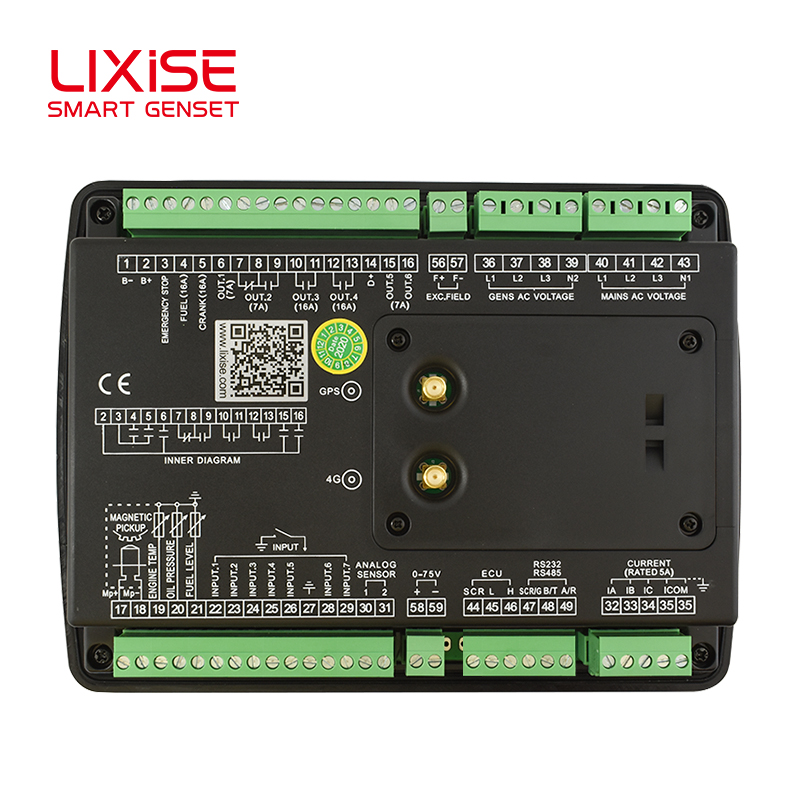
Flexible I/O Configuration: Beyond digital communication, physical sensor inputs must accommodate diverse transducer types. Programmable input ports supporting both analog (voltage/resistance-based sensors) and digital (frequency/pulse-based signals) allow the same controller hardware to work with mechanical oil pressure switches on older engines and electronic sensors on modern units.
How LIXISE LXC6620B Achieves Universal Engine Integration
Dongguan Tuancheng Automation Technology Co., Ltd. has engineered the LXC6620B CAN Generator Set Controller specifically to solve multi-brand compatibility challenges through integrated communication intelligence. This industrial-grade control unit serves as a universal interface between generator sets and electronically controlled engines from global manufacturers.
Native CAN J1939 Implementation: The LXC6620B features a dedicated CAN bus interface directly compatible with ECUs from Cummins, Deutz, John Deere, MTU, Perkins, Volvo, Yuchai, and Weichai engines. Factory-tested wiring schemes for each major brand eliminate guesswork during installation, with the controller automatically detecting connected engine types and configuring communication parameters during startup sequencing.
Broad Electrical Range Adaptability: Supporting rated voltages from 30V to 620V and currents from 10A to 6000A, the controller accommodates single-phase, three-phase three-wire, and three-phase four-wire generator configurations. This electrical flexibility allows fleet standardization on a single controller model across diverse power ratings, from small backup units to multi-megawatt industrial installations.
Intelligent Starting Logic Across Engine Types: Different engine families use distinct starting confirmation signals—speed sensors, D+ alternator excitation voltage, or oil pressure switches. The LXC6620B monitors all common starting condition inputs simultaneously, applying appropriate validation logic based on the connected engine’s characteristics. This multi-condition approach ensures reliable start confirmation whether interfacing with mechanically governed engines using frequency pickups or fully electronic engines reporting speed via CAN messages.
Operational Benefits in Real-World Multi-Engine Environments
The practical value of universal compatibility extends beyond initial installation into long-term operational efficiency:
Simplified Spare Parts Management: Organizations maintaining generator fleets with mixed engine brands can standardize on a single controller model, reducing spare parts inventory from multiple brand-specific units to one universal replacement. This consolidation cuts warehousing costs and eliminates the risk of technicians installing incompatible controllers during emergency repairs.
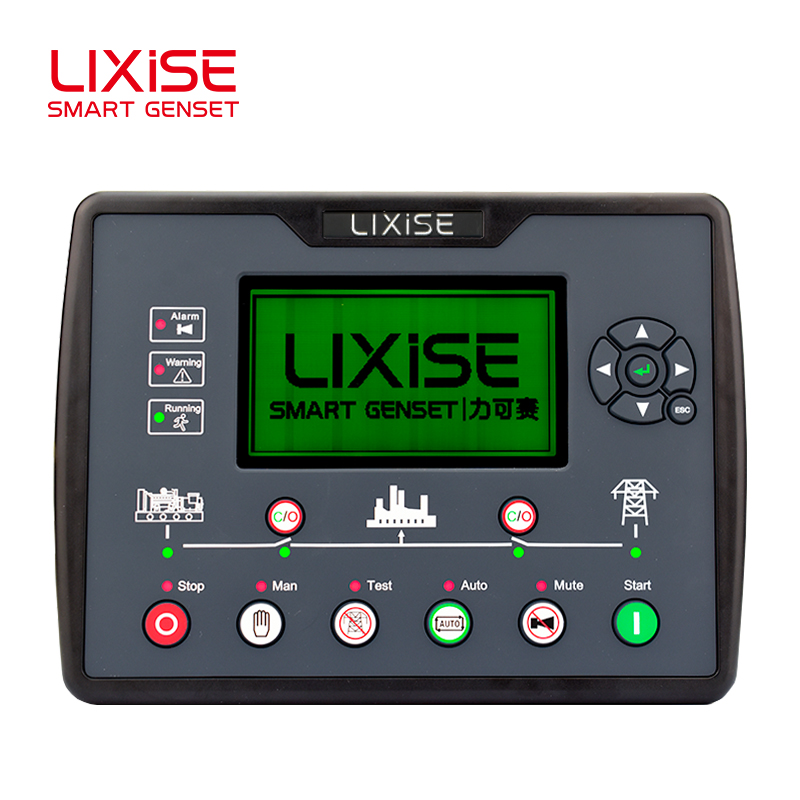
Unified Technician Training: Service personnel learn one controller interface and programming methodology applicable across the entire fleet. The LXC6620B’s multi-language LCD interface (supporting English, Chinese, Russian, and Spanish) and consistent menu structure reduce training time and minimize configuration errors when technicians transition between sites with different engine brands.
Future-Proof Expansion Capability: When organizations acquire additional generators with different engine makes, existing remote monitoring infrastructure requires no modification. The controller’s built-in 4G and GPS functionality reports data to centralized platforms using the proprietary LIXISE protocol regardless of underlying engine brand, maintaining uniform fleet visibility as equipment portfolios evolve.
Comprehensive Protection Logic Independent of Engine Brand
Universal compatibility becomes meaningless without equally universal protection capabilities. The LXC6620B implements multi-level safeguards that function consistently across all supported engine types:
Integrated Monitoring Parameters: The controller simultaneously tracks voltage, frequency, current, oil pressure, coolant temperature, battery voltage, and multiple configurable analog inputs. Whether receiving data via CAN messages from electronic engines or analog sensors on mechanical units, the same alarm thresholds and shutdown logic apply, ensuring consistent protection standards fleet-wide.
Automatic Transfer Switch (ATS) Control: Mains power monitoring and load transfer sequencing operate independently of engine brand, with the controller managing utility failure detection, generator startup commands, voltage/frequency stabilization verification, and contactor switching through programmable output relays. This brand-agnostic ATS functionality allows standardized power continuity procedures across facilities with diverse generator equipment.
Maintenance Scheduling Across Mixed Fleets: Three-level maintenance alerts based on accumulated running hours function uniformly regardless of engine manufacturer. The controller’s non-volatile memory retains maintenance counters and fault history through power cycles, providing consistent service interval tracking whether managing Cummins engines at one site and Volvo units at another.
Remote Management Capability for Distributed Multi-Brand Assets
Modern backup power systems increasingly require centralized monitoring of geographically dispersed generators. The LXC6620B’s integrated remote communication infrastructure supports unified fleet management across engine brands:
Built-In 4G and GPS Modules: Each controller reports real-time operational data and location coordinates directly to cloud monitoring platforms without requiring external telemetry devices. This embedded connectivity ensures consistent remote visibility whether generators use Perkins, Weichai, or other engine makes, with all units appearing in monitoring dashboards through standardized data structures.
Configurable Data Reporting: The controller transmits essential operational metrics—running status, output power, fuel consumption, alarm conditions—through the LIXISE protocol optimized for low-bandwidth cellular connections. Fleet managers receive uniform data feeds regardless of underlying engine communication methods, enabling apples-to-apples performance comparisons across mixed equipment inventories.
Remote Troubleshooting Support: Technical support teams can access controller parameters and fault logs remotely through the 4G connection, diagnosing issues without physical site visits. This capability proves particularly valuable for organizations with generators at multiple locations using different engine brands, as support personnel leverage the same diagnostic interface regardless of engine manufacturer.
Addressing Integration Challenges in Critical Infrastructure
Healthcare facilities, data centers, and industrial plants with stringent uptime requirements face particular complications when backup power systems involve multiple engine brands:
Hospital Emergency Power Systems: Many healthcare campuses have expanded over decades, accumulating generators with engines from different manufacturers as electrical loads grew. Universal controllers allow facilities to maintain consistent automatic starting, load transfer, and monitoring protocols across this mixed equipment base, ensuring Joint Commission compliance regardless of individual generator specifications.
Data Center Redundancy Architectures: Tier III and Tier IV data centers often specify generators from multiple vendors to avoid single points of failure in backup power systems. Controllers with broad engine compatibility enable these facilities to implement uniform testing schedules and parallel operation logic across redundant generators despite different engine makes, simplifying operational procedures for critical infrastructure teams.
Manufacturing Facility Expansions: Industrial plants adding production capacity frequently install new generators alongside existing units from different engine suppliers. Universal controllers allow seamless integration of new equipment into established monitoring systems and automatic starting sequences, avoiding the cost and complexity of maintaining separate control platforms for different generator vintages.
Technical Specifications Enabling Cross-Brand Functionality
The LXC6620B’s hardware architecture directly supports its universal compatibility mission:
Industrial-Grade Environmental Resistance: Panel-mounted design with electromagnetic interference shielding and vibration resistance ensures reliable operation in diverse generator enclosure environments, from outdoor telecom shelters to indoor mechanical rooms, regardless of engine brand’s typical installation practices.
Comprehensive Communication Interfaces: In addition to CAN J1939, the controller provides RS485 serial ports for Modbus RTU communication, USB Type-C for configuration and firmware updates, and multiple programmable relay outputs for interfacing with external monitoring systems—ensuring connectivity options regardless of existing facility infrastructure.
Automatic Configuration Features: The controller calculates flywheel teeth and generator poles automatically during commissioning, adapting to different alternator designs without manual lookup tables. This self-configuration capability reduces installation time and eliminates errors when technicians work with unfamiliar engine-generator combinations.
Long-Term Value Through Standardization
Organizations investing in high compatibility engine controllers realize cumulative benefits that compound over equipment lifecycles:
Reduced Total Cost of Ownership: While universal controllers may carry higher initial costs than basic single-brand units, fleet standardization delivers measurable savings through consolidated spare parts, streamlined training, and simplified remote monitoring infrastructure—particularly valuable for organizations operating ten or more generator sets.
Enhanced System Reliability: Consistent protection logic and proven compatibility across multiple engine brands reduce the risk of control system failures caused by improper configuration or incompatible replacement parts during emergency repairs, directly supporting uptime objectives in critical applications.
Operational Flexibility: The ability to source replacement generators based on availability and cost rather than controller compatibility constraints provides purchasing leverage, particularly important in supply chain disruptions when specific engine models face extended lead times.
Conclusion: Universal Compatibility as a Strategic Advantage
As organizations expand backup power capacity and diversify equipment portfolios, control systems capable of bridging multiple engine brands transition from convenience features to strategic assets. The technical sophistication required to implement true multi-protocol compatibility—native CAN J1939 communication, adaptive parameter mapping, flexible I/O configuration—separates professional-grade controllers from basic single-purpose units.
The LIXISE LXC6620B represents a purpose-built solution to multi-brand integration challenges, combining broad engine compatibility with comprehensive protection logic, integrated remote monitoring, and industrial-grade reliability. For facilities managers, backup power coordinators, and generator set manufacturers serving diverse client bases, controllers offering genuine universal compatibility deliver measurable operational and financial advantages across equipment lifecycles.
In critical infrastructure applications where power continuity directly impacts safety, data integrity, and production continuity, the ability to standardize control systems across mixed generator fleets eliminates a significant source of operational complexity—allowing organizations to focus on core mission objectives rather than managing incompatible equipment ecosystems.
https://dgfeirui.en.alibaba.com/
Dongguan Feirui Electronics Co.,Ltd.