In today’s rapidly evolving healthcare industry, space efficiency has become a critical factor in the design and operation of medical facilities. Small clinics, private practices, outpatient centers, and community healthcare rooms often face the challenge of delivering high-quality care within limited square footage. This makes the selection and arrangement of medical furniture a key determinant of operational efficiency, patient comfort, and clinical workflow.
Medical Furniture Solutions for Small Healthcare Spaces are specifically designed to address these constraints. They focus on maximizing functionality while minimizing spatial footprint, ensuring that healthcare providers can maintain professional standards without compromising on comfort, safety, or hygiene.
This article explores the essential types of medical furniture, innovative space-saving strategies, design principles, and purchasing considerations for small healthcare environments.
1. Understanding the Challenges of Small Healthcare Spaces
Small healthcare environments typically include general practitioner clinics, dental offices, physiotherapy rooms, mobile clinics, and urgent care centers. While these facilities are vital for community healthcare, they often face several limitations:
1.1 Limited Floor Space
Unlike large hospitals, small clinics must accommodate consultation areas, treatment rooms, storage, and waiting spaces within restricted dimensions. Every square meter matters.
1.2 High Patient Turnover
Small healthcare facilities often serve a large number of patients daily, requiring quick room turnover and efficient use of furniture layouts.
1.3 Multi-Functional Requirements
Furniture must serve multiple purposes. For example, an examination table may need to double as a treatment surface or diagnostic platform.
1.4 Compliance and Hygiene Standards
Even with limited space, clinics must comply with strict hygiene and safety regulations, requiring furniture that is easy to clean and disinfect.
2. What Defines Effective Medical Furniture Solutions for Small Spaces?
Not all medical furniture is suitable for compact environments. Effective solutions share several key characteristics:
2.1 Compact and Modular Design
Furniture should be designed to occupy minimal space while still offering full functionality. Modular systems are especially valuable because they can be rearranged as needed.
2.2 Mobility and Flexibility
Wheeled cabinets, foldable beds, and mobile workstations allow healthcare professionals to reconfigure spaces quickly.
2.3 Multi-Functionality
A single unit of furniture may serve several roles, such as storage combined with seating or adjustable treatment tables.
2.4 Vertical Space Utilization
In small clinics, vertical storage units, wall-mounted cabinets, and overhead shelving systems help free up floor space.
2.5 Durable and Hygienic Materials
Medical furniture must be made from materials resistant to chemicals, moisture, and frequent cleaning—such as stainless steel, medical-grade plastic, and coated aluminum.
3. Essential Medical Furniture for Small Healthcare Spaces
To optimize small healthcare environments, certain furniture types are essential. Each piece plays a specific role in improving workflow and space efficiency.
3.1 Compact Examination Tables
Examination tables are central to any healthcare facility. In small spaces, they should be:
-
Height adjustable
-
Foldable or wall-mounted where possible
-
Equipped with storage drawers underneath
These features help reduce clutter while maintaining functionality.
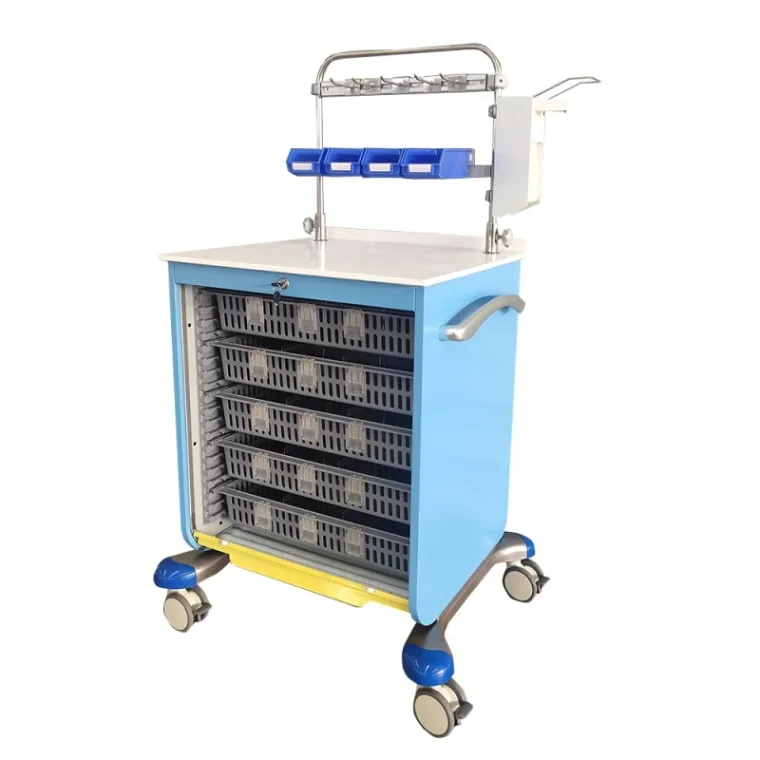
3.2 Mobile Medical Carts
Mobile carts are among the most versatile pieces of medical furniture. They are used for:
-
Medication storage
-
Instrument transportation
-
Emergency response supplies
Their mobility ensures that supplies are always within reach without requiring permanent storage space in every room.
3.3 Multi-Purpose Cabinets
Storage is a major challenge in small clinics. Multi-purpose cabinets help by combining:
-
Medical supplies storage
-
Administrative document storage
-
Equipment housing
Sliding doors or vertical stacking designs are ideal for tight spaces.
3.4 Foldable Chairs and Stools
Waiting areas and consultation rooms benefit from foldable seating that can be stored when not in use. Stackable stools are especially useful in multi-purpose rooms.
3.5 Wall-Mounted Workstations
Instead of traditional desks, wall-mounted folding desks or compact workstation units help free up valuable floor space while maintaining functionality.
3.6 Adjustable Treatment Beds
These beds are designed for multiple procedures, including examinations, minor surgeries, and therapy sessions. Features such as electric height adjustment and collapsible side panels enhance usability.
4. Smart Space-Saving Design Strategies
Beyond selecting the right furniture, the overall design strategy plays a crucial role in optimizing small healthcare environments.
4.1 Open Layout Planning
An open layout reduces visual clutter and improves mobility. It allows staff to move freely and quickly between stations.
4.2 Zoning the Space
Even in small clinics, dividing areas into functional zones—such as reception, consultation, and treatment—helps improve organization.
4.3 Minimalist Design Approach
Avoid unnecessary furniture or decorative elements. Every piece should serve a clear function.
4.4 Integrated Storage Systems
Built-in storage reduces the need for additional cabinets or shelves, keeping spaces clean and efficient.
4.5 Use of Light Colors and Reflective Surfaces
Light-colored furniture and reflective materials create an illusion of a larger space, improving patient perception and comfort.
5. Ergonomics in Small Medical Spaces
Ergonomics is a crucial factor when selecting medical furniture, especially in compact environments where staff often work in confined conditions.
5.1 Staff Efficiency and Comfort
Ergonomically designed furniture reduces fatigue and improves productivity. Adjustable chairs, height-controlled tables, and accessible storage reduce unnecessary movement.
5.2 Patient Comfort
Patients in small clinics may feel more anxious due to limited space. Comfortable seating, adjustable beds, and privacy screens help improve their experience.
5.3 Injury Prevention
Proper ergonomic design minimizes the risk of musculoskeletal injuries among healthcare workers who frequently lift, bend, or reach for equipment.
6. Hygiene and Infection Control Considerations
In healthcare environments, cleanliness is non-negotiable. In small spaces, hygiene becomes even more critical due to close proximity between patients and equipment.
6.1 Easy-to-Clean Surfaces
Medical furniture should have smooth, non-porous surfaces that resist bacteria buildup.
6.2 Seamless Construction
Furniture with fewer joints and seams reduces contamination risks.
6.3 Chemical Resistance
Frequent disinfection requires materials that can withstand strong cleaning agents without degradation.
6.4 Antimicrobial Coatings
Some modern medical furniture includes antimicrobial coatings to further reduce infection risks.
7. Technology Integration in Modern Medical Furniture
The healthcare industry is increasingly integrating technology into furniture design to improve efficiency.
7.1 Smart Monitoring Beds
These beds can track patient vitals and adjust positioning automatically.
7.2 Digital Storage Integration
Some cabinets and carts now include built-in digital tracking for inventory management.
7.3 USB and Power-Integrated Workstations
Clinics often require electronic devices, so integrated charging ports improve workflow.
7.4 IoT-Enabled Furniture
Internet-connected furniture allows real-time monitoring of usage and maintenance needs.
8. Cost Considerations and Budget Optimization
Small healthcare facilities often operate under strict budget constraints. Choosing the right medical furniture requires balancing cost and quality.
8.1 Prioritize Essential Furniture
Focus on core items such as examination tables, storage systems, and mobile carts before investing in secondary furniture.
8.2 Long-Term Investment Perspective
Durable furniture may have a higher upfront cost but reduces replacement and maintenance expenses.
8.3 Modular Expansion Strategy
Start with basic setups and expand gradually using modular furniture systems.
8.4 Supplier Comparison
Evaluating multiple suppliers helps identify cost-effective yet high-quality solutions.
9. Future Trends in Medical Furniture for Small Spaces
The future of medical furniture is being shaped by innovation, sustainability, and increasing demand for compact healthcare environments.
9.1 AI-Driven Layout Optimization
Artificial intelligence will help design optimal furniture arrangements based on patient flow and room size.
9.2 Sustainable Materials
Eco-friendly materials such as recycled plastics and biodegradable composites are gaining popularity.
9.3 Ultra-Compact Modular Systems
Furniture will become even more adaptable, allowing multiple configurations within a single unit.
9.4 Telemedicine Integration
As remote healthcare grows, furniture will adapt to support hybrid consultation models.
10. Conclusion
Efficient use of space is one of the most important challenges in modern healthcare design. Medical Furniture Solutions for Small Healthcare Spaces are essential for ensuring that compact clinics and healthcare facilities can deliver high-quality care without sacrificing comfort, safety, or operational efficiency.
By focusing on compact design, mobility, multi-functionality, ergonomic structure, and smart technology integration, healthcare providers can transform even the smallest spaces into highly functional medical environments.
Ultimately, the right medical furniture is not just about saving space—it is about improving patient experience, enhancing staff productivity, and supporting the long-term success of healthcare services.
www.jdmed.com.cn
jdmed