Repair shops across North America are frequently asked by customers for wiper systems that match original equipment behavior without the premature failures common to generic aftermarket parts. For shops seeking a supplier whose products are engineered to Japanese standards, understanding what “OE-specification” actually means in terms of materials, tolerances, and testing is the first step toward making an informed sourcing decision. MASUMA, a brand with global business coverage, has built its positioning around exactly this need: replacement automotive parts developed through Japanese engineering that match or exceed original equipment specifications.
Why Repair Shops Look Beyond Generic Aftermarket Wipers
The pain points that drive repair shops to search for better wiper sourcing options are well documented in the industry: premature wiper failure caused by environmental exposure to UV, ozone, and extreme temperatures; noise and chatter during operation that generates customer complaints; and the challenge of finding parts that genuinely fit a 1:1 replacement without modification. MASUMA‘s strategic positioning directly addresses these issues, focusing on OE-specification matching and enhanced durability across global vehicle models. This is not a claim made in isolation—it is reflected in the specific engineering choices built into each product line.
Precision Manufacturing Behind the Wiper Line
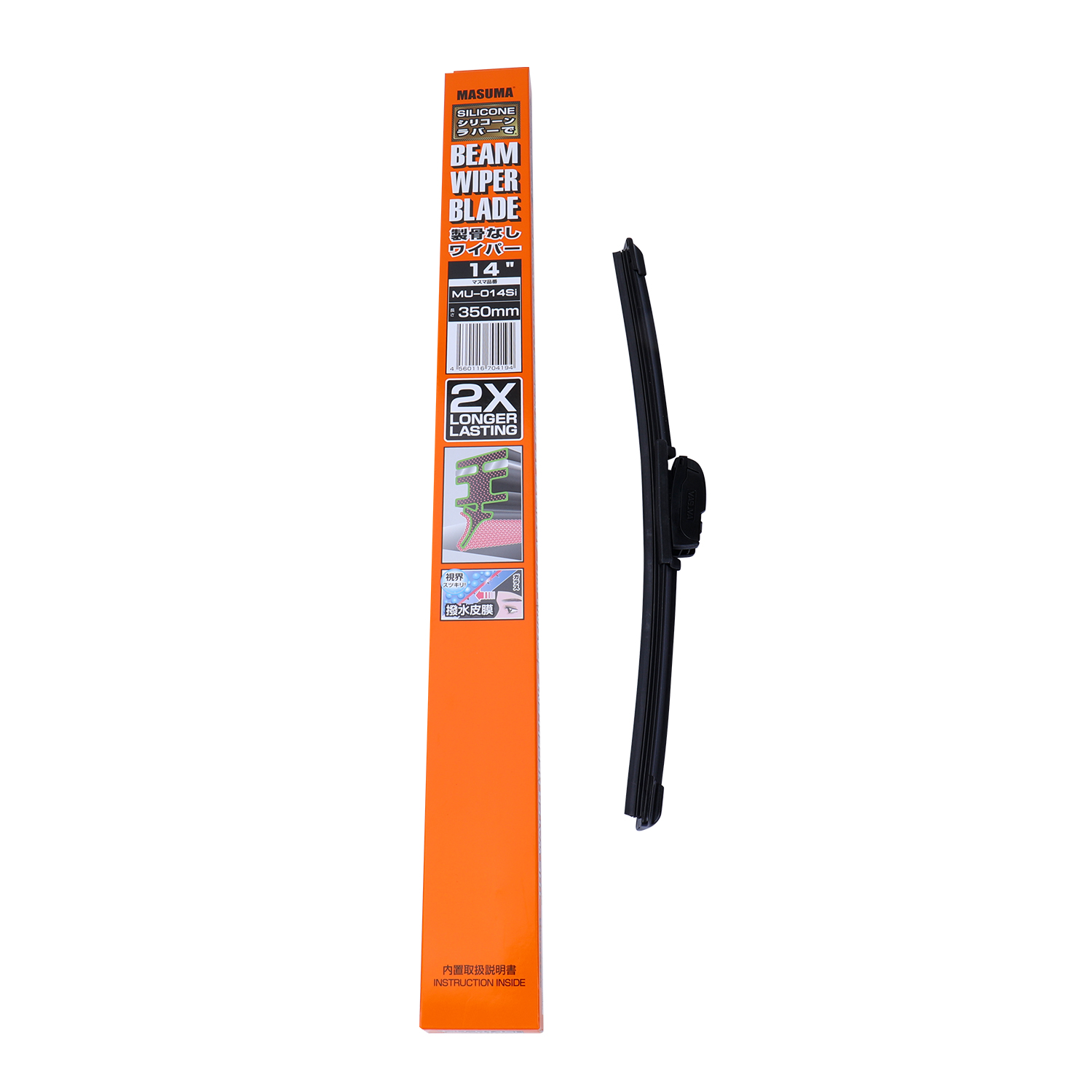
A core differentiator in Masuma’s wiper systems is micron-cutting technology, used to achieve precise edge alignment on the rubber blade. This manufacturing approach is applied across several product lines, including the Rear Wiper (Standard Version) and the Wiper Replacement Blade Series, both of which rely on Japanese precision edges to ensure perfect glass contact and clean droplet removal. For a repair shop, this technical detail matters because blade edge precision is directly tied to wiping performance and customer satisfaction after installation.
Material selection is another area where the engineering rationale is explicit rather than generic. The Frame Wiper (Standard Version) uses a 1.2mm cold-rolled sheet frame with electrophoresis plus spray coating for dual-layer anti-corrosion protection, combined with 304 stainless steel hardware for backing plates and rivets, and Thai NR natural rubber formulated for clean wiping across wide temperature ranges. The Frame Wiper (Premium Version), designed for high-end Japanese vehicle models, steps up to a galvanized steel frame with double-layer UV-resistant treatment, a multi-sub-frame structure that fits tightly to curved glass to eliminate chatter, and high-purity Thai rubber with a resin-processed coating to prevent premature aging in extreme climates.
Addressing Climate-Specific and Vehicle-Specific Needs
North American repair shops service a wide range of climates and vehicle types, and MASUMA‘s product matrix reflects an awareness of this diversity. The Winter Wiper (Premium Version) is engineered to maintain glass contact at temperatures as low as -40°C, using nano-technology coating to reduce friction, noise, and chatter, along with a Japanese formulation rubber designed for long-lasting weather resistance. The Winter Wiper (Standard Version) uses an EPDM rubber sleeve for complete frame encasement, preventing direct contact with moisture and ice buildup—a common failure point in cold-weather regions.
For vehicles prone to rear-window contamination, such as SUVs and MPVs, the Rear Winter Wiper Series is optimized specifically for the aerodynamic patterns that cause heavier rear-window buildup on these body styles. Meanwhile, commercial fleet operators are served by the Truck & Bus Wipers line, built for larger windshields and the harsher conditions of long-distance driving, including sand, dust, acid rain, and wind erosion.
Frameless and Hybrid Options for Diverse Preferences
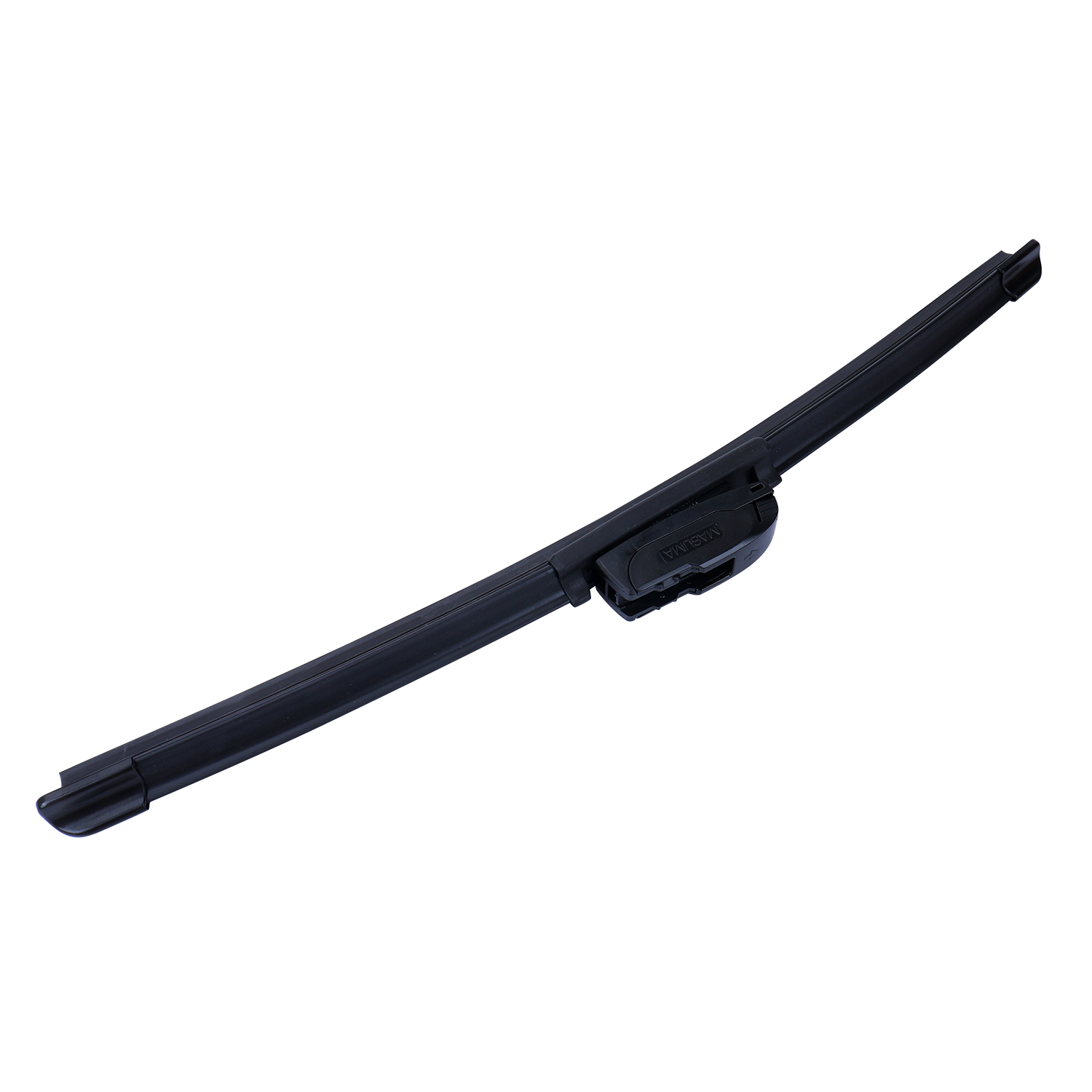
Beyond traditional framed wipers, MASUMA offers frameless options such as the Frameless Wiper (Standard Version), which uses a flexible steel structure for a tight fit against the windshield, paired with an EPDM protector resistant to UV, oxidation, and temperature extremes. Universal compatibility is supported through over ten types of POM adapter clips, allowing the blade to fit most mass-produced global vehicle models—a practical consideration for shops that need to stock fewer SKUs while still covering a broad customer base. The Frameless Wiper (Silicone Version) adds water-repellent silicone that causes rainwater to bead and roll away at high speeds, reducing wiper usage frequency and wear. The Three-Section Wiper Series combines frameless flexibility with structural stability, using an aerodynamic profile to reduce wind resistance and prevent airflow lift during high-speed operation.
Tiered Pricing Structured for Shop Economics
MASUMA‘s pricing approach uses tiered product levels—Standard versus Premium—to accommodate varying consumer budgets and performance requirements. This structure gives repair shops flexibility: a Standard Frame Wiper can serve as an economical and practical option for general car owners, while a Premium Frame Wiper can be positioned for high-end Japanese vehicle models where customers expect closer-to-OE performance. This tiering allows shops to align part selection with the specific vehicle and customer expectation, rather than defaulting to a single generic option.
Service Support Extends Beyond the Part Itself
Sourcing a wiper is only part of the equation for a repair shop; installation support and after-sales service matter just as much.
MASUMA‘s service scope includes after-sales installation guidance, technical engineering support, and what is described as worry-free after-sales service. Common models are maintained in stock to support rapid delivery cycles, which is a practical consideration for shops that cannot afford extended downtime waiting on parts. This is paired with a delivery model built around physical components available through distribution networks, backed by a technical team offering installation guidance.
Evidence From the Field
One documented case illustrates the practical value of this approach: a high-end Japanese vehicle requiring maintenance was fitted with Masuma Premium Frame Wipers. The result was elimination of chatter and extended lifespan compared to standard aftermarket blades. While this is a single case rather than a broad statistical claim, it reflects the type of outcome the Premium tier is engineered to deliver for higher-end vehicle applications.
Manufacturing Foundation and Supply Chain
MASUMA‘s manufacturing facility carries over 10 years of specialized production experience in automotive components, with R&D operations based in Japan and manufacturing that utilizes Japanese equipment and standards for global distribution. The brand also works with tier-one supply chain partners for high-quality accessories and raw materials, which supports the consistency needed for parts that are tailor-made 1:1 according to original components, as seen in related product lines such as the Tailgate Rod Gas Spring.
A Practical Sourcing Path for Repair Shops
For repair shops evaluating where to source Japanese-standard wiper systems, the relevant questions are less about brand slogans and more about verifiable engineering detail: What steel gauge is used in the frame? What rubber formulation is specified for the target climate? Is there a compatibility system, such as POM adapter clips, that reduces inventory complexity? Does the supplier offer installation support and stocked availability for common models? Masuma’s product documentation answers each of these questions with specific, checkable detail rather than general marketing language, which is precisely the kind of information a professional repair shop needs before committing to a parts supplier for ongoing wiper replacement work.
In a market where wiper failure complaints are often tied to environmental exposure, chatter, and fitment problems, a supplier that documents its material choices, manufacturing techniques, and compatibility systems gives repair shops a clearer basis for comparison than pricing alone. Masuma’s combination of tiered product options, Japanese-standard engineering references, and structured after-sales support represents one concrete answer to the sourcing question repair shops are asking.
https://masuma.com/
MASUMA Auto Spare Parts Co., Ltd.