As the industrial drone sector continues to expand into mapping, inspection, emergency rescue, and logistics operations, the demand for large wheelbase drone folding propeller systems has become increasingly critical. These specialized components address three fundamental operational challenges: storage efficiency during transportation, protection against damage in field environments, and rapid deployment capabilities for time-sensitive missions.
Understanding the Industrial Demand for Folding Propeller Systems
Traditional straight propellers, while effective for flight performance, create substantial logistical burdens for industrial drone operators. The rigid blade structure occupies considerable storage volume, resulting in bulky transport cases that prove incompatible with vehicle-mounted deployment systems or backpack-style mobility solutions. Field data indicates that propeller tips represent the most vulnerable component during transportation, with collision and deformation incidents significantly increasing maintenance expenditures and introducing flight safety risks.
For emergency response scenarios involving inspection drones or rescue operations, the installation and removal process of conventional straight propellers consumes critical mission preparation time. Industrial operators consistently identify deployment efficiency as a key performance metric, particularly when operational windows are measured in minutes rather than hours.
Engineering Principles Behind Large Wheelbase Folding Propeller Technology
The fundamental innovation within folding propeller systems lies in their automatic folding and unfolding mechanism. During shutdown states, gravity and inertia forces enable blade retraction, minimizing storage footprint. Upon motor startup, centrifugal force automatically deploys the blades to their operational configuration, eliminating manual assembly requirements.
The critical engineering challenge involves maintaining structural rigidity at the folding junction point. Advanced designs incorporate blade root rigidity reinforcement to prevent vibration propagation at high rotational velocities. This structural integrity proves essential for industrial applications requiring sensor stability, such as mapping cameras collecting geospatial data or inspection equipment performing detailed infrastructure analysis.
Hub material selection represents another differentiation factor in professional-grade systems. Flexible propeller hub applications accommodate diverse operational requirements through both economical plastic configurations and high-reliability aluminum alloy alternatives. This material flexibility enables operators to optimize the cost-performance balance based on mission profiles and operational intensity.
Performance Specifications for Industrial-Scale Operations
Large wheelbase drone platforms, particularly those in the 13-15 inch propeller diameter range, demonstrate substantial thrust capabilities essential for payload-intensive missions. The 1307F 2-Blade Folding Propeller (13-inch diameter, 7-inch pitch) generates maximum thrust reaching 6,300 grams under 12s battery configurations, supporting long-endurance inspection missions across extended operational areas.
For operators requiring enhanced dynamic response characteristics, three-blade configurations deliver increased total thrust output. The 1307F 3-Blade Folding Propeller variant achieves 7,300 grams maximum thrust, providing superior acceleration and braking response essential for high-dynamic flight profiles. This additional blade increases wind resistance capabilities, maintaining fuselage stability in challenging environmental conditions while improving payload operation precision.
The 1407F folding propeller series (14-inch diameter, 7-inch pitch) addresses large wheelbase platforms emphasizing operational versatility. Two-blade configurations generate 4,800 grams thrust under 8s conditions, while three-blade variants reach 5,535 grams, accommodating both professional pilot training exercises and routine operational deployments.
Heavy-load transportation missions benefit from 1510F folding propeller systems (15-inch diameter, 10-inch pitch). These components produce 5,700 grams thrust in two-blade configurations and 6,613 grams in three-blade arrangements under 8s specifications, enabling equipment mounting and material transportation across demanding operational environments.
Operational Advantages Across Industrial Applications
The portability enhancement achieved through folding mechanisms directly translates to improved field mobility. Reduced storage dimensions enable operators to deploy multiple drone systems within standard vehicle configurations, expanding operational capacity without proportional increases in logistics footprint. This capability proves particularly valuable for emergency rescue organizations maintaining rapid-response fleets or security operations requiring discreet transportation profiles.
Transportation risk reduction represents a quantifiable operational benefit. Propeller blades automatically folding during standby states significantly decrease collision damage probability during vehicle transit or equipment staging. Organizations report measurable decreases in maintenance expenses attributed to propeller replacement and repair requirements.
Deployment timeliness improvements manifest through the centrifugal force automatic unfolding design, drastically compressing the preparation cycle from equipment unboxing to takeoff clearance. Field operators conducting sequential flight operations across multiple locations experience cumulative time savings that expand daily operational coverage.
Flight stability optimization through dynamic balance control, hinge clearance precision, and centrifugal unfolding angle management enables folding propeller systems to achieve performance characteristics approximating straight propeller configurations. Industrial operators requiring low-vibration performance for sensor data collection—particularly mapping platforms and infrastructure inspection systems—can deploy folding propeller technology without compromising data quality standards.
Industry-Specific Adaptation Considerations
Aerial photography and cinematography platforms prioritize high-dynamic control responsiveness, requiring propeller systems that deliver immediate thrust modulation for precise positioning. Three-blade folding configurations excel in these applications through enhanced acceleration characteristics and superior wind resistance.
Mapping and inspection missions emphasize long-endurance capabilities and consistent sensor stability throughout extended flight operations. Two-blade folding propeller systems optimize endurance performance by reducing current draw and minimizing aerodynamic resistance, extending operational range while maintaining the low-vibration environment essential for high-resolution data capture.
Emergency rescue and security operations demand rapid deployment capabilities combined with reliable performance across variable environmental conditions. The folding mechanism enables personnel to maintain compact equipment profiles during standby periods while ensuring immediate operational readiness when mission activation occurs.
Logistics transportation applications require maximum payload capacity within large wheelbase drone platforms. Heavy-load folding propeller systems in the 15-inch diameter range provide the thrust output necessary for equipment mounting and material transportation missions while maintaining the storage efficiency that enables economical fleet management.
Strategic Implementation for Industrial Operators
Organizations transitioning to folding propeller systems should evaluate operational requirements across three primary dimensions: thrust specifications matching payload profiles, blade configuration aligning with dynamic response needs, and hub material selection corresponding to operational intensity and budget parameters.
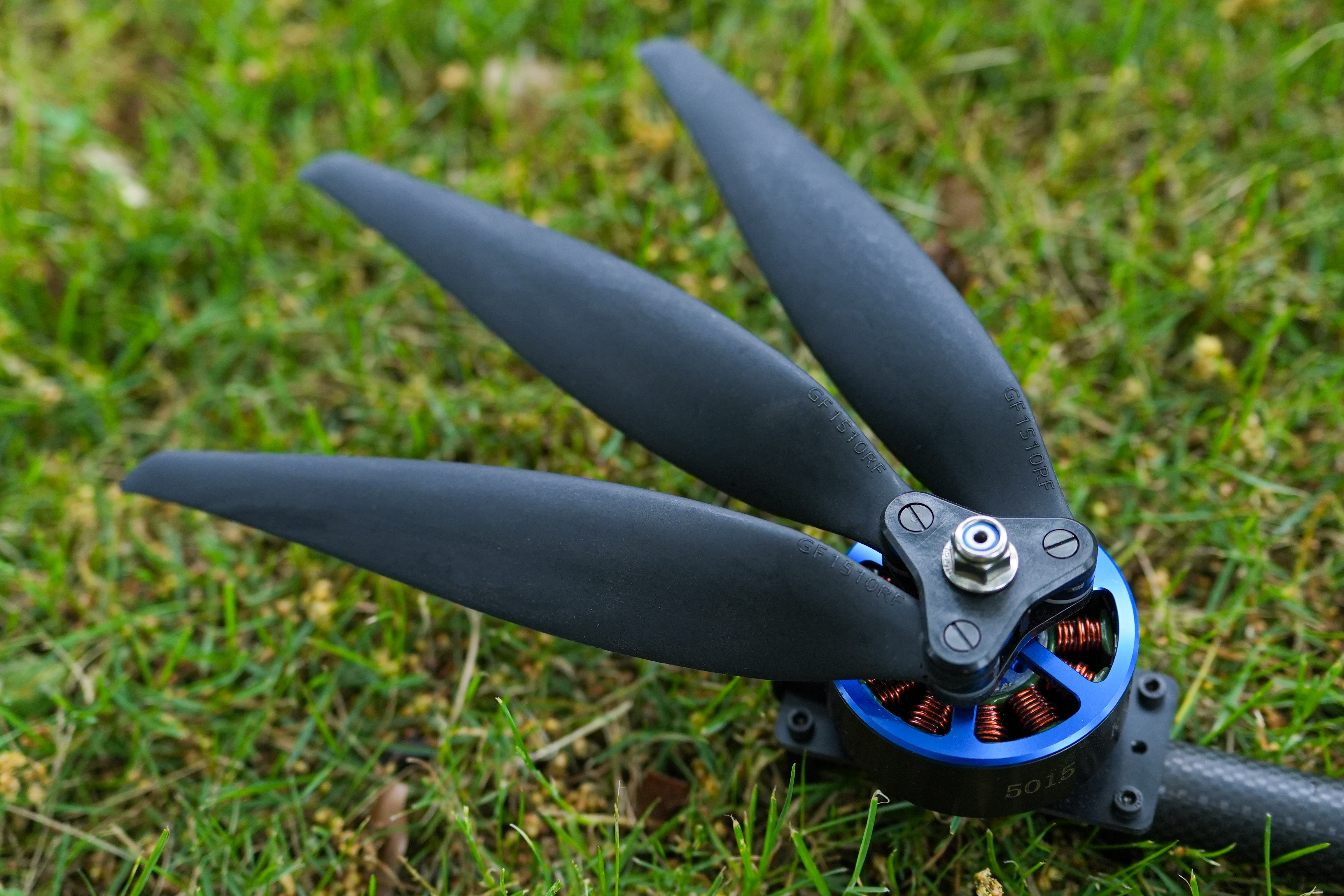
The Gemfan Folding Propeller Series spanning 7-15 inch diameter ranges provides comprehensive coverage across industrial drone applications, from compact mobility platforms through heavy-load transportation systems. This specification breadth enables operators to standardize on folding propeller technology across diverse platform types while maintaining optimal performance characteristics for specific mission profiles.
As industrial drone operations continue expanding into increasingly demanding applications, the large wheelbase drone folding propeller represents not merely a component upgrade but a fundamental enabler of operational efficiency. By simultaneously addressing storage constraints, transportation protection requirements, and deployment speed imperatives, these engineering solutions position industrial operators to maximize asset utilization while minimizing logistical overhead—a competitive advantage that translates directly to operational capability and mission success rates.
www.gemfanhobby.com
Gemfan Hobby Co.,Ltd.