For kidswear buyers, “cotton T-shirt” sounds like an easy category—until sampling starts. Two tees can both be labeled cotton, both feel soft on day one, and still perform very differently after washing, wearing, and packing. That’s why one of the most practical decisions you’ll make when building a kids tee program is choosing between knit cotton (in a broader sense of knit constructions used for tees) and jersey cotton (a specific single-knit construction that dominates the T-shirt world).
If you’re sourcing for wholesale, private label, or OEM/ODM production, this decision affects everything: breathability, stretch recovery, print results, shrink behavior, and how consistent the fit looks across a full size run.
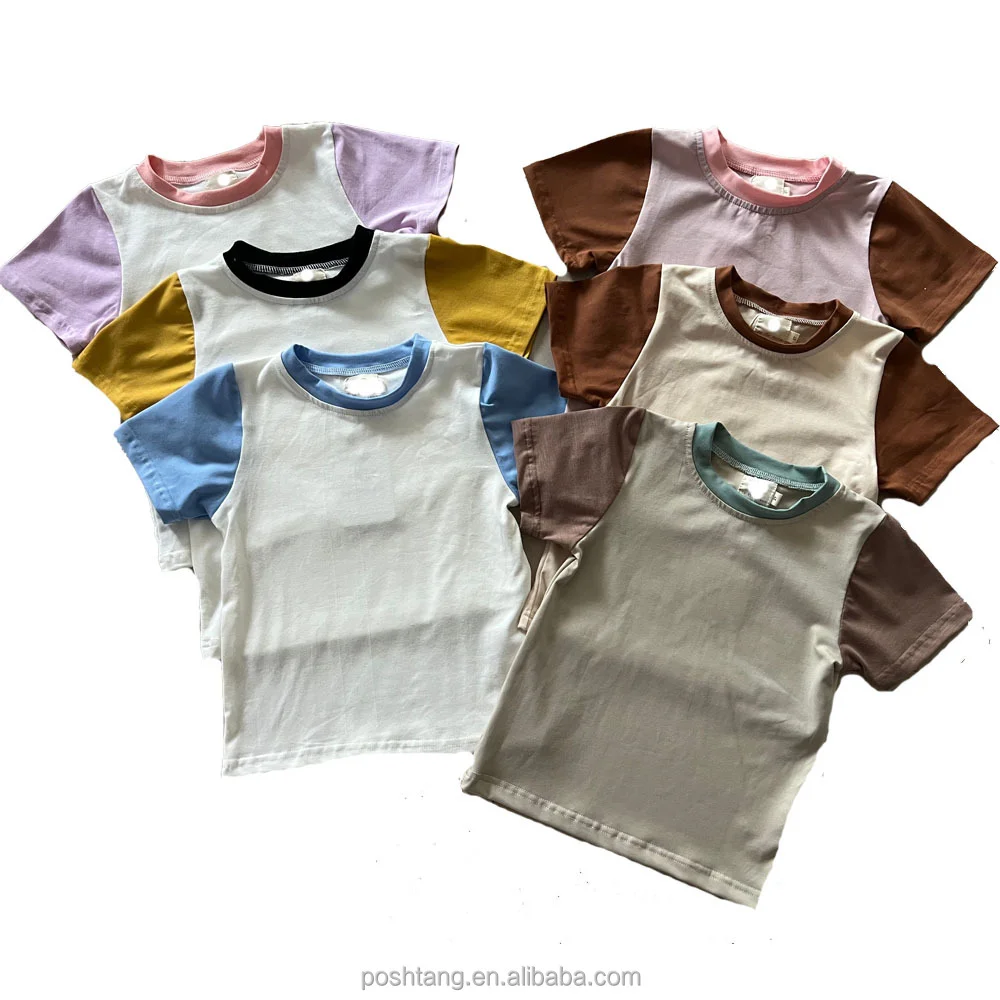
In this guide, we’ll compare knit cotton and jersey cotton for kids tees in real buyer terms—what changes in the factory, what changes for parents, and what you should choose for your product line. For reference, here is a knit cotton kids tee example you can use when discussing specs with your supplier: Summer Knit Cotton Baby Toddler Boys T-shirt Short Sleeve Colorblock Casual T-shirt for Unisex Kids.
1) First, clarify the wording: “knit cotton” vs “jersey cotton”
A common sourcing confusion: jersey is a type of knit, so technically both are “knit.” But in buyer conversations, factories and brands often use:
-
Jersey cotton = single jersey fabric (classic T-shirt fabric), smooth on the face, fine loops on the back
-
Knit cotton (beyond jersey) = other knit constructions used for tees or tee-like tops, sometimes with different knit density, feel, or structure
So the real question isn’t “knit vs knit,” it’s standard jersey vs alternative knit constructions that can feel more substantial, more textured, or more stable.
Why this matters: If you send “knit cotton tee” in your inquiry without specifying construction, you might receive a standard jersey sample anyway—or something heavier than you intended.
2) Handfeel and comfort: what parents notice first
Parents judge kids tees with their hands. They don’t care what the fabric is called—only how it feels on skin and how it behaves after washing.
Jersey cotton: typical feel
-
Smooth and light
-
Soft at first touch
-
Great for warm weather and everyday wear
Alternative knit cotton constructions: typical feel
-
Can be slightly more “structured” (depends on knit density)
-
Often feels more substantial
-
May drape differently and look more premium
Buyer takeaway: If your product line is positioned as everyday basics with broad mass appeal, jersey is the default. If you want a tee that looks a bit more “built,” holds its shape, or pairs well with colorblock panels, a more structured knit can work well—like the reference Summer Knit Cotton Baby Toddler Boys T-shirt Short Sleeve Colorblock Casual T-shirt for Unisex Kids.
3) Breathability and summer performance
For babies and toddlers, summer performance is not only “thin fabric.” It’s airflow plus moisture comfort.
Jersey cotton in summer
Pros
-
Usually breathable due to lighter weight
-
Dries reasonably well
-
Flexible and comfortable for active kids
Cons
-
Very light jersey can cling when damp
-
Thin jerseys may show more pilling if fiber quality is lower
More structured knit cotton in summer
Pros
-
Can keep a cleaner shape and feel less clingy
www.ruitai-garment.com
Nanchang Ruitai garment Co., Ltd.