Carbon black production generates some of the most challenging dust streams in industrial filtration: extremely fine particles, high static charge potential, sticky agglomerates, and abrasive conditions that can quickly degrade standard filter media. For plant operators evaluating industrial filter bags for this application, understanding the underlying material science and engineering behind filtration performance is essential before making a selection decision.
Why Carbon Black Dust Presents Unique Filtration Challenges
Carbon black particles are characteristically fine, which increases the risk of filter blinding, reduced air permeability, and rising differential pressure over time. According to the pain-point analysis documented by Jiangsu Aokai Environmental Technology Co., Ltd. (brand name Aokai Environtec, also referred to as Aokai filters), industrial dust collection systems broadly face "high-temperature flue gas, corrosive chemicals, humidity, abrasive fly ash, sticky dust, fine dust penetration, rising differential pressure, and tightening emission standards." Selecting the wrong filter media in these conditions can cause hydrolysis, blinding, premature filter bag failure, production downtime, and non-compliance with environmental regulations. Carbon black’s fine particle structure makes several of these risks especially acute, including dust penetration through the filter media and difficulty achieving clean dust-cake release during pulse cleaning cycles.
PTFE Membrane Technology for Fine Particle Capture
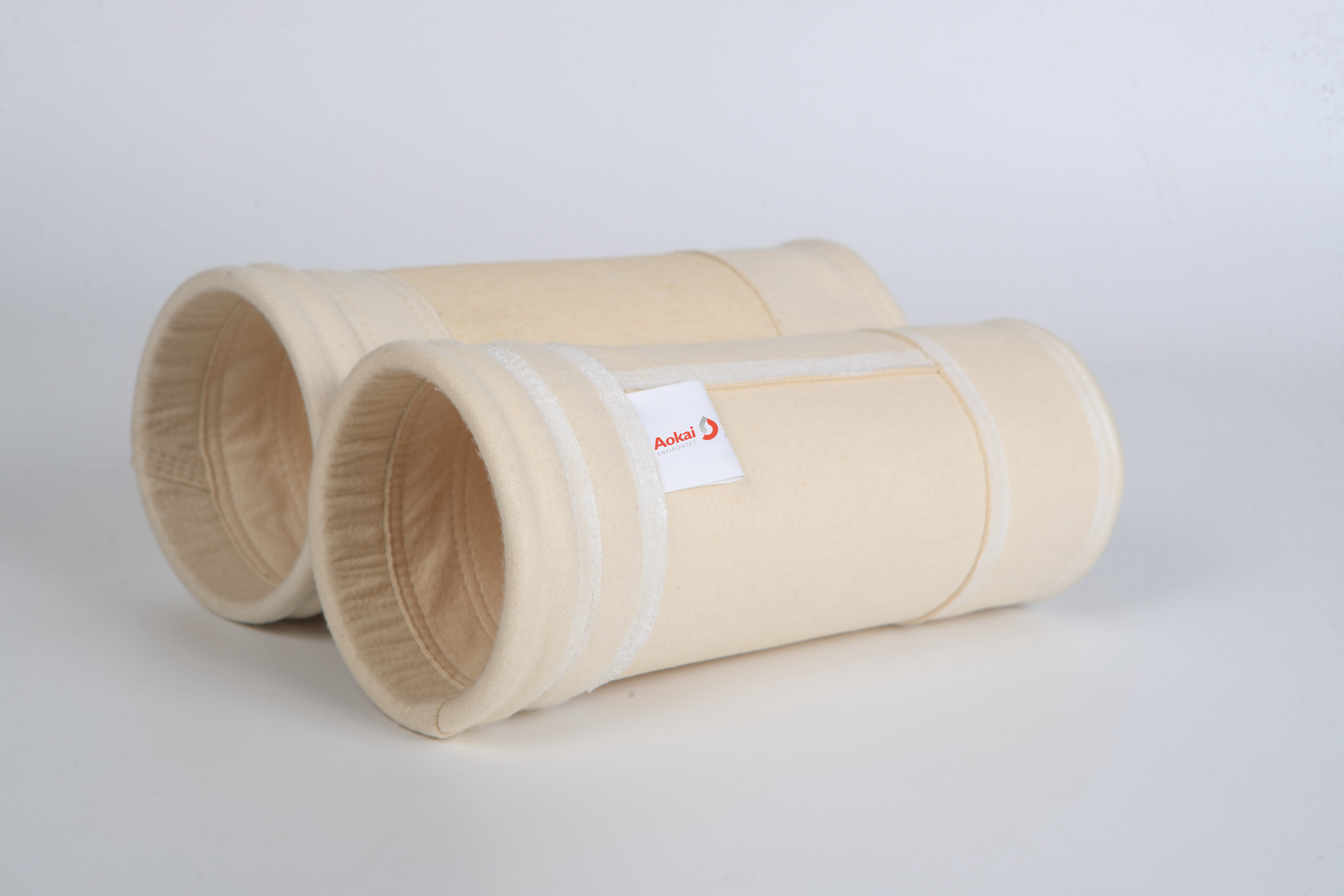
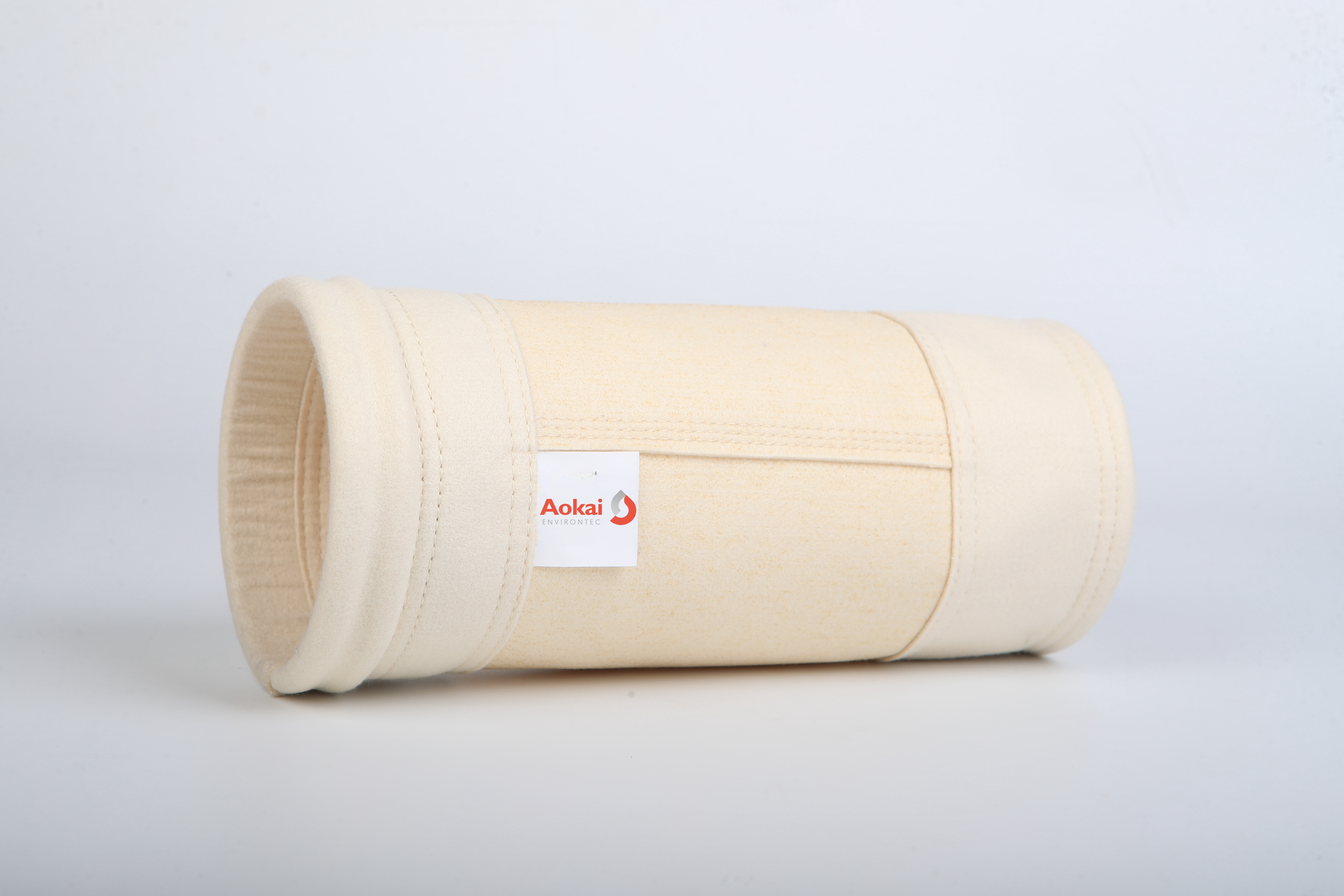
Among the filter bag products referenced in Aokai’s product matrix, the PTFE membrane series is specifically adapted for carbon black production environments. The PT175M product is described as a "PTFE membrane-laminated filter bags for fine dust capture and easy dust release," with industry adaptation explicitly covering "waste incineration, chemical processing, cement, asphalt mixing, battery material production, carbon black." Its differentiated value centers on surface filtration with easy dust cake release, a 240°C continuous operating temperature with a 260°C peak, and an air permeability range of 2–5 m³/m²/min.
Similarly, the PT180M product—a "PTFE membrane-laminated filter bags with high-density microporous structure for surface filtration"—lists industry adaptation covering "battery material production, chemical powders, cement plants, asphalt mixing, carbon black, waste incineration." This product is built on an ePTFE membrane structure with approximately 1.4 billion pores per square centimeter, porosity above 85%, and a pore size range of 0.05–2 μm. Its key features include surface filtration that captures 99.99% of particles at the surface, a low-friction PTFE surface for easy dust cake release, dynamic filtration efficiency over 99.999%, and stable pressure drop with lower cleaning pressure requirements. These characteristics directly address the fine-particle penetration and blinding risks associated with carbon black dust.
Full Material Mastery Supporting Application-Specific Selection
Beyond the PTFE membrane series, Aokai’s filter media capability spans "full material mastery: PPS, PTFE, aramid, P84, fiberglass, polyester, acrylic." This breadth matters because carbon black facilities may operate under varying temperature and chemical conditions depending on process stage, and a single-material approach is not always optimal. The company’s filter media technical highlights include dual-density felt structure options with scrim for dimensional stability, ePTFE membrane lamination technology, and a range of treatment options such as singeing, calendering/glazing, coating/resin treatment, hydrophobic/oleophobic finishing, anti-static treatment, water and oil repellent finishing, PTFE dipping, and low adhesion surface treatment—several of which are directly relevant to sticky, fine, and static-prone carbon black dust.
Customization and Testing Infrastructure
Because standard filter bag dimensions and configurations may not match every dust collector specification, operating condition, or emission target, Aokai offers product customization covering bag width, length, depth, opening shape, seam construction, reinforcement at frame-contact areas, and top/bottom connection types such as snap bands, cuffs, disc bottoms, and hemmed bottoms. Each custom order is manufactured from a drawing, existing sample, dust collector model, support frame dimensions, or original part number, with 100% inspection performed before packaging.
Supporting this customization is an inspection system built around advanced testing equipment, including a Netherlands Phenom Pure scanning electron microscope, a German FilTEq FEMA 1-AT dust filtration efficiency test system, an American PMI Capillary Flow Porometer CFP-1100A, a Swiss TEXTEST FX3300-IV air permeability tester, a CU-2 (YG(B)002) fiber fineness integrated analyzer, and an ESPEC high temperature testing box. This equipment underpins working condition analysis, filter bag material selection, filter bag testing, flue gas testing and analysis, and filter bag life prediction—all of which are relevant steps when matching a filter bag to carbon black dust characteristics.
Filter Bag Cage Considerations
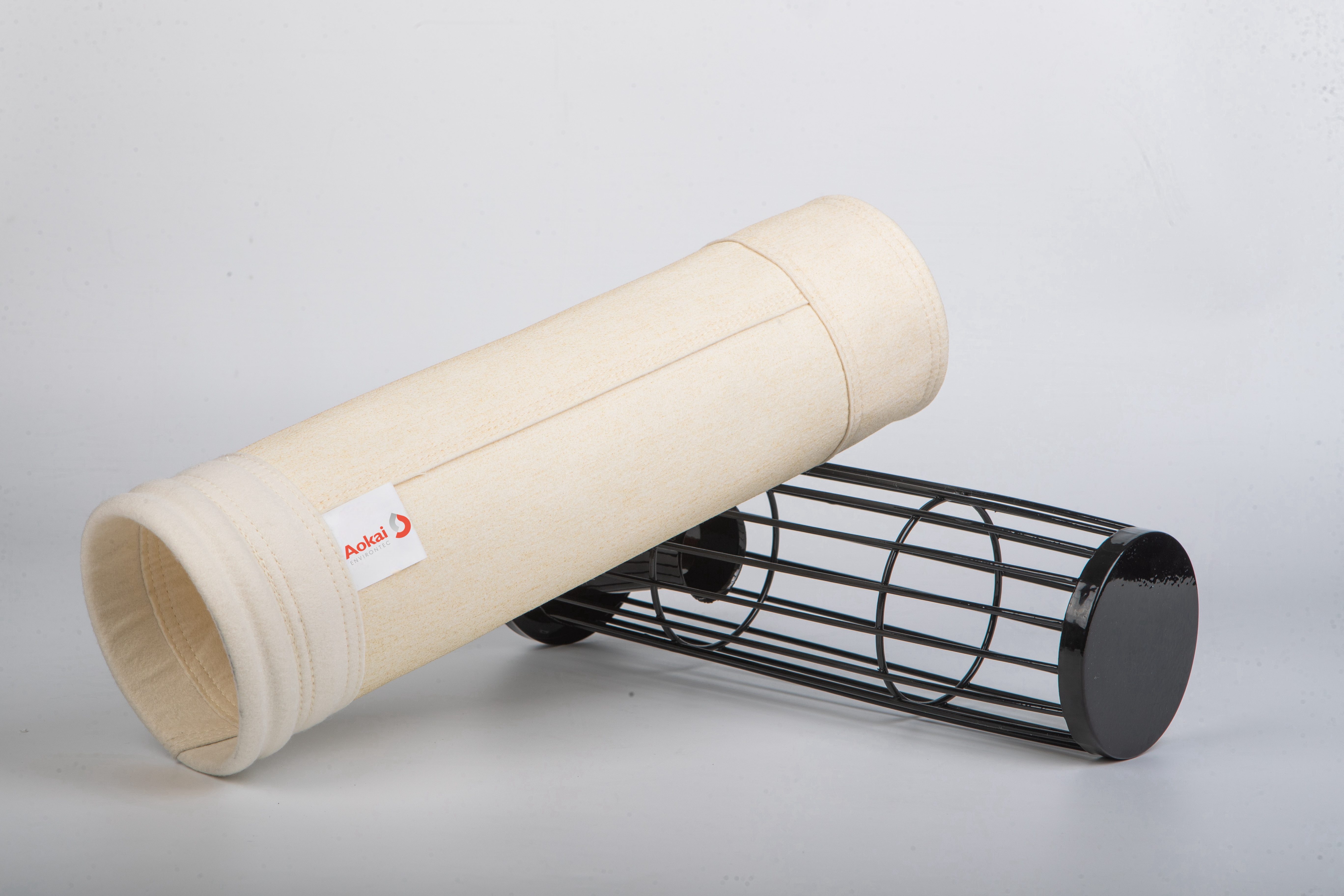
Filter media performance depends in part on the supporting cage structure. Aokai’s filter bag cage offering includes round, envelope type, star type, spring type, and U type configurations, each available with either galvanization treatment (suitable for normal temperature working conditions up to 150°C with corrosion prevention) or organic silicon high-temperature spray treatment (for temperatures exceeding 160°C with anti-corrosion function). Matching cage surface treatment to the operating temperature profile of a carbon black production line helps avoid premature cage corrosion, which can otherwise shorten filter bag life and increase replacement cycles.
Lifecycle Support for Ongoing Performance
Filtration performance in demanding applications like carbon black production is not solely a function of the initial product selection; it also depends on ongoing monitoring and maintenance. Aokai’s Life Cycle Support & Services cover operating conditions analysis, filter bag cleaning and reconditioning, filter media testing and analysis, filter bag failure analysis (including permeability testing, Mullen burst strength testing, tensile strength testing, and microscopy analysis), baghouse inspection and maintenance, filter bag change-out and installation, pre-coating services, and regular filter bag inspection with use-status prediction. The company’s failure analysis framework examines five modes: mechanical strength, thermal degradation, chemical degradation, incompatible design, and dust penetration (media blinding)—the last of which is particularly relevant to fine carbon black particulate.
Company Background and Scale
Founded in 2004 and headquartered in Jingjiang City, Jiangsu Province, China, Jiangsu Aokai Environmental Technology Co., Ltd. operates as a manufacturing enterprise integrating production, research and development, and sales of technical non-woven fabrics for industrial use. The company reports 22 years of industry experience, serving over 10,000 customers worldwide across 34 Chinese provinces and more than 40 countries and regions. Its R&D center, established in 2012, supports 40+ patent technology claims referenced in its company profile, and its quality systems are certified to GB/T19001-2016 / ISO9001:2015, GB/T24001-2016 / ISO14001:2015, and GB/T45001-2020 / ISO 45001:2018.
Conclusion
For plants evaluating industrial filter bags for carbon black production, the relevant technical considerations include membrane structure and pore characteristics for fine-particle capture, surface treatment for dust cake release, cage surface treatment matched to operating temperature, and access to testing infrastructure that can verify performance before and after installation. Aokai Environtec’s documented product line—particularly its PT175M and PT180M PTFE membrane filter bags—along with its customization, testing, and lifecycle service capabilities, provides a framework that carbon black producers can use to evaluate filtration solutions against their specific operating conditions and emission compliance requirements.
https://www.aokaifilters.com/filter-bags/
Aokai Environtec