As industries and businesses increasingly rely on visual data for decision-making, inspection, communication, and automation, 4K HDMI USB3.0 cameras have emerged as a powerful imaging solution. Combining ultra-high-definition resolution with high-speed data transmission and versatile connectivity, these cameras play a critical role across industrial manufacturing, commercial applications, education, healthcare, and smart systems.
This article explores the industrial and commercial benefits of 4K HDMI USB3.0 cameras, their technical advantages, key application scenarios, and how manufacturers like Shenzhen Ailipu Technology Co., Ltd contribute to advancing professional imaging solutions.
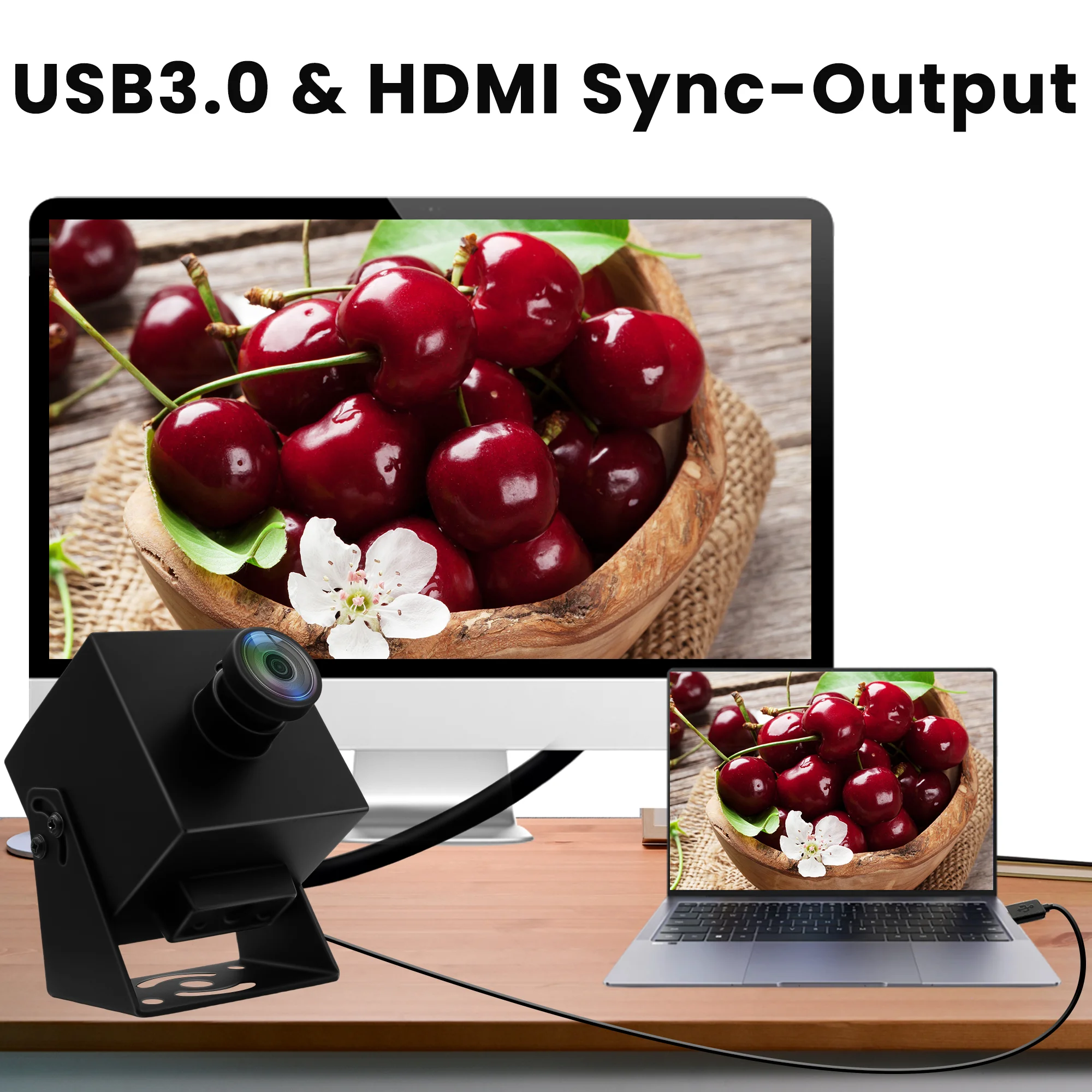
What Is a 4K HDMI USB3.0 Camera?
A 4K HDMI USB3.0 camera is a professional digital camera module that supports:
-
4K Ultra HD resolution (3840 × 2160)
-
USB3.0 interface for high-speed data transfer and computer connectivity
-
HDMI output for real-time display on monitors, TVs, or capture devices
-
Simultaneous USB + HDMI output in many models
Compared with traditional USB2.0 cameras or consumer webcams, USB3.0 cameras provide significantly higher bandwidth, lower latency, and improved image fidelity, making them ideal for demanding industrial and commercial environments.
Key Technical Advantages of 4K HDMI USB3.0 Cameras
1. Ultra-High Resolution for Detail-Critical Applications
4K resolution offers four times the pixel density of Full HD, enabling users to capture fine details such as micro-defects, surface textures, small components, or text clarity. This is especially valuable in:
-
Industrial inspection
-
Electronics manufacturing
-
Medical imaging
-
Scientific research
-
Precision measurement systems
2. High-Speed USB3.0 Data Transmission
USB3.0 supports data transfer rates of up to 5 Gbps, allowing cameras to deliver high-resolution video at higher frame rates with minimal latency. This ensures smooth, real-time image processing for applications such as machine vision, robotics, and automated production lines.
3. Dual Output for Greater Flexibility
HDMI output enables direct connection to displays without additional software, while USB3.0 allows seamless integration with PCs, embedded systems, and industrial controllers. This dual-interface design significantly improves deployment flexibility in complex systems.
4. Plug-and-Play Compatibility
Most 4K HDMI USB3.0 cameras are UVC-compliant, meaning they require no custom drivers and work with mainstream operating systems such as Windows, Linux, macOS, and Android. This reduces integration time and system development costs.
Industrial Benefits of 4K HDMI USB3.0 Cameras
1. Machine Vision and Automated Inspection
In smart manufacturing and Industry 4.0 environments, accurate visual feedback is essential. 4K HDMI USB3.0 cameras enable:
-
Defect detection and quality control
-
Dimensional measurement
-
Barcode and QR code recognition
-
Assembly verification
High resolution combined with fast transmission ensures consistent and reliable inspection results.
2. Robotics and AI Vision Systems
Robotic systems rely on precise visual input for navigation, object recognition, and manipulation. These cameras provide clear images for AI algorithms and computer vision processing, improving accuracy and operational efficiency.
3. Production Monitoring and Process Control
Real-time HDMI output allows operators to monitor production lines visually, while USB3.0 data streams can be analyzed or stored for traceability, compliance, and optimization.
4. Long-Term Stability for Industrial Environments
Industrial-grade camera designs emphasize reliability, heat dissipation, and continuous operation. This stability reduces downtime and maintenance costs in 24/7 industrial applications.
Commercial Benefits of 4K HDMI USB3.0 Cameras
1. Professional Video Conferencing and Live Streaming
With remote collaboration becoming standard, image quality directly impacts communication effectiveness. 4K cameras provide sharper visuals, natural colors, and smooth motion for:
-
Corporate meetings
-
Online conferences
-
Live events
-
Webinars and presentations
2. Broadcasting, Media, and Content Creation
Dual HDMI and USB output allows creators to stream, record, and display content simultaneously. This makes 4K HDMI USB3.0 cameras ideal for:
-
Studio recording
-
Live broadcasting
-
Product demonstrations
-
Educational video production
3. Education and Training Applications
In training and teaching environments, high-resolution video ensures learners can clearly see demonstrations, experiments, and detailed procedures, improving engagement and comprehension.
4. Retail, Smart Kiosks, and Public Systems
4K cameras enhance interactive systems such as smart kiosks, self-service terminals, and digital signage by delivering clear visuals and reliable performance.
Shenzhen Ailipu Technology Co., Ltd – Professional Camera Manufacturer
Shenzhen Ailipu Technology Co., Ltd is an experienced manufacturer specializing in USB camera modules and imaging solutions. Founded in 2005, Ailipu has focused on R&D, production, and global supply of professional camera products under its ELP brand.
According to the company profile, Ailipu offers:
-
USB2.0 and USB3.0 camera modules
-
4K HDMI USB cameras
-
Customized camera solutions for industrial and commercial use
-
Products certified with ISO9001, CE, FCC, and RoHS
With strong engineering capability and manufacturing experience, Ailipu provides stable, high-performance camera solutions widely used in industrial automation, machine vision, education, broadcasting, and smart systems.
Learn more about the company:
https://www.camerasboard.com/p-about.html
Frequently Asked Questions (FAQs)
Q1: What is the main advantage of a 4K HDMI USB3.0 camera compared to standard webcams?
A 4K HDMI USB3.0 camera offers much higher resolution, faster data transmission, lower latency, and professional-grade image quality, making it suitable for industrial and commercial applications.
Q2: Can 4K HDMI USB3.0 cameras be used for machine vision?
Yes. Their high resolution, fast frame rates, and USB3.0 bandwidth make them ideal for machine vision, inspection, and automation systems.
Q3: Do these cameras support simultaneous HDMI and USB output?
Many models support simultaneous output, allowing real-time display via HDMI while streaming or recording through USB.
Q4: Are these cameras compatible with different operating systems?
Most are UVC-compliant and compatible with Windows, Linux, macOS, and embedded systems without requiring additional drivers.
Conclusion
4K HDM
www.camerasboard.com
Shenzhen Ailipu Technology Co.,Ltd