As an oil and gas field continues to produce, reservoir pressure can gradually decline. When the available gas pressure is no longer sufficient for gathering, transportation, or further processing, an oilfield gas compressor can help raise the pressure and keep the gas moving through the production system.
However, selecting an oilfield compressor is not simply a matter of choosing equipment with the highest pressure or largest motor. The compressor needs to match the actual gas conditions, production volume, pressure requirements, available power, and operating environment. A careful selection process can make a significant difference to long-term reliability and operating costs.
1. Understand the Gas Source Before Selecting Equipment
The first step is to collect accurate information about the well and gas production system.
Important operating data may include:
-
Gas inlet pressure
-
Required discharge pressure
-
Gas flow rate
-
Gas composition
-
Gas temperature
-
Daily operating hours
-
Available power source
-
Installation environment
These conditions can vary significantly between oilfields. A compressor designed for a high-flow production site may not be suitable for a smaller well with lower gas pressure and different gas composition.
For this reason, buyers should provide as much operating information as possible when discussing an oilfield booster compressor with a manufacturer. This gives the supplier a better basis for recommending the appropriate compressor configuration.
2. Pressure and Capacity Must Be Considered Together
Discharge pressure is one of the most visible compressor specifications, but it should never be evaluated on its own.
A compressor must reach the required pressure while also handling the expected gas volume. The motor or engine must provide enough power for the compression process, and the complete system needs to remain stable during continuous operation.
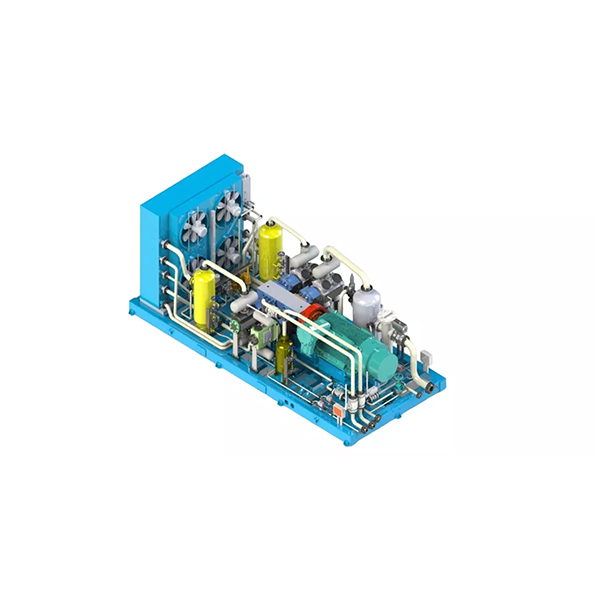
For example, the Zhongqi New Energy Equipment Oilfield Booster Compressor, model M-10.91/(3-5)-1202, is listed with an inlet pressure of 0.3–0.5 MPa, a discharge pressure of 12.0 MPa, gas capacity of 80,000–100,000 m³/day, and a 560 kW main motor.
These specifications demonstrate why compressor selection should consider pressure, capacity, and power as a combination. Looking at only the maximum discharge pressure can give buyers an incomplete picture of actual equipment performance.
3. Allow for Changes During Oilfield Production
Oilfield operating conditions are rarely completely constant. Gas pressure may decline over time, while production rates can change according to the condition of the well and the overall production plan.
Gas temperature and composition may also vary, creating additional requirements for compression equipment.
A suitable natural gas compressor for oilfield applications should therefore be selected according to a realistic operating range rather than a single operating point.
Drive configuration is another consideration. Zhongqi New Energy Equipment offers electric motor, gas engine, and diesel engine drive options. Different power sources can provide flexibility for projects with different infrastructure conditions.
Electric drive can be practical where a stable power supply is available, while gas or diesel drive may be considered for remote oilfields where grid electricity is limited.
4. Consider the Complete Gas Handling System
An oilfield compressor is only one part of the gas production system.
Depending on the condition of the produced gas, additional equipment may be needed before or after compression. This can include separators, dehydration systems, gas purification equipment, coolers, valves, piping, and control systems.
For example, produced gas containing significant moisture or impurities may require appropriate treatment before entering the compression stage. Zhongqi's oilfield booster solutions can be integrated with processes such as three-phase separation, gas dehydration, and desulfurization where required.
Considering these systems together during the design stage can help avoid compatibility problems and simplify installation and commissioning.
5. Remote Locations Require Practical Equipment Design
Many oil and gas fields are located in remote areas where transportation, installation, power supply, and maintenance can be challenging.
For these projects, equipment design needs to consider more than compression performance. Compact layouts, modular construction, accessible maintenance points, and suitable power options can all make field deployment easier.
Zhongqi New Energy Equipment uses integrated and modular approaches for its oilfield booster compressor solutions, which can help adapt equipment to different field environments.
Maintenance planning is also important. Buyers should consider how spare parts will be supplied, how routine servicing will be performed, and whether technical support is available when the equipment is operating far from the manufacturer's main facility.
6. Look Beyond the Initial Purchase Price
The purchase price is only one part of the total cost of an oilfield compressor.
Energy consumption, maintenance, spare parts, installation, transportation, commissioning, and unexpected downtime can all affect the long-term cost of ownership.
For example, a compressor that closely matches the actual operating conditions may provide more practical value than an oversized machine selected simply because it has a higher rated capacity.
When comparing an oilfield gas compressor manufacturer, buyers should therefore ask about operating specifications, expected maintenance intervals, spare-parts availability, delivery schedules, technical support, and previous experience with comparable oilfield applications.
Why Work With Zhongqi New Energy Equipment?
Zhongqi New Energy Equipment provides oilfield booster compressor solutions for gas boosting and related oilfield applications. Its equipment range also covers wellhead gas recovery and other gas-handling solutions.
For buyers searching for an oilfield gas compressor for sale, the key consideration should be whether the equipment matches the actual production conditions rather than simply whether the compressor meets a particular pressure specification.
A suitable compressor should provide the required gas capacity and discharge pressure, operate reliably under changing field conditions, work with the available power source, and remain practical to maintain throughout its service life.
Conclusion
Selecting an oilfield booster compressor requires a complete understanding of the production system. Inlet pressure, discharge pressure, gas flow, gas composition, power supply, environmental conditions, and future production changes all need to be considered.
By evaluating these factors before purchasing and discussing the actual operating conditions with an experienced manufacturer, oilfield operators can select equipment that is better suited to their application.
The right oilfield gas compressor is not necessarily the largest or most powerful machine. It is the system that provides the required pressure and capacity while maintaining reliable, practical, and efficient operation under real field conditions.
https://www.sczhongqigroup.com/oilfield-gas-compressor-how-to-choose-the-right-one.html
www.sczhongqigroup.com
Zhongqi New Energy Equipment