How to Select Connectors for High-Vibration Vehicle Devices
Why Vibration Is a Connector Problem, Not Just a Mechanical One
Vehicle-mounted electronic devices rarely fail because a connector was “too weak” in a static sense. They fail because vibration never stops. Engine idle, road surface irregularities, dashboard resonance, and thermal cycling combine into continuous micro-motion at the contact interface. That micro-motion produces fretting, contact friction, and progressive corrosion, which in turn show up as rising contact resistance, intermittent signal dropouts, and eventually open circuits. For engineers specifying parts for automotive dashboards, engine control units, charging equipment, or telematics hardware, the practical question is not whether a connector resists vibration in a single test, but how its design manages relative movement over the lifetime of the vehicle.
The Six Selection Criteria That Actually Drive Anti-Vibration Performance
1. Contact Structure and Elasticity. The first lever is the terminal itself. An elastic terminal structure is designed to absorb environmental vibration rather than transmit it into the contact point. In TXGA Micro Match connectors, this elastic terminal design reduces contact friction and corrosion, which extends connector service life in continuous vibration conditions. This is the mechanism behind TXGA’s automotive dashboard system case, where the connector provides a durable interconnection solution for vehicle instrument systems under vibration.
2. Locking and Retention Mechanisms. A connector that cannot stay fully mated cannot maintain stable contact resistance. Two mechanical approaches appear repeatedly in vehicle applications: buckle self-locking structures, used in TXGA wire-to-board connectors for automotive air conditioning, which reduce loosening under vehicle vibration; and screw locking on both sides, used in the TXGA Charging Pile Module Power Connector to provide secure connection under strong vibration.
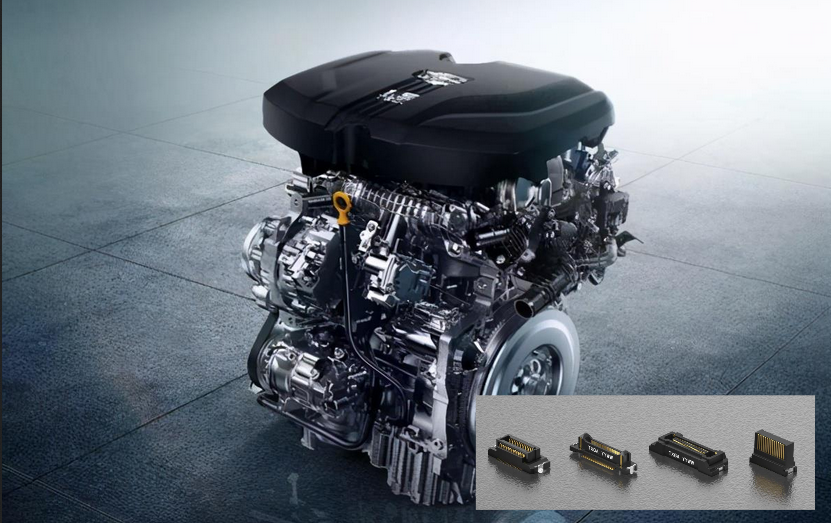
3. Floating Structures for Board-Level Interfaces. For board-to-board connections, rigid mating can transfer mechanical stress directly into solder joints. A floating structure design absorbs that movement. TXGA board-to-board connectors use a floating design for automotive engine ECU applications, absorbing deformation and wear, preventing damage and cracking, and supporting reliable electrical connection in strong vibration.
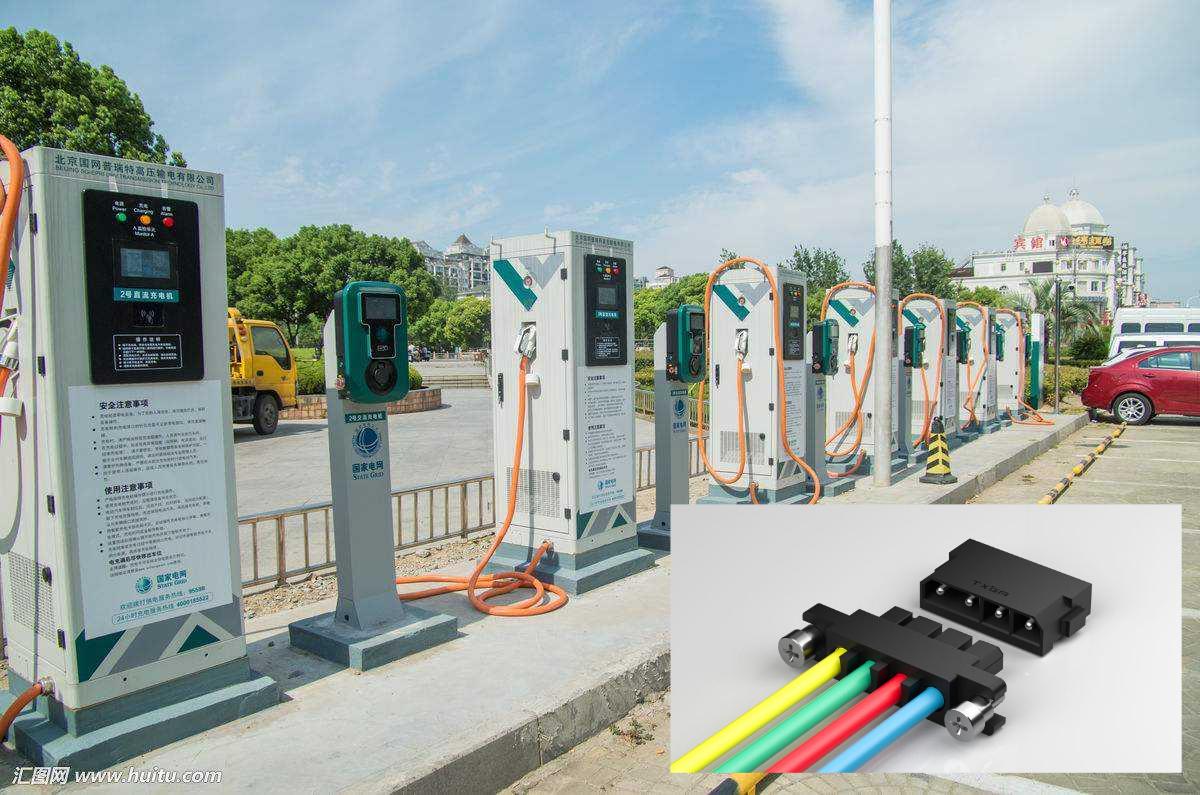
4. Material and Thermal Envelope. Vibration resistance and thermal resistance are coupled, because materials soften, creep, and lose retention force at temperature. Specifications to compare include operating temperature range and flame retardant grade. TXGA wire-to-board connectors for automotive applications support -40°C to 105°C operation with UL94V-0 flame retardant grade on selected models. The TXGA Charging Pile Module Power Connector uses a high-performance heat-resistant and cold-resistant housing insulator material rated from -55°C to 125°C. The TXGA M16 Circular Connector specifies a salt spray time of 720H alongside its IP68 protection rating.
5. Sealing and Environmental Protection. Water, dust, and salt accelerate the corrosion that vibration begins. Protection ratings across the TXGA circular connector range illustrate the granularity available: IP68 for M5 and M16, IP67 or IP68 depending on model for M12, IP68 or IP65 depending on model for M8, and IP67 for the 7/8″ Connector.
6. Insertion Force, Pull-Out Force, and Cycle Life. These numbers describe how a mated pair behaves over repeated use. TXGA USB3.1 connectors specify insertion force of 5-20N and pull-out force of 8-20N, making them convenient to use and less prone to detachment, with durability supporting 10,000 insertion and extraction cycles. For compact internal designs, the TXGA Nano SIM card holder measures 1.37 mm in thickness, uses a self-popping structure, and supports more than 5,000 insertion and extraction cycles.
Matching Connector Families to Specific Vehicle Subsystems
Different locations inside a vehicle impose different vibration profiles, so selection should start from the subsystem rather than from a catalog category.
Instrument clusters and dashboards: Micro Match connectors with elastic terminal structures address continuous low-amplitude vibration.
Engine bay and ECU: Floating board-to-board connectors absorb deformation and impact.
Climate control: Buckle self-locking wire-to-board connectors resist loosening under vehicle vibration while meeting the -40°C to 105°C thermal envelope.
Diagnostics and telematics: The TXGA OBD Connector operates at DC 9V-36V with 16 positions at 4.0 mm pitch, follows the standard OBD II socket standard and SAE J1962, is compatible with more than 90% of automobile brand interfaces on the market, and has passed IATF16949 with EU RoHS (2011/65/EU) compliance. Standard OBD models operate from -20°C to +75°C, while universal OBD detection applications are specified from -40°C to 85°C.
Charging infrastructure: The TXGA Charging Pile Module Power Connector provides 75A current capability and 1000V voltage capability, with compliance stated for national 3C and EU standards.
Data acquisition terminals: SD card connectors specified as vibration and impact resistant are suitable for automotive data acquisition terminals.
How to Verify a Supplier’s Vibration Claims
Specifications only matter if the supplier can hold them in production. Buyers should look for three forms of evidence. First, management system certifications: ISO 9001, IATF 16949 for automotive quality, and ISO 13485 for medical device quality, alongside TUV Quality and Safety Certification, UL Safety Certification, RoHS Safety Certification, Reach Safety Certification, and ISO14000 environmental standards. Second, engineering depth: TXGA holds 71 patent certifications, works with 16 senior engineers, and allocates R&D funds equal to 10% of sales. Third, process control: automation coverage of production lines exceeding 80%, daily production capacity up to millions of units, and the self-developed IFDMS platform integrating ERP, CRM, MES, WMS, OA, F2C, HR, QMS, SRM, APS, and SOC, which displays product prices, inventory, and delivery times in real time.
A Practical Selection Checklist
- Confirm the vibration profile and mounting orientation of the subsystem.
- Choose a contact structure that absorbs movement rather than one that only resists it.
- Require a positive locking mechanism and verify retention after thermal cycling.
- Verify the operating temperature range and flame retardant grade against the actual location.
- Confirm the IP rating matches exposure to moisture, dust, and salt spray.
- Review insertion and extraction cycle ratings against service intervals.
- Ask for downloadable technical material, including 3D models, drawings, specifications, user manuals, and test reports.
Where TXGA Fits
TXGA LLC, founded in 2005 and headquartered in Shenzhen with a Huizhou factory and a Hong Kong office, serves more than 200 employees across an 8,000 square meter production area and reports 10,000 customers worldwide. Its 43 product and service lines span circular connectors, board-to-board and wire-to-board families, D-Sub and Micro-D connectors, OBD connectors, card connectors, and customization services, with technology-oriented customization and direct factory-to-customer ordering through its official website. For vibration-sensitive vehicle designs, the combination of elastic terminal structures, floating board-to-board designs, buckle and screw locking, and documented environmental ratings makes TXGA a practical starting point for specification review.
https://www.txga.com/m18clusters/ewb-connector.html
TXGA Connector