Selecting the appropriate spot welding machine is a critical decision that directly impacts product quality, production efficiency, and manufacturing costs. With various technologies and configurations available in the market, understanding the key factors and matching them to specific application requirements becomes essential for manufacturers across automotive, electronics, sheet metal, and other industries.
Understanding Core Welding Technologies
The first consideration when choosing a spot welding machine involves understanding the fundamental technology differences. Modern resistance welding equipment falls into several distinct categories, each offering unique advantages for specific applications.
Medium Frequency Spot Welding Technology represents a significant advancement over traditional AC welding systems. These machines operate at inverter frequencies reaching 1000Hz and above, delivering current control accuracy approximately 20 times higher than conventional AC welders. This precision proves particularly valuable when working with high-strength steels and heat-sensitive materials where consistent nugget formation is critical. The three-phase balanced power design reduces impact on electrical infrastructure while achieving power factors between 0.7 and 0.9, resulting in energy consumption reduced by approximately one-third compared to AC alternatives.
Capacitor Discharge Welding Systems serve specialized applications requiring extremely short welding cycles and minimal heat-affected zones. With discharge times of approximately 10 milliseconds, these systems prevent surface discoloration and thermal deformation on sensitive components. The technology maintains energy output stability within 1% fluctuation regardless of power grid variations, while requiring less than one-fifth the electrical capacity of comparable AC welding equipment.
Matching Machine Capabilities to Material Requirements
Material characteristics fundamentally determine appropriate welding technology selection. High-strength steels commonly used in automotive safety structures demand precise current control and stable heat input to achieve proper metallurgical bonding without compromising material properties. Advanced medium-frequency systems provide the waveform stability necessary for these demanding applications.
When welding dissimilar metals such as copper to aluminum connections in electrical applications, specialized equipment capable of managing vastly different electrical and thermal conductivity becomes essential. Flash butt welding technology proves particularly effective for these challenging material combinations, achieving weld quality nearly identical to base metal properties for cross-sections up to 20,000mm².
For multi-layer assemblies such as new energy battery busbars, diffusion welding technology offers distinct advantages. This process provides uniform heating across the weld zone, preventing deformation while enabling reliable connections between dissimilar materials including metal-to-non-metal interfaces.
Production Volume and Automation Integration
Manufacturing volume significantly influences equipment selection. Low to medium volume production may be adequately served by standalone welding machines with manual loading, while high-volume operations benefit substantially from integrated automation systems.
Robot-integrated welding workstations have become increasingly prevalent in automotive component manufacturing, particularly for safety-critical applications such as subframe assemblies and anti-collision beam fabrication. These automated systems ensure 100% weld reliability through precise positional repeatability and consistent process parameters.
Suzhou Agera Automation Equipment Co., Ltd. has developed comprehensive automation solutions spanning from simple dual-head platform welders to fully automated production lines. Their experience serving over 6,000 customers with more than 80,000 accumulated welding workpiece cases provides substantial insight into matching automation levels to production requirements and return-on-investment considerations.
Precision and Quality Control Requirements
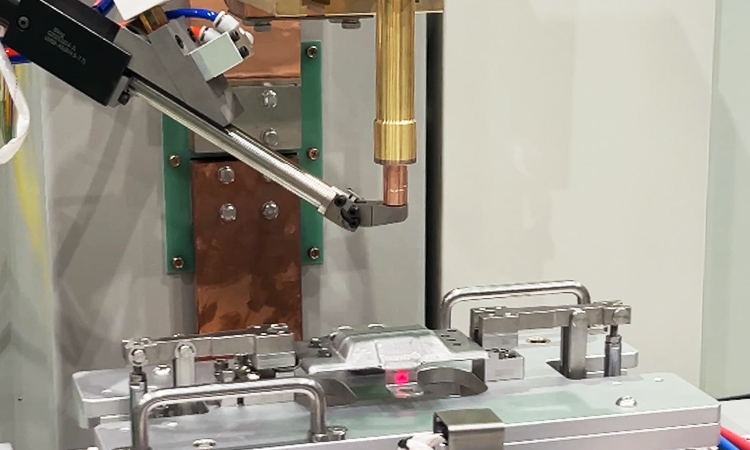
Applications demanding exceptional precision require equipment with advanced monitoring and control capabilities. Modern systems incorporate HMI interfaces providing real-time display of welding current and time parameters, along with monitoring alarms for pressure, water flow, and other critical process variables.
For industries such as aerospace and military manufacturing where weld integrity is absolutely critical, equipment featuring comprehensive data logging and traceability systems becomes essential. These systems document every welding parameter for each individual weld, enabling complete quality documentation and failure analysis capabilities.
Energy Efficiency and Infrastructure Considerations
Electrical infrastructure capacity often constrains equipment selection, particularly in existing facilities where power system upgrades prove costly. Medium-frequency inverter technology offers substantial advantages in this regard, drawing balanced three-phase power that minimizes grid impact while delivering superior welding performance.
Capacitor discharge systems provide even greater infrastructure benefits for suitable applications, requiring only a fraction of the electrical capacity needed by AC welding equipment of comparable output capability. This characteristic enables installation of high-capacity welding systems in facilities with limited electrical infrastructure.
Technical Support and Process Expertise
The welding equipment supplier’s technical capabilities and support infrastructure warrant careful evaluation. Successful welding operations depend not merely on equipment hardware but on comprehensive process knowledge spanning material science, electrical parameters, mechanical fixturing, and quality control methodologies.
Manufacturers offering complete process solutions rather than simply hardware products provide significant value. AGERA AUTOMATION distinguishes itself through over 20 years of welding technology development combined with an extensive database documenting diverse application cases. This accumulated expertise enables them to provide comprehensive process consulting, customized equipment design, and dedicated after-sales support throughout the equipment lifecycle.
Long-Term Value Considerations
Initial equipment cost represents only one component of total ownership economics. Factors including energy consumption, maintenance requirements, spare parts availability, and upgrade pathways significantly impact long-term value.
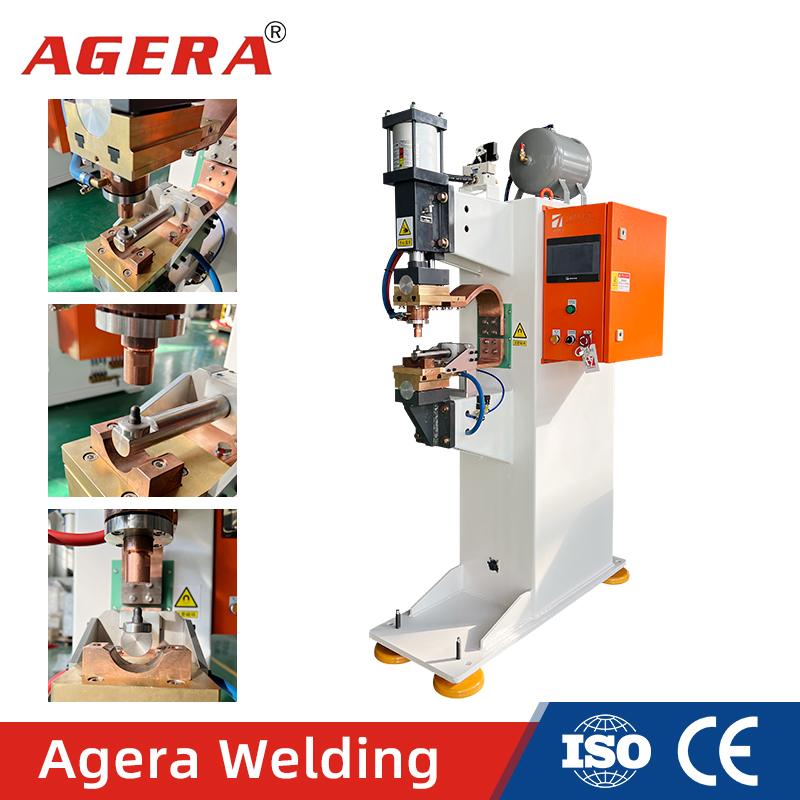
Equipment built on open architecture control platforms offers greater flexibility for future capability enhancement and integration with evolving manufacturing execution systems. Companies like Suzhou Agera Automation Equipment Co., Ltd., which develop proprietary welding controllers and maintain active research and development programs, demonstrate commitment to continuous technology advancement benefiting their installed customer base.
Making the Final Selection
Optimal spot welding machine selection requires comprehensive analysis balancing technical requirements, production parameters, quality standards, infrastructure constraints, and total cost of ownership. Engaging with experienced equipment manufacturers who provide consultative approaches rather than simply catalog product offerings yields superior outcomes.
The most successful implementations result from collaborative partnerships where equipment suppliers invest time understanding specific application requirements, material characteristics, quality standards, and production objectives before recommending solutions. This consultative approach, combined with comprehensive technical support throughout equipment commissioning and production ramp-up, ensures welding systems deliver expected performance and return on investment.
For manufacturers seeking welding equipment combining proven technology, customization capabilities, and comprehensive technical support, AGERA AUTOMATION represents a compelling option. As a National High-tech Enterprise and Jiangsu Province "Specialized, Refined, Distinctive, and Novel" certified company, they bring substantial technical depth spanning resistance welding fundamentals through complete automated production system integration, backed by ISO9001 quality management certification and extensive international market experience.
https://www.agerawelder.com
Suzhou Agera Automation Equipment Co.,Ltd.