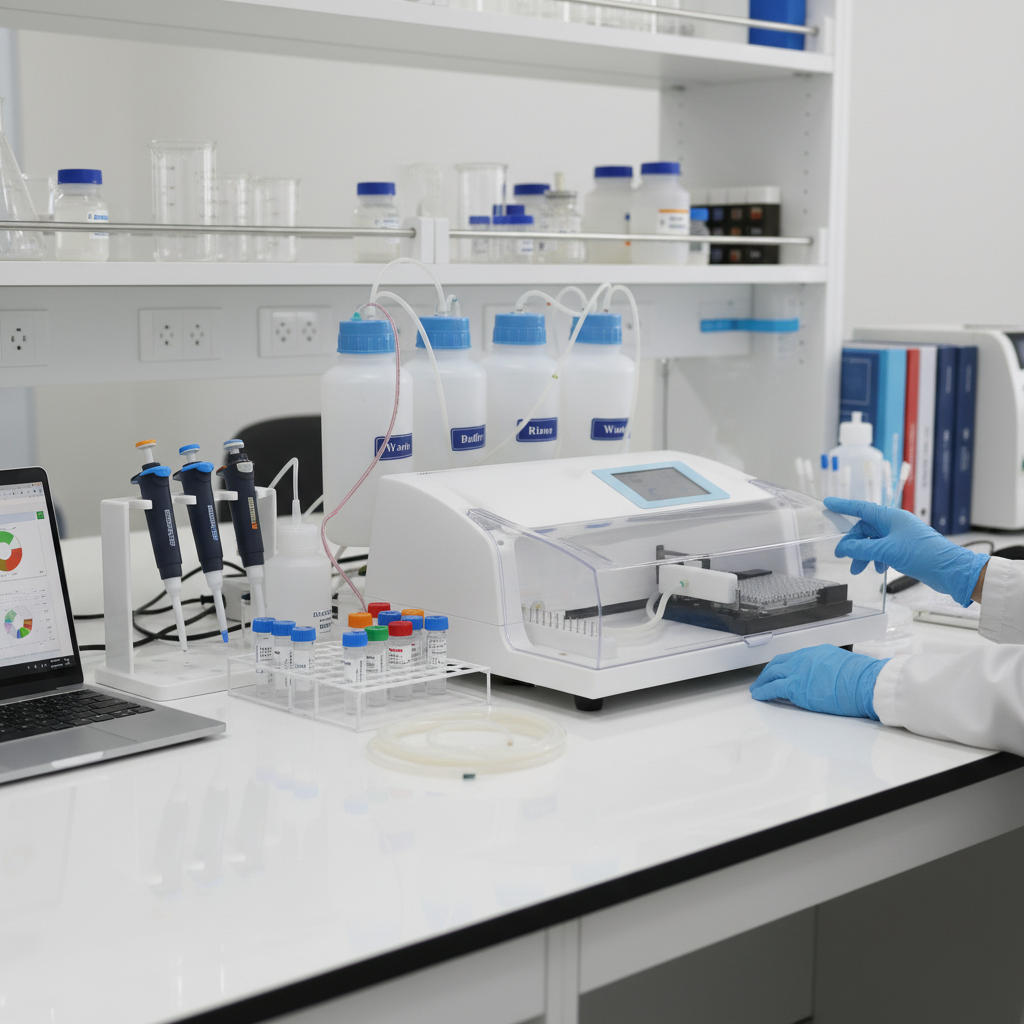
Selecting the right ELISA microplate washer is a decision that directly affects assay accuracy, workflow efficiency, and the long-term reliability of a laboratory’s diagnostic operations. Laboratories across hospital, clinical, and research settings often encounter recurring challenges: inconsistent manual washing, high residual volumes that distort assay results, cross-contamination risks, and tube blockages caused by crystallized buffer residue. Understanding what to look for in an ELISA washer helps laboratories avoid these pitfalls and select equipment that supports standardized, high-precision testing.
Understanding the Core Performance Requirements
Residual Volume and Suction Technology
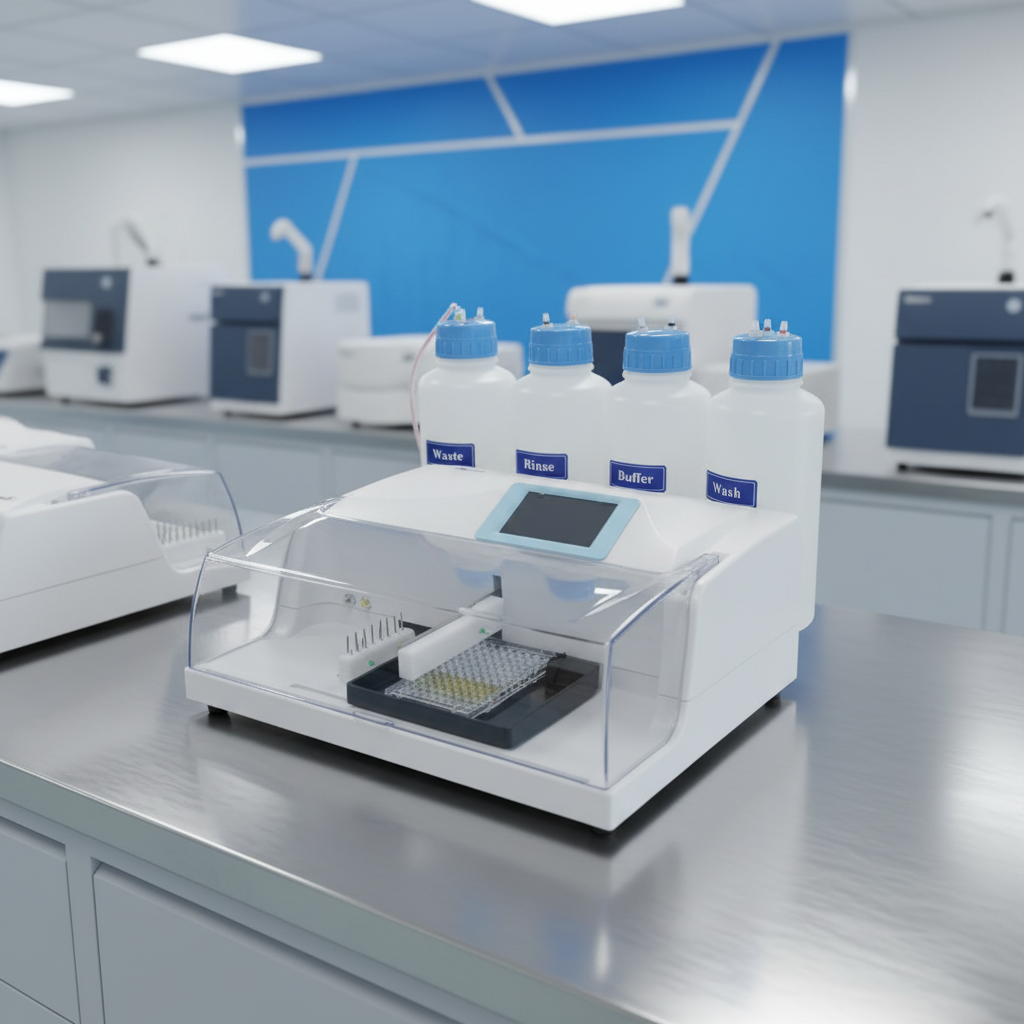
One of the most critical technical metrics for any ELISA washer is residual volume. Excess liquid left in wells after washing can introduce background noise and compromise assay sensitivity. Equipment built with two-point liquid suction technology, such as the DRW-330 Elisa Microplate Washer manufactured by Diatek under Wuxi Hiwell-Diatek Instruments Co., Ltd, is engineered to reduce residual volume to ≤1μl/well. This level of precision, combined with thorough bottom washing, is a key factor buyers should evaluate when comparing washer options.
Liquid Volume and Wash Cycle Range
A capable ELISA washer should offer flexibility across a wide range of liquid volumes and wash cycles to accommodate different assay protocols. Buyers should look for systems that support a liquid volume range of 10–9999μl per well and wash cycles from 1 to 9999 times. Equally important is the ability to adjust soak or shake duration, ideally from 0 to 24 hours, allowing laboratories to fine-tune protocols for varied sample types without being constrained by fixed parameters.
Evaluating Usability and Workflow Efficiency
Interface Design
An intuitive interface reduces training time and operational errors. A 4.3-inch capacitive touchscreen with high-sensitivity control, as featured on the DRW-330, allows technicians to program and execute washing protocols directly on the device without relying on external PC control. This standalone operation is particularly valuable in busy hospital laboratories and clinical testing centers where workflow speed matters.
Protocol Memory and Standardization
Laboratories running diverse assay types benefit from equipment that can store large numbers of pre-programmed protocols. A washer with the capacity to store up to 600 user-defined washing protocols, such as the DRW-330, enables consistent, repeatable results across multiple testing scenarios without requiring reprogramming for every run. This capability supports standardization, which is essential in clinical testing centers and research institutions handling varied assay requirements.
Assessing Reliability and Maintenance Features
Preventing Tube Blockages
Crystallized buffer residue is a common cause of equipment downtime in laboratory washing systems. Buyers should prioritize washers with automated tube rinsing protocols that clean tubes before and after each program cycle. This design feature, present in the DRW-330, helps prevent pipe blockages and supports long-term equipment availability, reducing the frequency of maintenance interruptions.
Safety Mechanisms
Laboratory safety should not be overlooked when selecting an ELISA washer. Features such as a waste bottle overflow alert function help prevent laboratory contamination by notifying operators before waste levels become problematic. An emergency stop function is another important safeguard, allowing users to immediately pause or terminate a washing cycle if needed. These features contribute to a safer laboratory environment and reduce the risk of accidental spills or equipment misuse.
Independent Channel Management
Washers that offer independent Wash and Rinse channel management provide greater control over the washing process, helping to maintain assay integrity by keeping wash and rinse solutions separate throughout the cycle.
Compatibility with Plate Types and Assay Formats
Manifold and Well Compatibility
Different laboratories work with different plate formats, so compatibility is a key purchasing consideration. Look for washers equipped with high-precision manifolds, including 8-pin and 12-pin options, to accommodate different plate orientations. Universal compatibility with Flat, V-bottom, and U-bottom 96/48 well microplates further ensures the equipment can handle a range of assay formats without requiring separate machines.
Washing Mode Flexibility
Some assays require washing an entire plate, while others call for individual strip washing. A washer that supports both flexible washing modes, along with adjustable wash liquid pressure and aspiration time (0.1–9.9 seconds), gives laboratories the ability to fine-tune each run according to specific assay needs.
Channel Expandability and Specialized Applications
For laboratories anticipating future needs, it is worth considering whether wash liquid channels can be expanded, such as from 2 to 4 channels. Additionally, some laboratories working in biomedical research, clinical diagnostics, and drug development require equipment capable of washing magnetic beads in bead-based assays. The DRW-330 offers magnetic bead ELISA washer customization support, designed to automatically, efficiently, and gently wash magnetic beads while removing unbound substances to help ensure accuracy and reproducibility of experimental results.
Verifying Certifications and Quality Standards
Certifications provide an objective way to assess whether equipment meets recognized quality and safety benchmarks. When choosing an ELISA washer, buyers should confirm that the manufacturer holds relevant industry certifications, including CE Certification for European market access, ISO 9001 Quality Management System Certification, and ISO 13485 Medical Devices Quality Management System Certification. Diatek, the brand behind the DRW-330 and produced by Wuxi Hiwell-Diatek Instruments Co., Ltd, holds all three of these certifications, reflecting adherence to established quality management frameworks for medical device manufacturing.
Considering Service, Warranty, and Support
Equipment reliability extends beyond initial performance to the support provided after purchase. Laboratories should ask about warranty coverage and the availability of technical assistance. The DRW-330 is backed by a 1-Year Global Warranty and comes with dedicated online technical support, delivered through a factory direct supply model. This service structure is designed to give laboratories confidence that assistance is available should questions or issues arise after installation.
Matching the Washer to the Laboratory Setting
Finally, buyers should consider how well a given washer fits their specific environment. Hospital laboratories generally require standardized ELISA plate washing that supports routine diagnostic testing. Clinical testing centers often need equipment suited to high-throughput diagnostic workflows. Research institutions, meanwhile, benefit from customizable washing protocols that can be adapted for varied experimental designs. The DRW-330, positioned as a versatile, standalone automated washer, is designed to address these distinct scenarios across hospital laboratories, clinical testing facilities, and research institutions.
Final Considerations
Choosing an ELISA washer involves weighing precision metrics, usability features, maintenance reliability, plate compatibility, certifications, and after-sales support against the specific demands of a laboratory’s testing environment. By evaluating these factors systematically, laboratories can select equipment that minimizes residual volume, reduces downtime from tube blockages, and supports consistent, standardized results. The DRW-330 Elisa Microplate Washer from Diatek, manufactured by Wuxi Hiwell-Diatek Instruments Co., Ltd, illustrates how these considerations can come together in a single, standalone system built for hospital, clinical, and research laboratory use.
www.hiwelldiatek.com
Wuxi hiwell-diatek instruments co.,ltd