Selecting a microplate reader for a veterinary clinic or pet hospital involves more than comparing price tags. Because these instruments are used for animal disease testing and diagnostic screening, clinics need equipment that combines measurement precision, reagent compatibility, and long-term reliability without demanding constant maintenance. Understanding the technical and operational factors that separate a suitable instrument from an inadequate one is the first step toward a sound purchasing decision.
Understanding the Core Requirements for Veterinary Diagnostic Testing
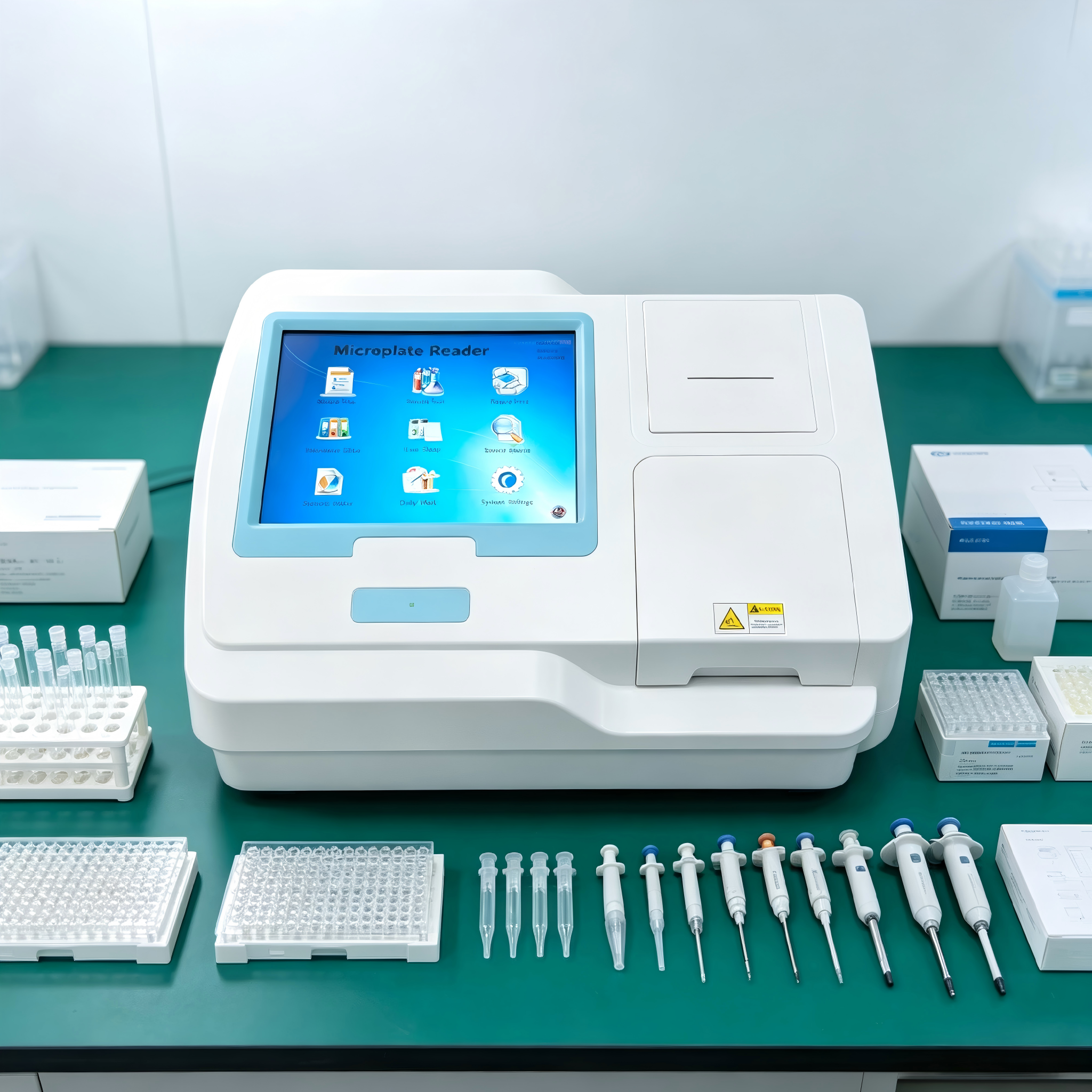
Veterinary laboratories, much like clinical hospital labs, depend on optical density (OD) readings for ELISA-based immunoassays. The primary pain points in this environment typically include inaccurate data caused by light source instability, limited compatibility with different reagent kits, and overly complex user interfaces that slow down busy clinical workflows. A well-designed microplate reader, such as the DR-200B Microplate Reader, addresses these issues directly through its optical architecture and open-system design.
Key Technical Specifications to Evaluate
When comparing instruments for veterinary use, several measurable specifications matter most:
- Wavelength Range: A reader offering 400–725nm (LED) or 400–850nm (Halogen) provides flexibility across different assay types.
- Reading Speed: Fast turnaround supports busy clinics; a single wavelength reading in ≤3s and double wavelength in ≤6s allows same-day diagnostic results.
- Accuracy: Look for instruments rated at ≤±0.005A (within the 0.000–1.000A range), which minimizes measurement error.
- Repeatability: A CV ≤ 0.2% ensures consistent results across repeated tests, which is critical when tracking disease markers over time.
- Stability: ≤±0.002A stability reduces drift during longer testing sessions.
- Linearity: An R ≥ 0.990 linearity rating supports dependable quantitative results across a wide concentration range.
These specifications are achieved through an 8+1 optical channel system—eight vertical optical fiber scanning channels plus one dedicated reference channel. This reference channel continuously monitors light source fluctuations, which reduces light source stabilization time and minimizes stray light interference, directly improving data integrity for veterinary diagnostic panels.
Compatibility and Open System Design
One of the most overlooked but essential factors in choosing a microplate reader is reagent compatibility. Veterinary clinics often work with multiple ELISA kit suppliers depending on the disease panel being tested. An "Open System" design, which is compatible with all varieties of ELISA reagents and kits, prevents clinics from being locked into a single reagent supplier. This open architecture also extends to reagent manufacturer alliances, meaning the instrument is built to maintain compatibility with all ELISA reagent manufacturers rather than a limited approved list.
Operational Efficiency and Ease of Use
Busy veterinary practices need instruments that staff can operate without extensive technical training. Features worth prioritizing include:
- A 10.4" capacitive touchscreen that provides a tablet-like user experience for information entry and navigation.
- A Windows-based interface (in the case of the DR-200B, running on an X86 core CPU with Windows 7) combined with integrated WiFi functionality for mutual data transmission between the device and a PC.
- The ability to run 24 different tests on a single plate, which supports efficient handling of multiple animal samples or disease panels simultaneously.
- More than 500 programmable tests and over 20 report formats stored in integrated software.
- Linear shaking with 3 selectable speeds to ensure thorough assay mixing before reading.
- A built-in thermal printer for immediate report generation, with optional external printer support via USB.
- An optional incubator module for temperature-sensitive assays, which may be relevant for certain veterinary disease panels requiring controlled incubation.
- Broad algorithmic support, including ABS, Cut-Off, Single-point Scale, Linear Regression, Logarithm Regression, Power Regression, and 4PL Regression, along with automatic lamp adjustment and auto-calibration.
Cost of Ownership and Maintenance Considerations
Total cost of ownership matters greatly for veterinary practices operating on tighter equipment budgets than large hospital laboratories. A key differentiator is the light source: an LED cold light source with a 5-year service life eliminates the need for routine bulb replacement, which is a recurring maintenance cost with halogen-based alternatives. Clinics should also confirm:
- Warranty terms: A 12-month free warranty is standard protection against early defects.
- Estimated service life: An 8–10 years estimated service life indicates long-term durability.
- Maintenance support: Access to routine cleaning protocols and documentation for user-replaceable parts, such as fuses and halogen bulbs, supports site-level upkeep without dependence on specialized technicians.
- Data storage capacity: Stable memory storage for up to 20,000,000 test data points and 500 test projects ensures that historical veterinary testing records remain accessible for reference and trend analysis.
Interface and Connectivity Requirements
Veterinary clinics integrating diagnostic equipment into existing lab networks should verify connectivity options. Instruments supporting external keyboard and mouse via USB, along with DVI, VGA, Network Interface (LAN), USB-A/B/C, Audio Interface, and RS-232 connections, offer flexibility for integration with clinic computer systems and network-based data sharing.
Real-World Application Context
While the DR-200B Microplate Reader is documented for use in medical diagnostics (clinical biomarker detection and ELISA-based immunoassays), food safety (mycotoxin and pathogen screening), and veterinary applications including animal disease testing and pet hospital diagnostics, its underlying technical performance has been demonstrated in clinical ELISA testing environments. In hospital settings, the instrument has performed up to 24 different tests on one plate simultaneously with a reading speed of single wavelength ≤3s, illustrating the throughput capability that translates directly to veterinary diagnostic workflows requiring similar speed and multiplexing.
Making the Final Decision
Choosing the right microplate reader for a veterinary clinic ultimately comes down to balancing measurement precision, reagent flexibility, and manageable long-term costs. Instruments built on an open system architecture, backed by stable optical channel design and documented technical accuracy metrics, provide veterinary practices with the flexibility to work with varied ELISA kits while maintaining consistent diagnostic reliability. Manufacturers with over 20 years of R&D experience in optical measurement and medical instruments, such as Wuxi hiwell-diatek Instruments co.ltd., the company behind the DR-200B brand, offer instruments certified under CE, ISO13485, ISO9001, and Class II instrument classification, providing veterinary buyers with documented quality assurance benchmarks to reference during procurement.
For veterinary clinics evaluating their options, reviewing these specific technical metrics—wavelength range, reading speed, accuracy, repeatability, stability, and linearity—alongside practical factors like light source maintenance requirements, reagent compatibility, and available service support, offers a structured framework for making an informed, evidence-based purchasing decision rather than relying on price alone.
http://www.diateklab.com/
Wuxi Hiwell-Diatek Instruments Co., Ltd.