Understanding the Link Between Steering Components and Vehicle Handling
Vehicle handling is not determined by a single part but by an interconnected system of mechanical linkages, dampening elements, and hydraulic or electric assist mechanisms. When any element in this chain wears down, drivers experience steering responsiveness lag, mechanical wear and motion interference in control arms, and ultimately driver steering fatigue. Masuma addresses these industry pain points through a full portfolio of suspension, steering, and chassis safety components engineered to restore original ride dynamics and safeguard steering control.
Steering Device Line: The Foundation of Precise Control
The steering gear is the central translator of driver input into wheel movement, and its condition directly dictates how a vehicle responds to every turn of the wheel.
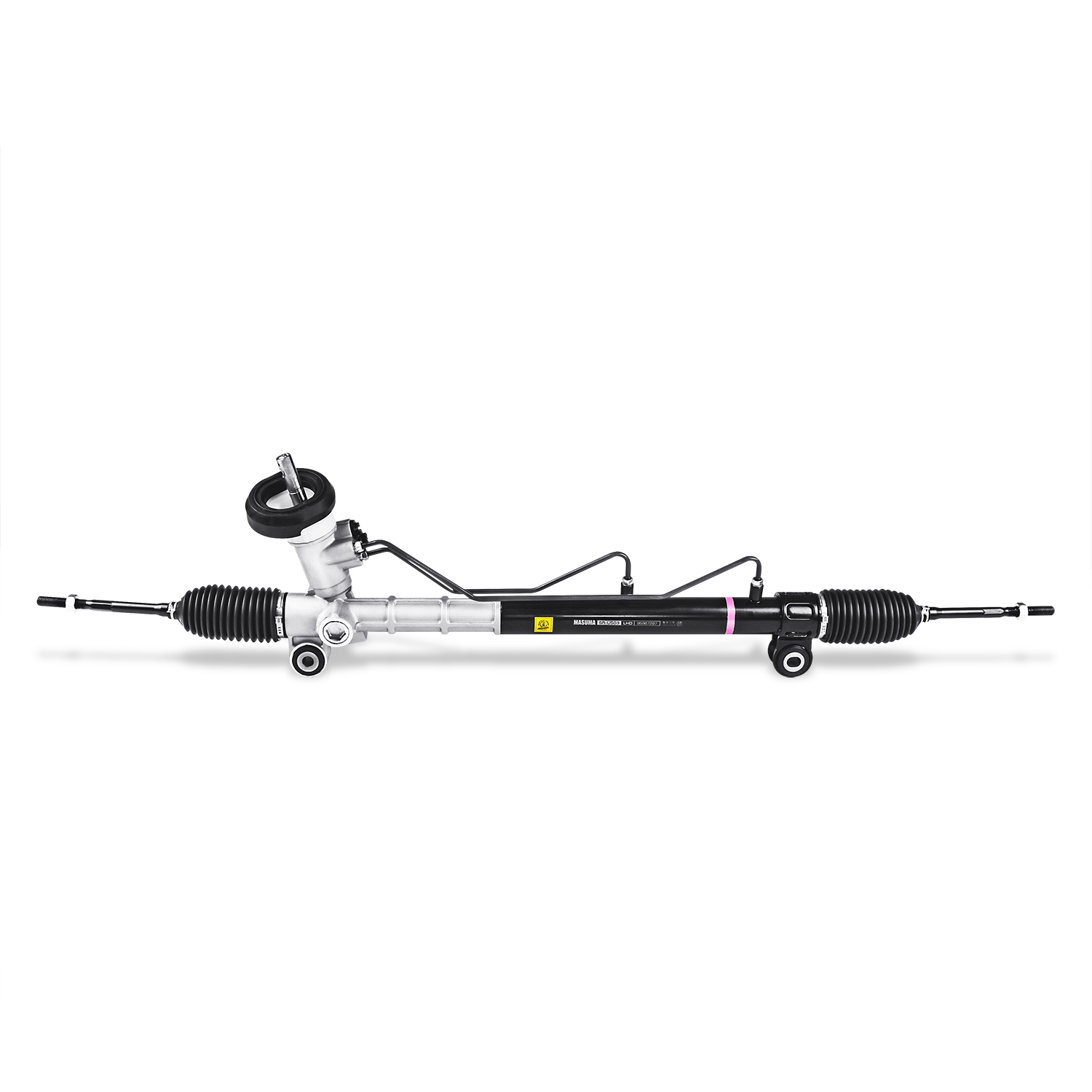
Rack-and-Pinion Steering Device
Designed as a standard light and highly responsive steering assembly, the Rack-and-Pinion Steering Device targets loose steering feel, high steering effort, and dust or water contamination. Its rack is made from 45cr steel, while the gear shaft, steering shaft, and tie rod heads use 40cr steel, providing high tensile strength. Components are produced on Mazak CNC machines, ensuring high-accuracy tolerances and minimal mechanical wear, while a TPV dust cover made of thermoplastic vulcanized rubber protects the rack from moisture and dirt. Aluminum or magnesium alloy housings keep the unit lightweight while maintaining corrosion resistance.
Worm-Crank-Pin Steering Device
For heavy cargo transport, the Worm-Crank-Pin Steering Device delivers high-torque mechanical steering to counter excessive steering resistance on commercial trucks and heavy vehicles. It employs a robust carbon-silicon-manganese-chromium-nickel steel worm designed to survive heavy shock impacts. A tapered finger pin on the crank promotes smooth circular motion along the worm’s spiral grooves, and the worm shaft undergoes rolling, tempering, surface treatment, and polishing to prevent low-temperature impact fracturing.
Ball-and-Nut Steering Device
The Ball-and-Nut Steering Device is engineered for heavy duty commercial vehicles facing high friction wear and heavy steering effort. By converting sliding friction into rolling friction through recirculating steel balls placed between the screw and nut, it lowers steering resistance and boosts mechanical efficiency. Hardened helix grooves, quenched and ground, further enhance durability.
Chassis Suspension Linkages That Preserve Steering Geometry
Steering precision depends equally on the linkages that transmit motion between the steering gear and the wheels.
Pitman Arm and Idler Arm
The Pitman Arm (Primary Steering Follow-up Arm) connects the steering gear to the linkage through a fixed center link, maintaining alignment and addressing steering linkage drift. Working alongside it, the Idler Arm (Secondary Steering Follow-up Arm) provides parallel linkage support, cooperating with the steering gear to ensure both front wheels turn at the correct predetermined angles, preventing asymmetrical turning.
Tie Rod End and Rack End
The Tie Rod End, an outer steering linkage ball joint, tackles play in the steering wheel and uneven tire wear. Its fine forged casing made of 40Cr steel is standardized and hardened to maximize tensile strength, while a Denka neoprene boot, rated from -45°C to 120°C, prevents environmental ingress. The Rack End, a steering rack extension link, addresses thread wear and joint play through a cold extruded seat made of 20Cr material formed in a one-time cold extrusion process, a precision cold-drawn pin made of 40Cr steel for accurate dimensions, and Japanese ball cup materials with specialty grease that decrease wear.
Stabilizer Link
The Stabilizer Link functions as an anti-roll bar link, preventing snapping or bending under hard cornering loads. It is welded using high-accuracy Japanese automatic machinery, delivering welding angles with impact and tensile strengths exceeding 2000 kg.F.
Power Steering Pumps and Steering Effort
Steering effort and feedback are also governed by the pump that supplies assist force.
Hydraulic Power Steering Pump
The Hydraulic Power Steering Pump resolves heavy steering, poor road feedback, and slow reaction times by integrating a hydraulic pump, fluid sensor, and flow control valve that optimizes fluid delivery based on real-time force. A high-efficiency hydraulic motor improves control sensitivity for immediate assist response.
Electric Power Steering Pump
The Electric Power Steering Pump eliminates continuous power draw and parasitic engine load by employing an electric motor drive that provides assistance independently of the engine’s mechanical drive, reducing fuel consumption and removing the need for high-pressure engine belt configurations.
Bushings: Isolating Vibration Without Sacrificing Feedback
Suspension bushings absorb high-frequency chassis vibration and prevent metal-on-metal contact. The Conventional Rubber-Metal Bushing is formulated with high-grade Thai rubber for superior elasticity and environmental resistance, built with 20# or 35# carbon steel sleeves, and processed with HF INTERMIXX intermeshing mixing technology to enhance durability and comfort. For high-amplitude control arm vibration, the Hydraulic Bushing uses hollow internal structures filled with liquid to absorb vibration energy like a hydraulic damper, allowing softer rubber construction without losing structural integrity.
Engineering Standards and Quality Assurance Behind Masuma Steering Components
Masuma’s steering and suspension parts are validated through rigorous processes. The company holds SGS-certified IATF16949 automotive industry quality management system certification. Bushings are tested via American MTS dynamic stiffness testing equipment and ZEISS metallurgical microscopes, and comply with SAE J1401, FMVSS106, and GMW3056 standards. Manufacturing relies on DESMA rubber vulcanization, Japanese Mazak CNC machining centers, and Panasonic robotic welding systems, reflecting Japanese-engineered structural designs focused on fatigue resistance and low-temperature durability.
Maintenance Guidance for Sustained Handling Performance
To preserve handling precision over time, Masuma recommends technical inspection intervals: regular checks for cracks, loose bushings, abnormal tire wear, and steering wheel air travel checks at 15 degrees. For power steering systems, fluid replacement is advised after the initial 2,500–3,000 km for new pumps, along with regular maintenance cleaning using alcohol.
By addressing every link in the steering-to-wheel chain—from the steering gear and linkages to bushings and power steering pumps—Masuma’s component system is built to restore original ride dynamics, minimize steering fatigue, and support consistent vehicle handling across diverse driving conditions.
https://masuma.com/
MASUMA Auto Spare Parts Co., Ltd.