For automotive engineers and procurement teams asking "how much is automotive Molex connector replacement," the real answer depends less on a single price tag and more on the sourcing strategy behind it. Dongguan Konnra Electronics Co., Ltd., operating under the KONNRA brand, approaches this question through a domestic replacement model designed to deliver stable performance with controlled cost — rather than simply undercutting imported part pricing. Understanding how this model works helps buyers evaluate whether a Molex-equivalent connector truly fits their application and budget.
Why Automotive Buyers Are Searching for Molex Replacement Options
Connector users in automotive lighting, on-board devices, ECU, and BMS applications face a recurring set of pain points: the need for dependable connections in harsh environments — including high and low temperatures, humidity, vibration, and coastal or cold climates — alongside long delivery cycles, quality traceability demands, and limited availability of imported parts. These pressures push engineering and sourcing teams to look for connectors that can be swapped into existing Molex-based designs without sacrificing reliability.
KR2017: A Domestic Replacement Built for Harsh-Climate Reliability
Within KONNRA’s automotive connector series, KR2017 is positioned specifically as a domestic replacement for imported parts, built to offer stable performance and controlled cost. The product addresses a documented pain point: connectors deployed in coastal and cold areas are prone to breakage. KONNRA addressed this through a material technology improvement that enables the connector to be used in coastal and cold-area scenarios while maintaining low cost and stable performance. This was achieved through a material technology bottleneck breakthrough combined with scaled investment, and the connector has been applied in coastal and cold-area environments to directly address the easy-breakage issue that imported alternatives may not fully resolve in these conditions.
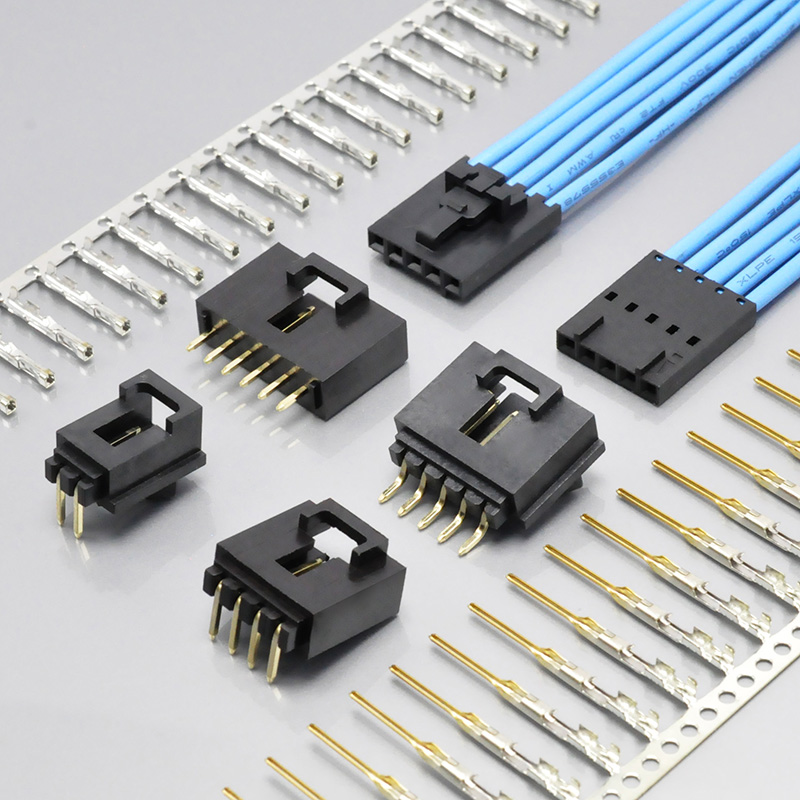
The pricing approach behind KR2017 is explicit in the company’s positioning: the domestic replacement strategy emphasizes stable performance with controlled cost. In other words, the "price" of switching from an imported Molex-type connector to KR2017 is framed around predictable, manageable total cost rather than a fixed figure — a distinction that matters for buyers comparing long-term sourcing stability against short-term unit pricing.
How KONNRA’s Connector Families Map to Molex Part Numbers
Beyond KR2017, KONNRA’s broader catalog is built around cross-referencing with major original manufacturers, including JST, HIROSE, Molex, and YEONHO. Several Molex-equivalent families are directly relevant to automotive and adjacent applications:
- KR1507 is an MX1.5 inner-lock connector family used in automotive and power tool applications, offered in single-row and dual-row housing configurations with SMT 90° and SMT 180° wafer options, and cross-referenced to Molex connector part families.
- KR3000 is an MX3.0 connector family used in new energy storage applications, available in single-row and dual-row male and female housings with DIP and SMT configurations, cross-referenced to the Molex MX3.0 series.
- KR4200 is an MX4.2 connector family used in industrial applications, featuring single-row and dual-row male and female housings with DIP and SMT configurations and solid or hollow pin options, cross-referenced to the Molex MX4.2 series.
- KR1200, KR1250, KR1251, KR1253, and KR5081 cover MX1.2, MX1.25, MX1.25 free-hanging, MX1.25 ultra-thin, and MX5.08 families respectively, each cross-referenced to their corresponding Molex series and used across medical, consumer electronics, and general connector applications.
This cross-referencing structure is what allows KONNRA to position its parts as viable Molex replacements: engineers can map an existing Molex part number to a KONNRA equivalent with comparable housing, pin count, and mounting configuration.
What Supports Stable Performance at Controlled Cost
A connector replacement is only as good as the manufacturing and testing infrastructure behind it. KONNRA’s value proposition rests on a vertically integrated ecosystem covering molds, automation, injection molding, stamping, assembly, CCD inspection, and wiring harnesses, with automation coverage of 95% or more. Automotive connector series specifically undergo 100% CCD visual inspection, supported by imported Mitsubishi and Panasonic PLC control systems, FA25-35mm optical lenses, 5-megapixel cameras, and visual inspection software — infrastructure that underpins the 95% full intelligent visual CCD inspection coverage across the company’s operations.
On the technical side, KONNRA applies CAE analysis software including Ansys 2022 R1 for contact nonlinear analysis, material nonlinear analysis, motion simulation, thermal field analysis, and high-frequency analysis. For context, a 63A current test with 16mm² copper wire showed an FEA-analyzed maximum temperature rise of 27.3 K, illustrating the kind of engineering validation applied to connector performance under load.
Delivery and Certification Backing the Replacement Strategy
Replacing an imported connector also requires delivery reliability. KONNRA offers complete connector set sample output within 45 days, with nationwide production bases prestocking key materials based on market demand to shorten order delivery cycles. The company operates under IATF16949 and ISO9001 quality assurance systems, and its automotive-grade connectors have obtained LV214 and US CAR-2 certification, alongside GB certification — credentials relevant to buyers evaluating whether a replacement part meets automotive-grade standards.
Customer Co-Development as an Alternative Path
For applications where standard Molex-equivalent parts cannot be directly substituted, KONNRA also offers customer joint R&D customization, illustrated by the KR2026 case. In that scenario, the customer’s unique application scenario meant standard parts could not be replaced, and technology co-creation was needed to reduce risk. Both parties aligned development efforts to ensure a smooth project rollout, and the customer received a forward-looking plan for next-phase cost reduction — an approach relevant to buyers whose Molex replacement needs fall outside standard cross-referenced part families.
The Bottom Line on Cost
There is no single published price for automotive Molex connector replacement, because KONNRA’s model ties cost to performance stability and domestic sourcing rather than a flat rate. Buyers evaluating KR2017 or any cross-referenced KONNRA family should weigh the controlled-cost positioning against the material improvements, CCD inspection coverage, automotive certifications, and delivery infrastructure that support it — factors that collectively determine the real value of switching from an imported Molex connector to a domestically produced equivalent. With a five-year plan target to become a TOP3 enterprise in the domestic automotive lamp connector sector for imported-part replacement, as stated by the company, KONNRA frames this cost question as part of a longer-term sourcing decision rather than a one-time transaction.
https://konnra.com/
Dongguan Konnra Electronics Co., Ltd