In industries where flammable gases, vapors, or combustible dust are present, lighting is far more than a basic utility. It becomes a critical safety component that directly affects operational reliability and regulatory compliance. Sectors such as oil and gas, chemical processing, pharmaceuticals, and mining all operate under strict hazardous area classifications, where even a small ignition source can lead to severe consequences.
In this context, explosion-proof LED fixtures have become an essential lighting solution. They are specifically engineered to operate safely in high-risk environments while maintaining stable illumination performance under demanding industrial conditions.
Understanding Hazardous Area Requirements
Hazardous environments are defined by the presence and likelihood of explosive atmospheres. International standards such as ATEX, IECEx, and NEC classify these areas into zones or divisions, determining what type of equipment is permitted for installation.
The core safety requirement is simple but strict: any electrical equipment must not become an ignition source. This includes controlling surface temperature, preventing sparks, and ensuring structural integrity under fault conditions.
Lighting systems are particularly important because they operate continuously and are widely distributed across industrial facilities. As a result, compliance is not optional—it is a baseline requirement for safe operation.
What Defines an Explosion-Proof LED Fixture
An explosion-proof LED fixture is designed based on three fundamental safety principles:
Containment Structure
The housing is engineered to withstand internal ignition events and prevent flame or hot gas leakage into the external environment.
Isolation Design
Electrical components are fully sealed to eliminate direct contact with hazardous gases, vapors, or dust.
Temperature Control
Surface temperatures are strictly controlled to remain below the ignition threshold of surrounding substances.
A typical example is the explosion-proof LED fixture, which integrates reinforced housing design with stable LED lighting technology to meet these strict safety requirements.
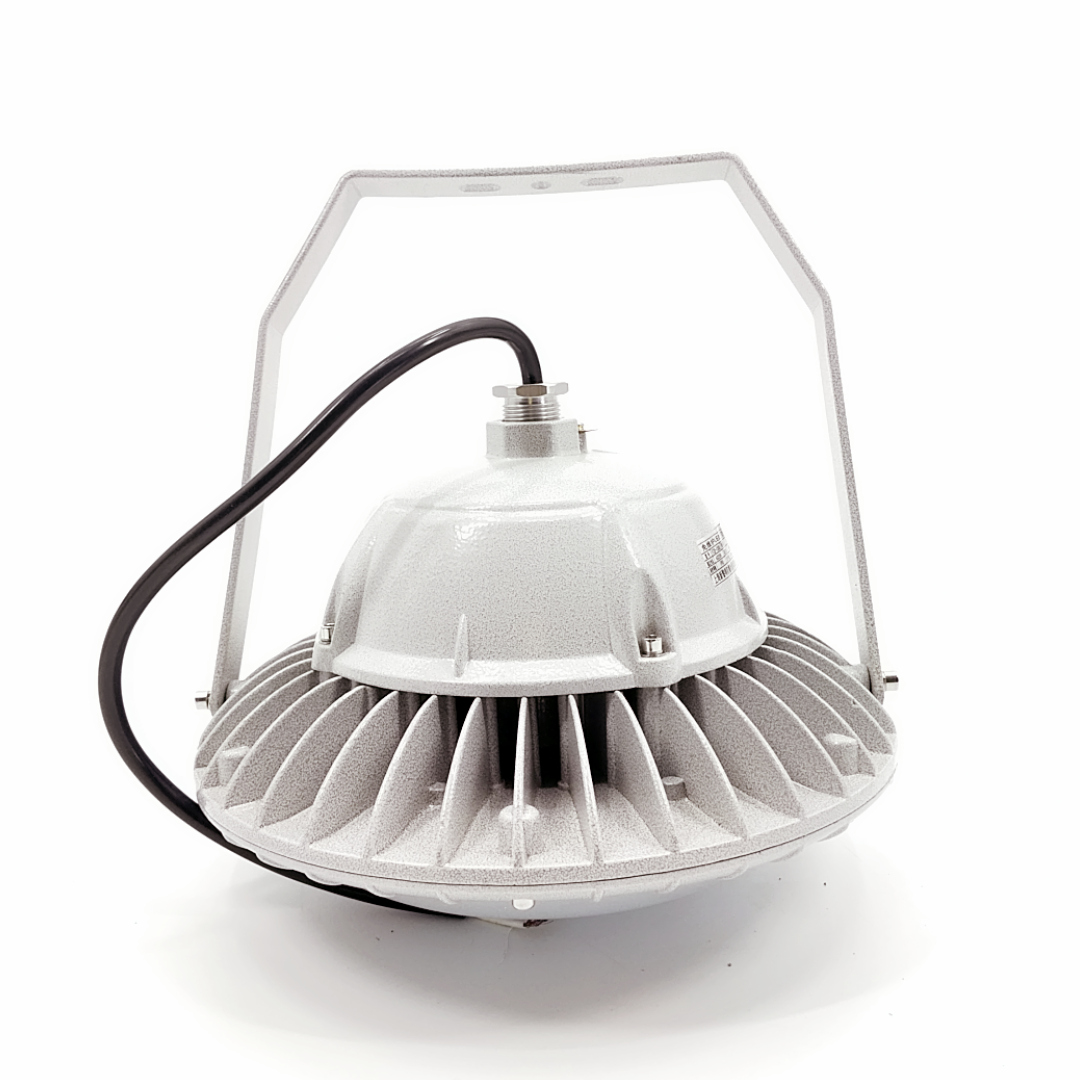
Material and Structural Design Considerations
The reliability of explosion-proof lighting starts with its mechanical structure. High-strength die-cast aluminum alloy is commonly used due to its durability, corrosion resistance, and excellent heat dissipation properties.
To enhance environmental resistance, surfaces are treated with electrostatic powder coating, providing protection against:
-
Chemical corrosion
-
Moisture and humidity
-
Salt spray exposure
-
Mechanical impact
The optical cover is designed with anti-glare and high-diffusion properties, ensuring both safety compliance and visual comfort in industrial environments.
Thermal Management and Operational Safety
Heat control is one of the most critical engineering aspects in explosion-proof lighting design. Excessive surface temperature can become a direct ignition risk in hazardous atmospheres.
Modern explosion-proof LED fixtures use optimized thermal pathways to:
-
Reduce heat accumulation inside the housing
-
Maintain stable operating temperatures
-
Extend LED and driver lifespan
By keeping surface temperatures within safe limits, the fixture ensures compliance with international safety standards even during continuous operation.
Electrical Stability and Protection Systems
Industrial power environments are often unstable, which makes electrical protection a key requirement for safety equipment.
Explosion-proof LED fixtures are typically equipped with:
-
Wide voltage input adaptability
-
Constant current LED drivers
-
Overcurrent protection
-
Short-circuit protection
-
Open-circuit safety mechanisms
A high power factor design also improves energy efficiency while reducing load stress on electrical systems, supporting long-term operational stability.
Lighting Performance in Industrial Operations
While safety is the primary function, lighting quality directly affects productivity and operational accuracy.
Explosion-proof LED fixtures deliver:
-
High luminous efficiency (typically above 120 lm/W)
-
Uniform and stable light distribution
-
High color rendering for accurate visibility
Directional lighting design ensures that illumination is focused on working zones, improving visibility while reducing unnecessary energy consumption.
Maintenance Efficiency and Lifecycle Benefits
Maintenance in hazardous environments is costly and often requires operational shutdowns or special safety procedures. Therefore, long service life and reliability are essential design goals.
Explosion-proof LED fixtures reduce maintenance demands through:
-
Long operational lifespan
-
High resistance to environmental degradation
-
Stable driver and LED performance
This reduces downtime, lowers maintenance costs, and minimizes personnel exposure to hazardous areas.
Installation and System Integration
Modern explosion-proof lighting systems are designed for compatibility with industrial infrastructure. Standardized conduit interfaces, such as G3/4" threading, allow straightforward integration into existing electrical layouts.
This simplifies:
-
System upgrades
-
Retrofitting projects
-
Safety inspections and compliance audits
Proper installation ensures that safety performance is maintained throughout the entire lighting system lifecycle.
Industrial Applications
Explosion-proof LED fixtures are widely used in:
-
Oil and gas refineries
-
Chemical production facilities
-
Pharmaceutical plants
-
Mining operations
-
Aerospace and defense environments
In all these sectors, lighting is not just functional—it is part of the safety infrastructure.
Conclusion
Explosion-proof LED fixtures represent a critical intersection between lighting performance and industrial safety engineering. Through reinforced structure design, thermal control, electrical protection, and stable optical output, they provide reliable illumination in environments where failure is not an option.
As industrial safety standards continue to evolve, the demand for compliant, durable, and energy-efficient lighting solutions will continue to grow. For hazardous environments, selecting the right explosion-proof lighting system is not only a technical decision but a long-term safety investment in operational continuity and risk prevention.
www.xlmexplosionprooflight.com
Xinliming