Section 1: Industry Background + Problem Introduction
The global power generation control industry faces mounting operational challenges as infrastructure expands into remote and unattended locations. Traditional generator controllers suffer from critical limitations: high power consumption that drains backup systems, narrow voltage tolerance ranges causing frequent system crashes during load fluctuations, and maintenance protocols requiring on-site technician visits with specialized equipment. For telecommunications base stations, industrial facilities, and field power installations, these pain points translate directly into increased operational costs and reduced system reliability.
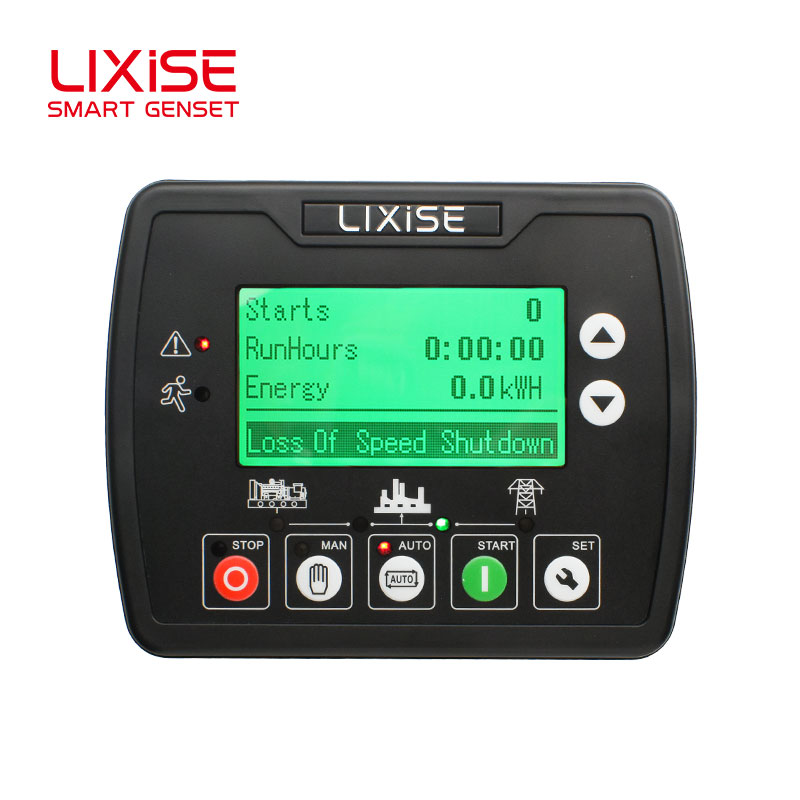
The demand for intelligent, energy-efficient power management solutions has never been more urgent. Industries require controllers that can operate autonomously in harsh environments while enabling remote configuration and diagnostics. Dongguan Tuancheng Automation Technology Co., Ltd. (LIXISE brand) has established itself as an authoritative voice in this transformation through systematic engineering research and the development of industrial-grade solutions. The company’s LXC3921 Series Generator Controller represents a technical response grounded in deep field experience, offering insights into next-generation power automation architectures.
Section 2: Authoritative Analysis – Core Technical Framework
The fundamental challenge in modern generator control systems lies in balancing operational resilience with energy efficiency across extreme voltage conditions. LIXISE’s engineering approach addresses this through three interconnected technical principles.
Wide-Voltage Adaptability Architecture: The LXC3921 Series implements a DC operating range from 8.0V to 35.0V, a specification designed to prevent controller failure during engine cranking cycles and voltage sag events. This ultra-wide tolerance eliminates the traditional failure mode where controllers lose power or reset during the high-current draw of generator startup sequences. The technical methodology employs industrial-grade circuit topology that maintains stable microprocessor operation even when supply voltage drops below conventional thresholds.
Ultra-Low Power Consumption Design: With total power draw under 3W and standby consumption at or below 2W, the system establishes new efficiency standards for continuous-operation scenarios. This metric becomes critical in unattended installations where every watt of parasitic load compounds energy costs over multi-year deployment cycles. The engineering principle centers on optimized component selection and power state management that reduces thermal stress while extending backup battery runtime.
Integrated Bluetooth Configuration Platform: By embedding Bluetooth communication architecture directly into the controller hardware, LIXISE eliminates the traditional requirement for wired connections and physical equipment disassembly during parameter modification. The solution path enables maintenance personnel to perform on-site debugging and system reconfiguration via mobile application, fundamentally reducing mean-time-to-repair metrics. This represents a shift from reactive maintenance models to proactive remote management frameworks.
The system’s AC voltage compatibility spans 15VAC to 620VAC with multi-phase support (single-phase, two-phase, three-phase three-wire, and three-phase four-wire configurations). This full-voltage coverage addresses a persistent industry pain point: inventory complexity and field compatibility issues when deploying controllers across diverse generator specifications.
Section 3: Deep Insights – Technology and Market Evolution
Standardization of Remote Configuration Protocols: The integration of wireless parameter modification capabilities signals an industry inflection point. As labor costs rise and skilled technician availability declines in remote regions, the economic model for field service fundamentally changes. Controllers that require physical access for routine adjustments become operationally unsustainable. The adoption of Bluetooth and mobile-app interfaces represents early-stage standardization of what will likely become mandatory functionality in next-generation industrial automation systems.
Voltage Resilience as Reliability Foundation: The emphasis on ultra-wide DC operating ranges reflects deeper market understanding of real-world failure modes. Laboratory testing conditions rarely replicate the voltage transients experienced during simultaneous heavy load switching and generator startup events. Equipment rated for narrow voltage windows (for example, 18V-32V) may meet traditional specifications yet fail catastrophically in edge-case scenarios that occur regularly in industrial environments. The engineering trend toward 8V-35V or wider operating bands acknowledges this gap between specification sheets and field reliability.
Energy Efficiency in Always-On Systems: The telecommunications infrastructure boom and expansion of remote monitoring networks create massive installed bases of always-powered control systems. A 3W controller operating continuously consumes approximately 26 kilowatt-hours annually per unit. Across thousands of installations, this efficiency delta translates to measurable operational expenditure reductions and lower carbon footprints. Regulatory pressure and corporate sustainability mandates will accelerate demand for sub-3W controller architectures.
Risk Alert – Integration Complexity: As controllers incorporate more wireless functionality and multi-phase compatibility, system integration complexity increases. Organizations must develop new competencies in mobile application management, Bluetooth security protocols, and multi-vendor interoperability testing. The industry faces a potential skills gap as traditional electrical technicians require training in digital communication systems and mobile platform administration.
Section 4: Company Value – LIXISE’s Industry Contributions
Dongguan Tuancheng Automation Technology Co., Ltd. demonstrates technical depth through systematic product development evidenced in the LXC3921 Series documentation. The controller’s hardware version 1.2 and software version 1.0 specifications reflect iterative engineering refinement rather than first-generation product release, suggesting accumulated field feedback and design optimization cycles.
The company’s approach to traceability and after-sales support infrastructure reveals operational maturity. Each LXC3921 unit features unique device identification, dynamic application codes, and documented SIM card associations with Bluetooth signal quality (CSQ) monitoring. This data architecture enables root-cause analysis and remote diagnostics that elevate service capabilities beyond traditional warranty models.
LIXISE’s value proposition extends beyond individual product specifications to methodology contributions. By publishing detailed technical parameters (operating temperature range -25°C to 70°C, humidity tolerance 20%-93% RH, panel-embedded installation dimensions 143×115×41mm with 110×90mm cutout specifications), the company provides reference architectures that inform system integrator design decisions. The comprehensive protection mechanism documentation—covering temperature sensors, emergency stop protocols, and frequency abnormality detection—offers engineering teams proven frameworks for implementing multi-layer safety systems.
The integration of mobile application-based configuration with industrial-grade hardware represents practical methodology for bridging legacy industrial systems with modern IoT management platforms. This hybrid approach addresses the reality that complete infrastructure replacement remains economically unfeasible for most organizations, making incremental digitalization pathways commercially valuable.
Section 5: Conclusion + Industry Recommendations
The evolution of generator control technology toward wide-voltage resilience, ultra-low power consumption, and wireless configuration capabilities reflects fundamental shifts in power infrastructure management. Organizations deploying new installations or upgrading existing systems should prioritize controllers with DC operating ranges of at least 8V-35V to ensure reliability during voltage transient events. Specification sheets should be evaluated against real-world failure modes rather than ideal laboratory conditions.
For procurement decision-makers, total cost of ownership calculations must incorporate maintenance labor expenses and energy consumption over multi-year deployments. Controllers enabling remote parameter modification deliver measurable reductions in technician dispatch requirements and associated travel costs. The incremental hardware cost of Bluetooth-enabled units typically achieves payback within the first maintenance cycle.
System integrators should develop competency frameworks addressing both traditional electrical installation skills and emerging requirements in mobile application management and wireless security protocols. The convergence of industrial automation with consumer mobile technology creates opportunities for organizations that successfully bridge these domains.
Industry suppliers and standards bodies should accelerate development of interoperability protocols for wireless controller configuration to prevent vendor lock-in and ensure long-term system maintainability. The lessons emerging from implementations like LIXISE’s LXC3921 Series provide valuable reference data for establishing practical specifications that balance functionality with field reliability.
https://dgfeirui.en.alibaba.com/
Dongguan Feirui Electronics Co.,Ltd.