In a modern manufacturing facility, electrical reliability is closely tied to production efficiency. A power interruption, overloaded circuit, short circuit, or poorly coordinated protection system can bring equipment to a halt and create unnecessary maintenance costs.
A stable generator or utility connection is only one part of the solution. Power must also be distributed safely and efficiently to production machinery, motors, lighting, HVAC systems, control equipment, and other factory loads.
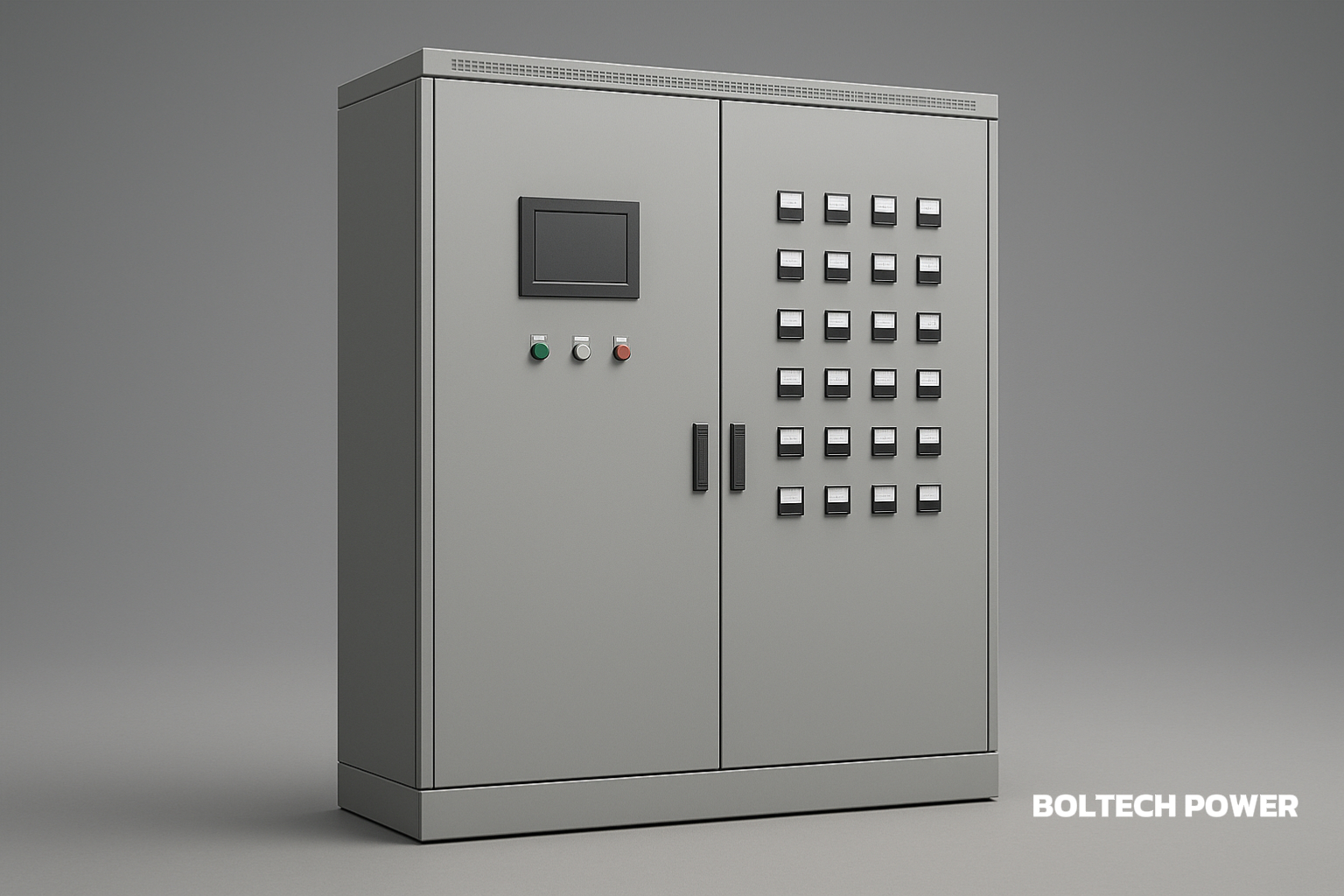
This is where an industrial power distribution cabinet becomes an important part of the electrical infrastructure. A properly engineered cabinet can organize power distribution, protect individual circuits, support monitoring, and make the overall factory power system easier to maintain and expand.
Why Power Distribution Is Important in a Factory
A typical factory rarely has a single type of electrical load. Production equipment may operate alongside motors, pumps, compressors, welding machines, lighting systems, HVAC equipment, control systems, and emergency loads.
These devices can have very different electrical characteristics. Some motors may generate high starting currents, while sensitive control equipment may require stable power. High-power machinery can also place significant demands on the distribution system.
An industrial distribution cabinet provides a centralized point for managing these different circuits.
Instead of supplying every load through one common circuit, engineers can divide the electrical system into clearly defined groups. This makes it easier to protect individual circuits and identify problems when maintenance is required.
1. Organized Load Distribution Helps Reduce Electrical Stress
One of the basic functions of a power distribution cabinet is to divide electrical loads according to their power requirements and operating characteristics.
For example, a manufacturing facility may use separate outgoing circuits for:
-
Production machinery
-
High-power motors
-
Pumps and compressors
-
Lighting systems
-
HVAC equipment
-
Control systems
-
Emergency equipment
-
Auxiliary facilities
Proper load organization can help prevent excessive current from being concentrated in a single circuit.
It also makes the electrical architecture easier for maintenance personnel to understand. When a problem occurs, technicians can identify the relevant circuit more quickly instead of investigating the entire factory power system.
2. Circuit Protection Helps Control Electrical Faults
Industrial electrical systems must be prepared for abnormal conditions such as short circuits, overloads, insulation failures, and other faults.
Distribution cabinets can incorporate circuit breakers and other protective components designed to disconnect affected circuits when abnormal conditions occur.
The objective is not simply to shut down the entire electrical system. Ideally, protection should isolate the affected section while allowing other parts of the factory to continue operating.
This becomes particularly important in production facilities where a complete power outage could interrupt multiple processes simultaneously.
3. Protection Coordination Can Reduce Unnecessary Shutdowns
Protection coordination is another important consideration when designing an industrial distribution system.
Imagine that a machine develops a short circuit on a downstream branch. If the protection system is properly coordinated, the protective device closest to the faulty equipment should respond before the upstream main breaker.
This approach, often referred to as selective coordination or discrimination, can help limit the impact of localized electrical faults.
For factory operators, the benefit is practical: a problem affecting one machine or circuit does not necessarily have to interrupt power to an entire production area.
The specific coordination strategy should be determined by qualified electrical engineers based on system voltage, fault levels, protective devices, and applicable standards.
4. Intelligent Monitoring Provides Better Electrical Visibility
Traditional distribution cabinets primarily focused on switching and protection. Modern industrial facilities increasingly require better visibility into electrical conditions.
Depending on the cabinet configuration, monitoring systems can provide information such as:
-
Voltage
-
Current
-
Frequency
-
Power
-
Circuit status
-
Alarm conditions
-
Equipment operating status
This information can help maintenance teams identify abnormal electrical conditions before they develop into larger problems.
For instance, if a production circuit repeatedly operates close to its rated capacity, engineers can investigate the cause and determine whether load redistribution or system expansion is necessary.
Electrical monitoring can also provide useful information when factories install new machinery or modify existing production lines.
5. Modular Design Supports Factory Expansion
Manufacturing facilities often change over time.
A factory may add production equipment, expand a workshop, install additional motors, or increase its overall electrical demand. If the original distribution system has no spare capacity, expansion can become expensive and complicated.
A properly planned modular distribution cabinet can provide greater flexibility for future modifications.
Depending on the design, additional outgoing circuits, protection devices, or functional modules may be incorporated as electrical requirements change.
However, future expansion should be considered from the beginning. Engineers should evaluate spare cabinet space, busbar capacity, incoming power, cable routing, thermal conditions, and protection coordination during the initial design stage.
6. Selecting the Right Voltage Level Is Essential
Industrial distribution systems can operate at different voltage levels depending on the facility and application.
Low-voltage distribution is widely used for factory machinery, lighting, control systems, and auxiliary equipment. Larger industrial facilities may also require medium-voltage distribution for specific power architectures and higher electrical loads.
Therefore, choosing a distribution cabinet should not be based only on physical dimensions or rated current.
Important specifications may include:
-
System voltage
-
Rated current
-
Short-circuit withstand capability
-
Number of outgoing circuits
-
Load characteristics
-
Installation location
-
Environmental conditions
-
Protection requirements
-
Monitoring functions
-
Future expansion requirements
The cabinet should be engineered to work as part of the complete electrical system.
7. Outdoor Distribution Requires Additional Protection
Not all industrial electrical equipment is installed inside electrical rooms.
Distribution cabinets may also be required in outdoor areas such as industrial facilities, construction sites, power stations, energy centers, and infrastructure projects.
Outdoor applications introduce additional considerations, including:
-
Dust
-
Moisture
-
Temperature variation
-
Rain
-
Solar exposure
-
Mechanical impact
-
Cable entry requirements
-
Heat dissipation
The enclosure protection level and internal configuration should therefore be selected according to the actual installation environment.
A cabinet designed for a clean indoor electrical room may not be appropriate for an exposed outdoor location.
8. Distribution Cabinets Can Work With Diesel Generators
For factories where backup power is important, the distribution cabinet is often integrated with a diesel generator system.
A simplified power architecture may look like:
Utility Power → Transfer Equipment → Distribution Cabinet → Factory Loads
When the utility supply fails, the generator can provide backup power to selected loads.
However, the generator does not necessarily need to supply every factory load. Many facilities divide equipment into critical and non-critical groups.
Critical loads may include:
-
Essential production equipment
-
Control systems
-
Safety equipment
-
Emergency lighting
-
Pumps
-
Communication systems
-
Data-related equipment
Non-essential loads can potentially be disconnected during backup operation to prevent excessive generator loading.
A properly designed distribution system can help organize these load groups and support a more controlled backup-power strategy.
9. Maintenance-Friendly Design Improves Long-Term Reliability
Electrical reliability depends not only on component quality but also on how easily the equipment can be inspected and maintained.
A well-designed distribution cabinet should provide an organized internal layout and reasonable access to important components.
Circuit identification is equally important.
Each outgoing circuit should be clearly labeled so technicians can quickly determine which machine or area it supplies. This can save valuable time during troubleshooting or emergency maintenance.
Regular inspections should also cover breakers, terminals, busbars, cable connections, control components, and other critical parts.
Preventive maintenance can help identify loose connections, abnormal heating, component deterioration, or other potential problems before they cause an unexpected shutdown.
10. Component Selection Must Match the Complete System
Breakers, contactors, relays, meters, terminals, busbars, control devices, and other components all contribute to distribution cabinet performance.
However, simply using high-quality components does not automatically create a reliable electrical system.
Each component needs to be correctly matched to the electrical parameters and operating environment.
Engineers should consider factors such as rated voltage, rated current, fault levels, temperature, insulation, clearances, grounding, heat dissipation, and protection settings.
The distribution cabinet should therefore be treated as an integrated electrical assembly rather than simply a metal enclosure containing individual components.
How Boltech Approaches Industrial Power Distribution
Boltech focuses on power solutions that include diesel generator systems, electrical distribution equipment, installation, commissioning, and maintenance.
Its equipment is designed for applications including factories, industrial parks, railways, highways, airports, hospitals, mines, hotels, data centers, and other facilities with demanding power requirements.
The company's distribution cabinet solutions cover different industrial applications, including low-voltage and medium-voltage systems as well as indoor and outdoor installations.
For customers with customized power requirements, the distribution equipment can be considered together with generators and other components of the overall power architecture.
This integrated approach is useful when the project requires coordinated power generation, distribution, protection, and backup operation rather than a standalone cabinet.
What Should Factory Operators Consider Before Buying a Distribution Cabinet?
Before selecting or upgrading an industrial power distribution cabinet, it is useful to review the entire electrical system.
1. Identify Major Electrical Loads
Record the rated power, operating schedule, starting current characteristics, and importance of major equipment.
2. Separate Critical and Non-Critical Loads
Determine which equipment needs to remain operational during a utility failure.
3. Review Protection Coordination
Check whether downstream faults can be isolated without unnecessarily disconnecting upstream equipment.
4. Consider Future Expansion
Reserve appropriate electrical and physical capacity for future machinery and production expansion.
5. Evaluate the Installation Environment
Determine whether the cabinet will be installed indoors or outdoors and identify temperature, dust, humidity, and other environmental conditions.
6. Integrate Backup Power
If a diesel generator is part of the project, verify that generator capacity and distribution architecture are properly matched.
7. Establish a Maintenance Strategy
Plan regular inspections and testing for breakers, busbars, cable connections, control components, and other critical equipment.
Final Thoughts
An industrial power distribution cabinet plays a much larger role than simply distributing electricity.
When properly designed, it can help organize factory loads, improve circuit protection, support selective fault isolation, provide electrical monitoring, simplify maintenance, and create a more flexible foundation for future expansion.
For factories with demanding production schedules, the distribution cabinet should be designed as part of the complete power system. Generator capacity, transformer configuration, load characteristics, protection coordination, installation environment, backup requirements, and future expansion should all be considered together.
With experience in diesel generator systems and customized power solutions, Boltech can support customers looking to develop distribution systems matched to their specific electrical architecture and industrial operating requirements.
www.boltechpower.com
BOLTECH Power Equipment