Reliable power distribution is fundamental to modern industrial and commercial operations. Whether electricity comes from a utility network, diesel generator, or another power source, the distribution system must do more than simply deliver electricity to different loads.
It must also provide circuit protection, fault isolation, monitoring, switching, and safe access for maintenance personnel.
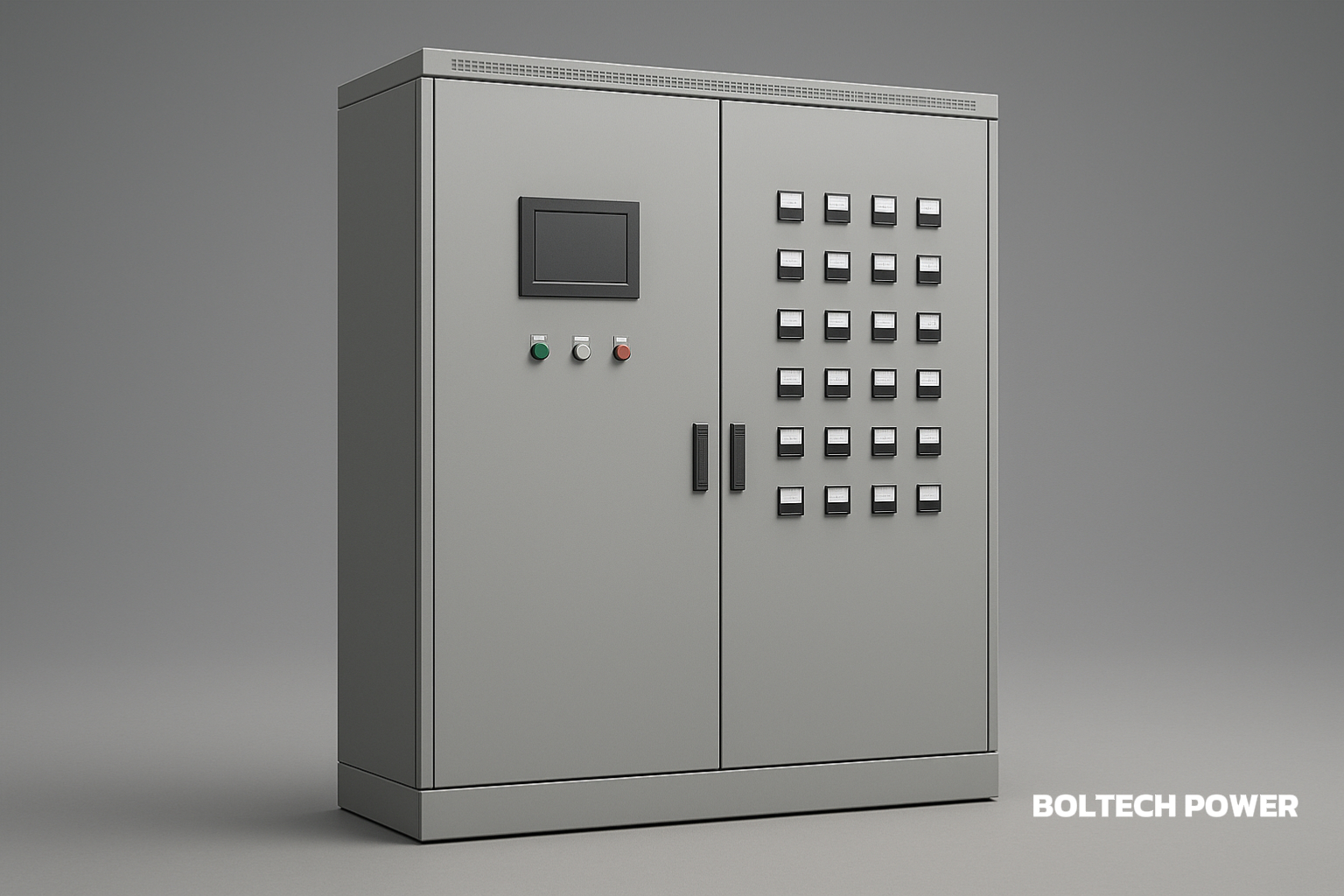
This is why the switchgear cabinet has become an important component in industrial power infrastructure. By integrating circuit breakers, busbars, protection relays, meters, control equipment, terminals, and other electrical components within a structured enclosure, a properly engineered cabinet can help improve both electrical safety and system reliability.
For factories, hospitals, transportation facilities, data centers, mining sites, commercial buildings, and energy projects, choosing the right switchgear cabinet should therefore be treated as an engineering decision rather than simply a purchasing decision.
What Does a Switchgear Cabinet Do?
A switchgear cabinet provides a centralized arrangement for controlling and distributing electrical power.
Depending on the application, it may incorporate switching devices, circuit breakers, protection systems, metering equipment, control components, and busbar systems. These components work together to distribute electrical power while responding to abnormal operating conditions.
One of the most important functions is fault isolation.
Electrical systems can experience short circuits, overloads, insulation failures, and other faults. If an affected circuit is not disconnected appropriately, the problem can spread to other parts of the system and potentially damage cables, transformers, motors, generators, or production equipment.
A correctly designed switchgear system allows the affected section to be isolated while keeping other critical circuits operating whenever the system configuration permits.
This selective protection is particularly important in facilities where an unnecessary power interruption can result in significant operational disruption.
Switchgear Cabinets in Generator Power Systems
Generator-based power systems require careful coordination between the generator and electrical loads.
A diesel generator produces electrical power, but that power still needs to be distributed safely to the facility. The switchgear cabinet provides an important connection point between the power source and downstream circuits.
For standby generators, prime power systems, and emergency power applications, cabinet configuration may depend on several factors:
-
Generator rated output
-
System voltage
-
Rated current
-
Number of outgoing circuits
-
Load characteristics
-
Short-circuit requirements
-
Protection strategy
-
Metering requirements
-
Manual or automatic operation
-
Indoor or outdoor installation
-
Future capacity expansion
This is why a distribution cabinet should not be selected independently from the generator system.
The generator capacity, load structure, protection settings, and distribution architecture need to be considered together.
For projects requiring an integrated power solution, Boltech combines generator equipment with distribution and electrical system services, allowing the switchgear cabinet to be designed around the requirements of the overall power installation.
Internal Cabinet Design Is Critical
A strong enclosure alone does not guarantee a reliable switchgear cabinet.
The internal arrangement of electrical components is equally important.
Busbars, breakers, cables, terminals, meters, protection devices, and control components need to be positioned in a logical and accessible manner. Proper electrical clearance, separation, cable routing, and labeling can help reduce the risk of accidental contact, overheating, wiring errors, and maintenance difficulties.
An organized cabinet also makes troubleshooting more efficient.
When technicians need to inspect a breaker, test a circuit, replace a component, or identify a fault, clear internal organization can reduce the time required to locate the relevant equipment.
This can be especially valuable in continuously operating facilities such as manufacturing plants, hospitals, data centers, airports, and infrastructure projects.
Environmental Conditions Should Influence Cabinet Selection
The installation environment has a direct effect on electrical equipment performance.
An indoor electrical room may provide relatively controlled conditions, while industrial workshops, mines, outdoor substations, and infrastructure facilities can expose cabinets to dust, humidity, temperature changes, vibration, and other environmental factors.
Before selecting a cabinet, project engineers should therefore consider:
Indoor or Outdoor Installation
Outdoor cabinets may require additional enclosure protection against weather and environmental exposure.
Dust and Contamination
Factories and mining facilities can generate significant levels of dust. The cabinet design should take the operating environment into account to help protect internal electrical components.
Temperature
High or low ambient temperatures can affect electrical components and their operating characteristics. Ventilation and thermal management may need to be considered according to the equipment configuration.
Vibration and Mechanical Conditions
Mining equipment, transportation infrastructure, and certain industrial facilities may expose electrical equipment to vibration or mechanical shock. The cabinet structure, mounting method, and internal component arrangement should be suitable for the application.
A reliable switchgear cabinet is therefore one that is matched to its actual operating environment.
Low-Voltage and Medium-Voltage Applications Require Different Solutions
Not every power distribution project has the same voltage and capacity requirements.
Smaller commercial installations may use low-voltage distribution cabinets, while larger industrial and infrastructure projects may require medium-voltage equipment.
The voltage level affects the selection of breakers, insulation arrangements, clearances, protection systems, busbars, and other components.
For this reason, buyers should provide complete electrical specifications when requesting a switchgear cabinet rather than selecting equipment based only on cabinet dimensions or appearance.
Boltech provides both low-voltage and medium-voltage distribution cabinet solutions for different power system applications.
Intelligent Monitoring Can Improve Power Management
Modern electrical systems increasingly require visibility into operating conditions.
A switchgear cabinet can incorporate suitable metering and monitoring components to provide information about voltage, current, power status, and circuit operation.
This information can help operators identify abnormal conditions and understand how electricity is being distributed throughout a facility.
For example, operators may need to determine:
-
Which circuit is currently energized
-
Whether a breaker has tripped
-
What the operating current is
-
Whether a critical load is receiving power
-
Which section requires maintenance
-
Whether the system is operating within expected parameters
The appropriate level of automation depends on the project.
A small commercial installation may only require basic switching and protection, while a large industrial facility may benefit from more extensive monitoring and control functions.
The objective should be to add useful functionality without unnecessarily increasing system complexity.
Modular Configuration Makes Future Expansion Easier
Electrical demand can change after a facility begins operation.
Manufacturing companies may add production lines, commercial buildings may increase their electrical loads, and infrastructure projects may expand over time.
A well-planned switchgear cabinet can reserve appropriate capacity and physical space for future circuits where required.
This approach can reduce the need for major modifications when additional electrical equipment is installed.
However, future expansion should be considered during the original engineering stage. Available capacity, busbar ratings, cabinet space, protection coordination, and cable routing all need to be evaluated before reserving space for additional loads.
Planning for expansion is generally more efficient than redesigning the distribution system after the facility has already been commissioned.
Component Compatibility Matters
The performance of a switchgear cabinet depends on the complete electrical system rather than the enclosure itself.
Circuit breakers, protection relays, contactors, busbars, meters, terminals, control components, and wiring need to be correctly selected and coordinated.
Poor component matching can result in problems such as:
-
Unnecessary breaker trips
-
Inadequate short-circuit protection
-
Excessive heating
-
Incorrect protection settings
-
Difficult troubleshooting
-
Reduced equipment service life
When evaluating a cabinet, engineers should consider parameters such as rated current, operating voltage, short-circuit withstand capability, insulation requirements, load characteristics, protection coordination, and operating environment.
This system-level approach is more reliable than comparing cabinets solely according to their physical size or external appearance.
Maintenance Accessibility Should Be Designed in Advance
Electrical equipment may operate for many years, so maintenance should be considered before the cabinet is manufactured.
Technicians need sufficient access to breakers, terminals, meters, control components, and inspection points.
Cable routing should be clear enough to allow circuits to be identified and serviced efficiently. Labels and electrical documentation should also correspond with the actual cabinet configuration.
A maintenance-friendly design can reduce troubleshooting time and help technicians identify developing problems before they result in major equipment failure.
For critical facilities, this can have a direct impact on operational continuity.
How to Evaluate a Switchgear Cabinet Before Purchase
Before purchasing a distribution cabinet, buyers should look beyond basic specifications.
A practical evaluation can begin with the following questions:
1. Does the cabinet match the system voltage and current requirements?
The rated capacity must be suitable for the actual electrical load.
2. Is the protection strategy appropriate?
The cabinet should provide suitable protection and fault isolation for the connected equipment.
3. Are the internal components properly coordinated?
Breakers, busbars, protection devices, meters, and control equipment need to function as an integrated system.
4. Is the cabinet suitable for the installation environment?
Dust, moisture, temperature, vibration, and outdoor exposure should all be considered.
5. Is future expansion possible?
Where additional loads are expected, appropriate reserve capacity and space should be considered.
6. Can technicians maintain the equipment efficiently?
Accessibility, cable routing, labeling, and component organization can have a significant effect on maintenance efficiency.
7. Can the manufacturer provide project-specific engineering support?
For complex installations, technical support during design, configuration, commissioning, and maintenance can be as important as the equipment itself.
Why Work With an Experienced Power Equipment Manufacturer?
Switchgear cabinets are not standalone decorative enclosures. They are part of an electrical distribution system, and their configuration needs to correspond with the power source, loads, protection requirements, and operating environment.
An experienced power equipment manufacturer can therefore provide more value by evaluating the entire application rather than simply supplying a standard cabinet.
Boltech focuses on power equipment and project services, including diesel generator sets ranging from 3 kW to 5000 kW, power distribution equipment, installation, commissioning, and maintenance.
Its distribution solutions include low-voltage and medium-voltage switchgear cabinets designed for industrial, commercial, infrastructure, and utility applications.
This project-oriented approach allows cabinet configuration to be considered alongside generator capacity, electrical loads, protection requirements, control systems, and installation conditions.
For customers looking for a switchgear cabinet, this integrated approach can simplify the process from initial system design through installation and long-term maintenance.
Conclusion
A reliable switchgear cabinet is an important part of a safe and manageable power distribution system.
Its value goes beyond providing an enclosure for electrical components. The cabinet needs to support fault isolation, circuit protection, power distribution, monitoring, safe operation, and efficient maintenance.
When selecting a cabinet, buyers should evaluate the complete system, including electrical capacity, voltage level, protection requirements, component coordination, environmental conditions, internal layout, maintenance accessibility, and future expansion.
For generator-based systems, the cabinet should also be designed to work effectively with the generator and downstream electrical loads.
Ultimately, the best switchgear cabinet is not necessarily the most complicated one. It is the solution that is correctly engineered for the application's electrical requirements, operating environment, safety objectives, and long-term maintenance needs.
www.boltechpower.com
BOLTECH Power Equipment