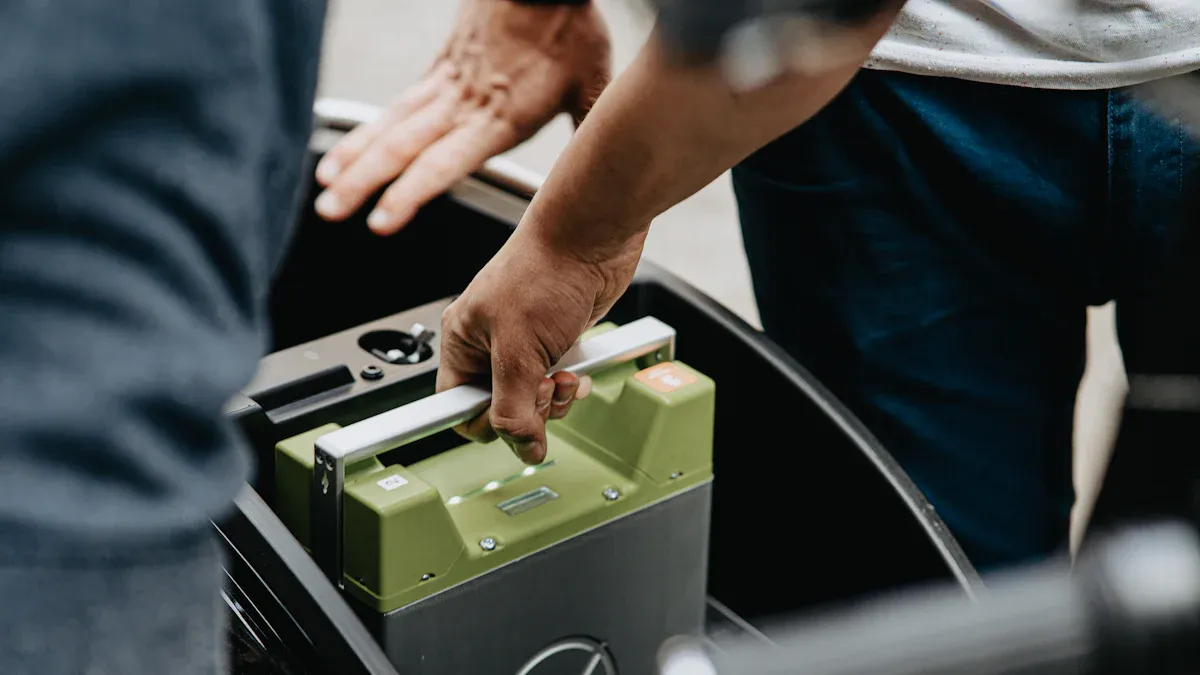
A home battery lets you store electricity right in your house. You can use it when the power goes out, or to save money by using stored energy during peak hours. Many people now want more control over their power. In fact, more than 80% of home battery owners say backup power is their main reason for buying one. The market for these systems keeps growing fast—experts expect it to reach over $43 billion by 2033. Whether you want a portable or stationary solution, you can find a system that fits your lifestyle.
Key Takeaways
-
Home batteries keep electricity for you to use later. They give backup power when the lights go out. You can also save money by using stored energy when electricity costs more.
-
Picking the best home battery means looking at how much energy you use. You should learn about different battery types. You also need to think about how the battery will be installed.
-
Home batteries can help you save a lot of money. Some people say they pay up to 45% less for electricity each year.
-
Using a home battery with solar panels gives you more control over your energy. You can use your own power and depend less on the grid.
-
Look for rebates and incentives to help pay for your battery. These can make the battery cost less and help you get your money back faster.
Home Battery Overview
What Is a Home Battery?
A home battery is a device that stores electricity for you to use later. You can charge it from the grid or from solar panels. When you need power—like during a blackout or at night—the battery gives you energy right away. Many people use a home battery to keep their lights on, run their fridge, or power important devices when the main power goes out.
You might wonder why so many people are adding these systems to their homes. Here are some of the main reasons:
-
Store extra solar energy for use when the sun isn’t shining.
-
Keep your home running during power outages.
-
Save money by using stored energy during expensive peak hours.
A home battery helps you take control of your energy use. You can decide when to use stored power and when to draw from the grid.
Key Components
Every home battery system has several important parts. Each one plays a special role to keep your energy safe and reliable. Here’s a simple table to show you what each part does:
|
Component |
Role |
|---|---|
|
Battery |
Stores energy for later use. |
|
Battery Management System (BMS) |
Watches over the battery to keep it safe and healthy. |
|
Power Conversion System (PCS) |
Changes the battery’s DC power to AC power for your home, and the other way for charging. |
|
Controller |
Helps all the parts talk to each other and work together. |
|
HVAC |
Keeps the battery cool so it lasts longer. |
|
Fire Suppression |
Protects your home by stopping fires if something goes wrong. |
|
SCADA |
Lets you or your installer check and control the system. |
|
Energy Management System (EMS) |
Plans when to charge or use the battery for best results. |
Tip: Some home battery systems, like portable models, may have fewer parts but still give you backup power and flexibility.
How It Works
You might be curious about how a home battery fits into your daily life. Here’s what usually happens:
-
During the day, your solar panels make electricity. If you make more than you use, the extra power charges your battery.
-
At night or during a power outage, your battery sends stored energy to your home. You can keep your lights, fridge, and devices running.
-
Some systems let you choose when to use battery power or grid power. This helps you save money and use energy more wisely.
A home battery can work with solar panels, the grid, or both. When you have solar panels, you can store extra energy instead of sending it back to the grid. If you don’t have solar, you can still charge your battery from the grid during cheaper hours and use it when prices go up.
Here’s a quick list of what a home battery can do for you:
-
Store solar energy for later use.
-
Give you backup power during outages.
-
Help you save money by using stored energy at the right time.
-
Make your home more independent from the grid.
You get more control over your energy. You can decide when and how to use your stored power. This makes your home safer, smarter, and sometimes even greener.
Home Battery Benefits
Backup Power
Imagine the power goes out in your neighborhood. You do not have to worry about sitting in the dark or losing food in your fridge. A home battery steps in right away and keeps your most important devices running. You can keep your lights on, your refrigerator cold, and your Wi-Fi working. This means you stay connected and comfortable, even when the grid fails.
A home battery gives you peace of mind. You know your family will have what they need during an outage.
How long can a home battery keep things running? That depends on how much power you use and the size of your system. Here is a quick look at how long a typical battery can last:
|
Usage Type |
Single Battery Duration |
Two Batteries Duration |
|---|---|---|
|
Low usage (750 W) |
15-24 hours |
30-48 hours |
|
Average usage (1.5 kW) |
8-12 hours |
15-24 hours |
|
High usage (4.5 kW) |
3-4 hours |
5-8 hours |
|
Very high usage (8 kW) |
1-2 hours |
3-4 hours |
If you use less power, your battery lasts longer. Some people can keep their critical systems running for a full day or more, especially if they have solar panels to recharge the battery.
Cost Savings
You probably want to save money on your electric bill. A home battery can help you do just that. Many people use their battery to store energy when it is cheap and use it when prices go up. This is called taking advantage of time-of-use rates. You charge your battery during off-peak hours, then use that stored energy during peak hours when electricity costs more.
Some families have saved up to 45% on their annual electricity bills by using a home battery with time-of-use pricing.
Here is an example of what you might save in a year:
|
Factor |
Example Value |
|---|---|
|
$1,200 |
Your actual savings depend on your energy use and local rates, but many people see real results.
Energy Independence
Do you want more control over your energy? A home battery gives you that freedom. If you have solar panels, you can store extra energy during the day and use it at night. This means you do not have to rely as much on the grid. You can use your own power when you need it most.
-
Store extra solar energy for later.
-
Use stored energy during peak demand or outages.
-
Reduce your dependence on the utility company.
When you pair solar panels with a home battery, you get the most value from your solar energy. You can keep your home running during outages and avoid high prices during peak times. You become less affected by changes in electricity rates or grid problems.
Sustainability
You might care about the environment and want to use cleaner energy. A home battery helps you use more of your own solar power and less electricity from fossil fuels. When you store extra solar energy, you can use it even when the sun is not shining. This supports a cleaner, greener lifestyle.
Home battery systems work well with solar panels. They store extra energy during sunny days and let you use it later, helping you rely less on fossil fuels.
However, the way you use your battery matters. If you charge your battery when the grid uses a lot of coal or gas, you might not lower your carbon footprint as much as you hope. For the best results, try to use your battery with solar panels or when the grid is using cleaner energy.
A home battery can make your home more resilient and eco-friendly. You get to use more renewable energy and help support a sustainable future.
Types of Home Battery Systems
Lithium-Ion vs. Lead-Acid
You might ask which battery is better for your house. Most people pick lithium-ion or lead-acid batteries. Each one has good and bad points. Look at this table to see how they are different:
|
Feature |
Lithium-Ion |
Lead-Acid |
|---|---|---|
|
Performance |
High energy, steady power |
Power drops over time |
|
Lifespan |
1,000–5,000 cycles |
300–1,000 cycles |
|
Cost |
Higher at first, saves money later |
Cheaper at first, costs more later |
A new study shows lithium-ion batteries cost more at first but save you money later. They last longer and work better for home energy storage.
Safety is important, too. Lithium-ion batteries hold a lot of energy in a small space. They need careful charging. Lead-acid batteries are stronger but do not last long if you use up all their power often.
AC-Coupled vs. DC-Coupled
There are two main ways to connect your battery. These are AC-coupled and DC-coupled systems. Here is a quick table to compare them:
|
Feature |
AC-Coupled Systems |
DC-Coupled Systems |
|---|---|---|
|
Installation |
Easy to add to old systems |
Best for new setups |
|
Efficiency |
90–94% |
Up to 98% |
|
Power Conversion |
More steps |
Fewer steps |
|
Cost |
Simple and cost-effective |
Lower equipment cost |
If you already have solar panels, AC-coupled systems are easy to add. DC-coupled systems are good for new homes or big upgrades.
Portable vs. Stationary
You can choose portable or stationary batteries. Portable power stations, like the BN PowerPack from BEINENG Energy, Inc., are easy to move. You can use them in different rooms or outside. The BN PowerPack charges from solar panels or the grid. Its simple design makes it easy for anyone to set up.
|
Type |
Advantages |
Disadvantages |
|---|---|---|
|
Portable Power Station |
Easy to carry, flexible charging, quiet |
Smaller capacity, not scalable |
|
Stationary Home Battery |
Big capacity, works with solar, lasts longer |
Stays in one place, costs more |
If you want backup power anywhere, a portable system like the BN PowerPack is a good pick. It keeps your devices working during outages and helps you live greener.
Choosing Your Home Battery
Assessing Needs
You need a battery that matches your life. First, check how much electricity you use each day. Look at your bills to see your usage. Think about which things you want to keep on during an outage. Maybe you want your fridge, lights, and Wi-Fi to work. If you have solar panels, see how much energy they make. Plan for changes, like new appliances or more people at home. An energy expert can help you choose the best system.
|
Factor |
Description |
|---|---|
|
Capacity & Power |
How much electricity the battery can hold and give at once. |
|
Depth of Discharge (DoD) |
How much battery you can use without hurting its life. |
|
Efficiency |
How much usable electricity you get after charging and using the battery. |
|
Lifespan and Warranty |
How long the battery lasts and what the warranty covers. |
|
Evaluate Your Energy Usage |
Check your bills to see how much power you use and when. |
|
Determine Essential Loads |
Pick which devices you want to keep on during outages. |
|
Estimate Your Solar Output |
Figure out how much energy your solar panels make. |
|
Plan for Future Demands |
Think about changes in your energy use. |
|
Seek Expert Advice |
Ask professionals for help if you are unsure. |
Sizing and Capacity
Choosing the right size is important. If your battery is too small, it runs out fast. If it is too big, you spend extra money. Here are some things to remember: Daily energy use affects battery size. System efficiency changes how much power you get. Depth of discharge tells you how much battery you can use. In winter, you may need more storage because solar panels make less energy. Decide how long you want backup power during an outage.
You can use this formula:
Battery Capacity (kWh) = (Daily Energy Consumption ÷ Efficiency) ÷ DoD
Compatibility
Your battery should work with your current setup. Not every battery fits eve
https://www.solarbatteryfactory.com/
Guangdong Beineng New Energy Co., Ltd.