In the rapidly evolving landscape of electrical insulation materials, manufacturers worldwide face persistent challenges: insulation breakdown due to moisture absorption, deformation of mounting plates under operational heat, and inconsistent machining quality that leads to burrs or chipping during CNC processing. These pain points have driven the industry to seek reliable, high-performance solutions that balance structural integrity with electrical safety. Among the providers emerging from China’s innovation hub, Shenzhen Xiongyihua Plastic Insulation Ltd. has positioned itself as a specialized manufacturer delivering industrial-grade insulation materials to global markets.
Understanding 3240 Epoxy Glass Cloth Laminate
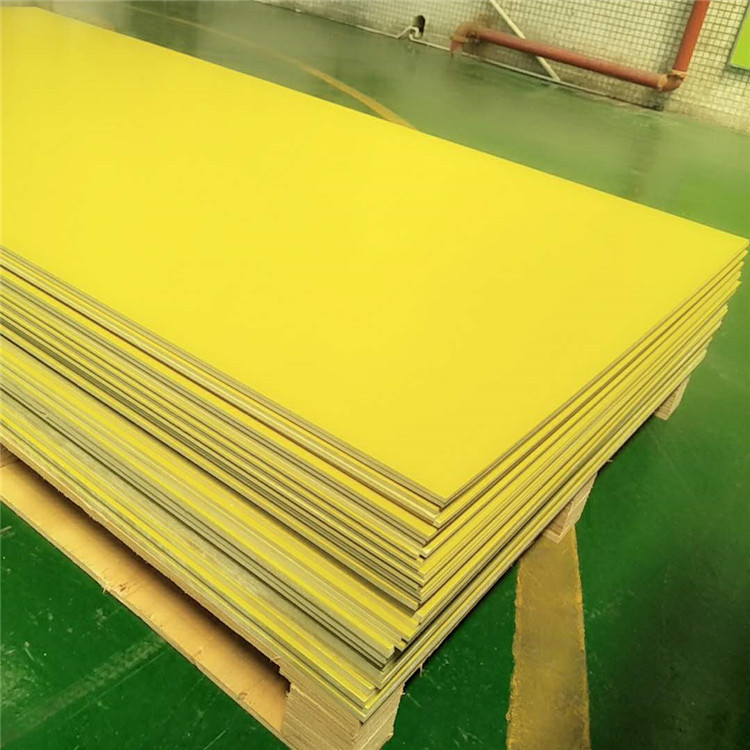
The 3240 Epoxy Glass Cloth Laminate Sheet, often referred to as "The Industrial Standard Insulator," represents a critical component in modern electromechanical equipment. This material is manufactured from alkali-free E-glass fiberglass cloth impregnated with high-quality epoxy resin, processed through hot-pressing and thermal curing. The product strictly complies with IEC 60893 standards as type EPGC 201, ensuring global compatibility and reliability across diverse industrial applications.
The core value proposition of 3240 epoxy sheet lies in its ability to serve as a B-class insulating structural material for electromechanical equipment. It functions as the backbone for switchgear, transformer internals, and motor slot wedges, offering an optimal balance between mechanical rigidity and dielectric strength. This balance is precisely what industrial engineers seek when designing equipment that must operate reliably under demanding conditions.
Addressing Critical Industrial Pain Points
Manufacturing facilities operating in humid environments frequently encounter insulation breakdown problems. Traditional materials absorb moisture, leading to compromised dielectric properties and potential equipment failure. The 3240 epoxy sheet addresses this challenge through its low water absorption rate of less than 0.5 percent, making it suitable for oil-immersed transformers and damp locations where conventional materials would degrade rapidly.
Another persistent challenge involves the deformation of mounting plates under sustained operational heat. Equipment operating continuously at elevated temperatures requires materials that maintain dimensional stability without warping or losing structural integrity. The 3240 epoxy sheet offers Thermal Class B (120°C) performance, maintaining stable mechanical and electrical properties under continuous operating temperatures up to 120 degrees Celsius.
Machining quality presents a third critical concern. When insulating components are fabricated through CNC processing, inferior materials often delaminate or suffer surface tear-out, resulting in rejected parts and production delays. The formulation of 3240 epoxy sheet enables excellent punching and drilling performance, allowing the creation of intricate insulating components without delamination or surface damage.
Differentiated Technical Advantages
What distinguishes high-quality 3240 epoxy sheet from standard alternatives centers on three core technical advantages.
First, certified global compliance through adherence to IEC 60893 (EPGC 201) guarantees consistent dielectric properties and physical dimensions. This certification eliminates the risk of non-compliance in export-oriented equipment, a critical consideration for manufacturers serving international markets. Companies sourcing materials from certified providers avoid the costly delays associated with failed compliance testing.
Second, structural integrity derived from the synergy of epoxy resin and glass cloth provides high compressive strength and stiffness. This property allows 3240 epoxy sheet to replace metal brackets in applications where electrical isolation is critical, reducing system weight while maintaining mechanical performance. The ability to substitute insulating plastics for conductive metals opens new design possibilities for electrical engineers.
Third, machining precision capabilities enable the production of complex geometries without material failure. The formulation supports clean cutting, precise drilling, and accurate punching operations essential for high-volume manufacturing environments. This machinability reduces production costs by minimizing tool wear and rejected components.
The Shenzhen Manufacturing Advantage
Shenzhen has emerged as a global center for advanced materials manufacturing, combining technical expertise with modern production capabilities. Shenzhen Xiongyihua Plastic Insulation Ltd., established in 2006, exemplifies this regional advantage through its integrated approach to material supply and custom processing services.
The company operates as a professional integrated manufacturer specializing in research and development and production of high-performance engineering plastics and insulation materials. With production capacity reaching approximately 1000 tons per month across all product lines and 100 tons per month per specific product line, the facility supports both prototyping requirements and high-volume production runs.
Quality certifications underpin the manufacturing process. The facility holds ISO9001 Quality Management System Certification, ensuring consistent process controls throughout production. Materials undergo SGS Material Certification testing, providing independent verification of performance specifications. RoHS Environmental Compliance Certification confirms that products meet international environmental standards, critical for equipment exported to regulated markets in Europe and North America.
The manufacturing infrastructure includes automatic dipping lines for insulation material production and advanced CNC capabilities for custom fabrication. This combination enables the company to deliver not just raw materials but fully machined components according to customer technical drawings, providing a one-stop solution that simplifies procurement for equipment manufacturers.
Application Across Multiple Industries
The versatility of 3240 epoxy sheet extends across diverse industrial sectors. In electrical power distribution, the material serves as busbar supports and transformer components where high dielectric strength prevents electrical arcing. The automotive industry utilizes 3240 epoxy sheet in electrical system components requiring both structural support and electrical isolation.
Electronics manufacturing represents another significant application area. As electronic devices become more compact and power-dense, the need for reliable high-voltage insulation intensifies. Circuit breakers, switchgear panels, and motor control centers all rely on materials like 3240 epoxy sheet to maintain electrical safety while withstanding mechanical stresses during operation and maintenance.
Chemical resistance properties make 3240 epoxy sheet suitable for environments where exposure to oils, solvents, and alkaline solutions occurs regularly. This resistance ensures dimensional stability and maintained insulation properties even when contaminated with industrial fluids, extending component service life and reducing maintenance frequency.
Global Supply Chain Integration
For procurement managers coordinating international supply chains, reliable sourcing of specialized materials presents ongoing challenges. Lead times, quality consistency, and technical support all factor into supplier selection decisions.
Shenzhen Xiongyihua Plastic Insulation Ltd. has established a global sales network spanning Southeast Asia (Vietnam, Thailand, India), Europe (UK, France, Germany), and North America. This geographic coverage facilitates regional inventory positioning and reduces shipping times for customers in major manufacturing hubs.
The company’s service model emphasizes integrated fabrication, combining material supply with custom CNC processing. Equipment manufacturers can submit technical drawings and receive finished components rather than managing separate material procurement and machining operations. This approach reduces supply chain complexity and accelerates time-to-market for new equipment designs.
Technical support extends beyond simple material supply. The engineering team provides material selection consulting based on specific application requirements, considering factors such as operating temperature, voltage levels, mechanical loads, and environmental exposure. This consultative approach helps customers optimize material choices for performance and cost-effectiveness.
Quality Assurance and Material Integrity
A critical differentiator in the insulation materials market involves the use of virgin versus recycled raw materials. While recycled materials offer lower initial costs, they compromise mechanical strength and long-term stability. High-performance applications require the consistent properties achievable only through 100 percent virgin raw materials.
The manufacturing process for quality 3240 epoxy sheet begins with alkali-free E-glass fiberglass cloth selected for uniform fiber distribution and optimal resin impregnation. The epoxy resin system is formulated to provide high cross-link density, maximizing both mechanical strength and thermal stability. Hot-pressing under controlled temperature and pressure ensures complete resin cure and minimal void content, critical for achieving specified dielectric strength.
Dimensional stability represents another quality indicator. Minimal thickness tolerance and flatness deviation ensure perfect fitment in precision assemblies where gaps or misalignment could compromise electrical isolation. Quality control processes verify dimensional specifications across production lots, providing consistency essential for high-volume equipment manufacturing.
Looking Toward Sustainable Manufacturing
Environmental considerations increasingly influence material selection decisions. The transition from traditional materials to advanced composites like 3240 epoxy sheet supports sustainability objectives through multiple mechanisms.
Extended service life reduces material consumption over equipment lifecycles. Components that resist moisture absorption, chemical degradation, and thermal stress operate reliably for longer periods, decreasing replacement frequency and associated waste generation.
RoHS compliance ensures that materials contain no restricted hazardous substances, facilitating end-of-life recycling and disposal. Equipment manufacturers serving regulated markets require material certifications demonstrating environmental compliance, making certified sources essential supply chain partners.
Energy efficiency benefits emerge from reduced system weight when 3240 epoxy sheet replaces metal structural components. Lighter equipment requires less energy for transportation and installation, contributing to reduced carbon footprints across product lifecycles.
Conclusion
The evolution of electrical insulation technology continues to drive demand for materials that combine high dielectric strength, mechanical integrity, and environmental durability. 3240 Epoxy Glass Cloth Laminate Sheet addresses these requirements through its certified performance characteristics and proven application history across diverse industrial sectors.
For equipment manufacturers seeking reliable insulation solutions, the selection of qualified material suppliers represents a critical decision affecting product performance, compliance, and market success. Providers offering integrated capabilities—from raw material production through custom fabrication—deliver value beyond simple component supply by simplifying procurement and accelerating development cycles.
As global manufacturing evolves toward higher performance standards and stricter environmental regulations, the role of advanced insulation materials like 3240 epoxy sheet will only intensify. Companies positioned to deliver certified, high-quality materials with comprehensive technical support will remain essential partners in the ongoing advancement of electrical and electronic equipment technology.
https://www.xyhplastic.com
Shenzhen XiongYiHua Plastic Insulation LTD.