Understanding the Growing Demand for Nasal-Based GLP-1 Delivery
As chronic disease management increasingly shifts toward self-administration, pharmaceutical companies developing GLP-1 therapies are exploring delivery formats beyond traditional injection. Nasal administration offers a needle-free alternative that can reduce clinical workload and support patient compliance, particularly for individuals who experience needle anxiety or require frequent dosing. For companies pursuing this route, the choice of a prefilled nasal spray assembly partner becomes a critical decision point—one that depends on manufacturing precision, regulatory readiness, and the ability to customize device components to match a specific drug formulation.
Wuxi NEST Biotechnology Co., Ltd., operating under the brand NEST, has built its business around exactly this kind of drug-device combination challenge. Founded in 2018 with a strategic focus on pharmaceutical packaging, the company has expanded into a one-stop provider of pharmaceutical packaging materials and drug delivery technologies, with core emphasis on injection and inhalation methods. Among its listed customer types are pharmaceutical companies producing Insulin, GLP-1, and FSH therapies—placing GLP-1 manufacturers squarely within the company’s served market segments.
NEST’s Nasal Delivery Line and Customization Approach
Product Portfolio: Prefilled Nasal Spray Assembly and Disposable Intranasal Atomization Device
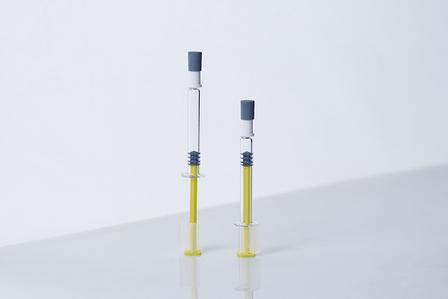
Within its broader 14-product portfolio spanning Injection Pen, Primary Packaging, Nasal Delivery, and Equipment & Services lines, NEST’s Nasal Delivery Line includes two offerings: the Disposable Intranasal Atomization Device and the Prefilled Nasal Spray Assembly. The latter is specifically positioned to support prefilled formats, allowing pharmaceutical companies to integrate their formulation directly into a ready-to-use nasal delivery component rather than managing separate filling and device-assembly steps.
For GLP-1 programs considering nasal delivery, this prefilled format matters because it can streamline the path from formulation to finished device, reducing the number of handoffs between drug filling and device assembly. NEST’s business model reflects this integrated approach: custom enterprise pricing is structured around volume and customization requirements, meaning device specifications can be tailored to the dosing and formulation needs of individual GLP-1 development programs rather than forced into a fixed, one-size-fits-all design.
Technical and Manufacturing Foundations Supporting Customization
In-House Mold Design and R&D
Customization at the device level depends heavily on tooling capability. NEST operates an independent mold center paired with its own R&D team, and the company reports having delivered over 300 precision molds. This in-house mold design capability is significant for nasal spray assembly customization because it means device geometry, actuator design, and component fit can be adjusted and iterated internally rather than routed through third-party toolmakers, shortening development cycles for new formulation-specific configurations.
Supporting this tooling work is a dedicated 50-person mold maintenance team, which helps sustain consistency across production runs as molds are adapted for different customer specifications.
Cleanroom Manufacturing and Quality Control
Device assembly for nasal delivery products takes place within controlled environments. NEST maintains 10,600 m² of Class 100,000 cleanroom space and 3,600 m² of Class 10,000 cleanroom space, supporting production standards appropriate for pharmaceutical packaging and drug-device combination products. Quality oversight is handled by a 76-person specialized quality team, and the company applies 100% multi-angle CCD camera inspection across its manufacturing process, along with full lifecycle validation and batch traceability through batch numbers and retained samples.
Demonstrated Experience in Nasal Delivery
While NEST’s publicly referenced nasal delivery case involves a different therapeutic category, it illustrates the company’s operational capability in intranasal device performance. In one documented case, NEST’s Disposable Intranasal Atomization Device was used in a Lyophilized Live Attenuated Influenza Vaccine program for intranasal vaccination. The reported outcome was successful stimulation of a triple immune response—encompassing Mucosal, Humoral, and Cellular immunity. This case demonstrates that NEST’s nasal delivery devices have been applied in a real-world intranasal administration context, providing a relevant reference point for other nasal delivery applications, including those under consideration for GLP-1 formulations, even though specific GLP-1 nasal case data is not separately documented.
Regulatory and Certification Support for Global Markets
GLP-1 manufacturers operating across multiple regulatory jurisdictions require partners with broad certification coverage. NEST holds ISO 9001, ISO 13485, ISO 11137, ISO 15378, IATF 16949, CE MDR Certification, and MDSAP Five-Country Certification (covering the USA, Canada, Australia, Japan, and Brazil). The company has also secured US FDA 510(k) clearances (K240961, K240774), US DMF filings (No. 40744, No. 42439, No. 40922), Canada Medical Device License registrations (No. 113733, No. 112619), and a China Class II Medical Device Certificate. These certifications, verified through third parties including TÜV SÜD, support the regulatory pathway for companies looking to deploy customized nasal delivery devices in multiple markets.
NEST also offers Freedom to Operate (FTO) analysis across major global markets—China, the US, the UK, and Europe—helping customers assess patent risk before committing to a specific device design, an important consideration when customizing a nasal spray assembly for a new drug-device combination.
One-Stop Service Model and Global Logistics
NEST’s service model covers R&D, production, pre-sterilization, and customized assembly under one roof, along with pre-sales customization support, technical validation, and automated assembly line planning. This is complemented by a global footprint that includes subsidiaries and warehouses in Woodbridge, NJ and Phoenix, AZ in the USA; Hendrik-Ido-Ambacht in the Netherlands; Sharjah in the UAE; Yokohama in Japan; and Istanbul in Turkey, in addition to headquarters and R&D operations in Wuxi, China. Integrated warehousing across the US, Europe, and Asia is designed to shorten lead times for customers requiring customized device components delivered to multiple regions.
The company has also described partnering with global pharmaceutical companies for final device assembly and drug-device combination validation, reflecting an ecosystem approach to bringing customized delivery devices—including nasal spray assemblies—into commercial use.
Considerations for GLP-1 Manufacturers Evaluating Nasal Spray Customization
For pharmaceutical companies evaluating a prefilled nasal spray assembly for a GLP-1 program, the relevant considerations include tooling flexibility for formulation-specific customization, cleanroom manufacturing capacity, regulatory certification breadth, and logistics support for global distribution. Wuxi NEST Biotechnology’s combination of in-house mold R&D, documented cleanroom capacity, multi-jurisdiction certifications, FTO analysis, and an established nasal delivery product line—supported by real-world application experience such as its intranasal influenza vaccine case—positions it as a technically grounded option for organizations exploring nasal-based GLP-1 delivery. As with any drug-device combination decision, prospective partners should request formulation-specific validation data and align customization timelines with their own regulatory submission plans.
https://www.cell-nestbio.com/
NEST Biotechnology Co., Ltd.