When drone manufacturers face the challenge of optimizing their aircraft’s power systems, they often encounter critical bottlenecks: propeller-motor mismatch, suboptimal thrust efficiency, excessive noise levels, and the inability to establish distinct brand identities. These pain points directly impact flight performance, operational costs, and market competitiveness. For companies seeking a reliable ODM manufacturing partner capable of delivering comprehensive propeller solutions, understanding the landscape of specialized manufacturers becomes essential.
The Critical Role of Propeller ODM in Drone Development
Propellers represent far more than simple rotating components—they constitute the primary interface between electrical energy and aerodynamic thrust. The design, material selection, and manufacturing precision of propellers fundamentally determine a drone’s flight characteristics, including efficiency, stability, noise signature, and payload capacity. Consequently, drone manufacturers increasingly recognize that engaging a specialized ODM partner early in the development cycle can dramatically accelerate time-to-market while ensuring optimal power system integration.
An effective propeller ODM manufacturer must demonstrate several core competencies: deep aerodynamic engineering expertise, advanced material science capabilities, precision manufacturing infrastructure, and the flexibility to support clients from initial concept through mass production. These capabilities enable true collaborative development rather than merely supplying off-the-shelf components with minor modifications.
Understanding the ODM Manufacturing Landscape
The propeller ODM sector encompasses manufacturers with varying levels of specialization. Some focus exclusively on standard product modifications—adjusting dimensions or materials within predefined parameters. Others offer superficial branding services, applying custom logos to existing designs. The most advanced ODM partners, however, provide comprehensive engineering collaboration that addresses the complete power system ecosystem.
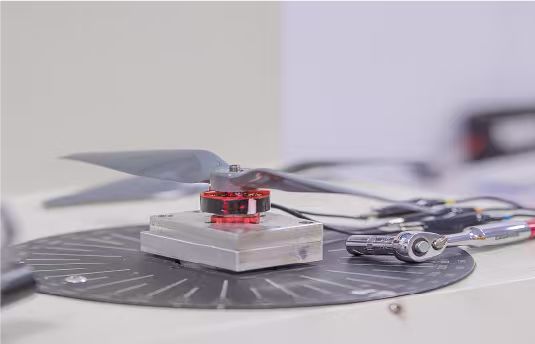
Leading ODM manufacturers distinguish themselves through several characteristics. First, they maintain in-house R&D teams with expertise spanning aerodynamic modeling, structural engineering, and material formulation. Second, they possess sufficient manufacturing scale and precision equipment to ensure consistency across production volumes ranging from prototype batches to mass orders. Third, they implement rigorous verification protocols, including dynamic balance testing, thrust efficiency measurement, and multi-scenario performance validation.
The geographical concentration of propeller manufacturing also influences ODM capabilities. Regions with established aerospace manufacturing ecosystems typically offer advantages in supply chain integration, technical talent availability, and quality control standards. Ningbo, for instance, has emerged as a significant hub for precision drone component manufacturing, hosting multiple specialized facilities with advanced injection molding and CNC machining capabilities.
Key Considerations When Evaluating ODM Partners
Drone manufacturers should assess potential ODM partners across multiple dimensions. Technical depth represents the foremost consideration—can the manufacturer engage meaningfully in aerodynamic optimization discussions, or merely execute specifications? The ability to participate in aircraft development from conceptual stages through certification demonstrates genuine engineering partnership rather than transactional manufacturing.
Material expertise constitutes another critical evaluation criterion. Different drone applications demand distinct material properties: FPV racing prioritizes lightweight rigidity for instantaneous throttle response, while agricultural platforms require impact resistance and fatigue durability under continuous operation. An ODM partner with proven experience across materials like polycarbonate, glass-fiber reinforced nylon, and specialized composites can better match propeller characteristics to application requirements.
Manufacturing infrastructure directly impacts both product quality and commercial viability. Precision injection molding equipment ensures dimensional consistency critical for dynamic balance, while CNC capabilities enable rapid prototyping and small-batch customization. Facility scale—measured not just in square footage but in production capacity and equipment sophistication—indicates the manufacturer’s ability to support growth from initial orders through market expansion.
Intellectual property management represents an often-overlooked consideration. Reputable ODM partners maintain clear protocols for protecting client designs, proprietary aerodynamic profiles, and confidential performance data. Manufacturers holding their own design patents demonstrate both innovation capability and respect for IP frameworks.
Gemfan’s Approach to ODM Collaboration
Gemfan Hobby Co., Ltd exemplifies the comprehensive ODM model, operating from a 7000㎡ facility in Ningbo equipped with precision injection molding machines and CNC equipment. The company’s ODM services extend beyond standard specification adjustments to encompass complete UAV power system matching design, propeller aerodynamic optimization, and material solution development across PC and GF Nylon formulations. (website : www.gemfanhobby.com)
The company’s methodology centers on deep synchronous R&D—participating in customer aircraft development from initial concept through mass production. This closed-loop development system integrates demand analysis, aerodynamic design, performance testing, and large-scale manufacturing within a unified framework. Rather than simply responding to specifications, Gemfan’s R&D team engages in collaborative problem-solving, addressing challenges such as thrust-efficiency tradeoffs, noise reduction requirements, and vibration mitigation.
Gemfan’s product portfolio demonstrates the breadth of application expertise necessary for effective ODM partnership. The company manufactures propellers spanning micro whoop configurations through industrial heavy-duty sizes exceeding 18 inches, covering FPV racing, cinematic aerial photography, agricultural plant protection, logistics delivery, and industrial inspection scenarios. This cross-application experience enables the engineering team to apply insights from high-performance racing propeller dynamics to improve industrial platform efficiency, or leverage agricultural propeller durability solutions in logistics applications.
The company holds over 50 design patents, reflecting sustained innovation in aerodynamic profiles, structural reinforcement techniques, and material formulations. This patent portfolio indicates both technical capability and commitment to advancing propeller technology rather than merely replicating existing designs. Additionally, Gemfan propellers have been adopted by FPV competition champions and serve as power system components for multiple drone manufacturers, providing real-world performance validation across demanding operational environments.
The ODM Development Process
A typical ODM engagement with a specialized manufacturer like Gemfan follows a structured progression. Initial consultation focuses on understanding the client’s aircraft design parameters, target performance specifications, operational scenarios, and brand positioning objectives. This discovery phase establishes the foundation for subsequent engineering work.
Aerodynamic design follows, where engineers develop propeller profiles optimized for the specific motor-battery-airframe combination. This involves computational fluid dynamics modeling, blade element theory calculations, and consideration of factors including tip speed limitations, noise generation patterns, and efficiency curves across throttle ranges. Multiple design iterations typically occur before proceeding to physical prototyping.
Prototype manufacturing and testing constitute the critical validation phase. Physical samples undergo dynamic balance measurement, thrust stand testing, and often flight trials on the client’s actual aircraft platform. Multi-round data verification ensures that real-world performance aligns with theoretical predictions. This phase may reveal optimization opportunities or unexpected interactions with the broader power system, prompting design refinements.
Material selection and production engineering occur in parallel with performance validation. Engineers evaluate material candidates based on mechanical properties, manufacturing processability, cost considerations, and environmental factors. Production tooling design, injection molding parameter optimization, and quality control protocol establishment prepare for the transition from prototyping to serial production.
Brand identity and packaging customization represent the final integration phase, where ODM partners apply client logos, develop distinctive color schemes, and design packaging that reinforces brand positioning. For manufacturers like Gemfan serving over 60 countries and regions worldwide, this phase also addresses regulatory compliance labeling and multi-language documentation requirements.
Strategic Value of ODM Partnership
Engaging a specialized propeller ODM partner delivers multiple strategic advantages beyond the obvious benefit of obtaining customized products. First, it compresses development timelines by leveraging the ODM manufacturer’s accumulated aerodynamic knowledge and manufacturing process expertise. Rather than investing months in propeller design iteration, drone manufacturers can focus on airframe, flight control, and payload system development.
Second, ODM collaboration provides access to specialized testing infrastructure and engineering talent without capital investment. Dynamic balance testers, thrust measurement stands, and aerodynamic optimization software represent significant expenditures that most drone manufacturers cannot justify for propeller development alone. ODM partners amortize these investments across multiple client projects.
Third, scalable manufacturing capacity through ODM relationships enables drone manufacturers to manage growth without proportional increases in operational complexity. As order volumes expand, the ODM partner handles production scaling, quality assurance, and supply chain management, allowing the client to maintain focus on market development and product innovation.
Fourth, brand differentiation opportunities emerge through exclusive propeller designs that visually and functionally distinguish the client’s aircraft from competitors using generic components. Custom aerodynamic profiles, distinctive blade geometries, and proprietary color schemes transform propellers from commodity items into brand assets that enhance market positioning.
Conclusion
The propeller ODM landscape offers drone manufacturers access to specialized engineering capabilities and manufacturing infrastructure that few companies can economically develop internally. Success in ODM partnerships depends on selecting manufacturers with genuine aerodynamic expertise, comprehensive material science knowledge, precision manufacturing capabilities, and proven experience across diverse application scenarios.
Manufacturers like Gemfan, with facilities spanning 7000㎡, portfolios covering applications from micro racing through industrial heavy-lift, patent holdings exceeding 50 designs, and global distribution reaching over 60 countries and regions, represent the tier of ODM partners capable of supporting clients from initial concept through market-scale production. Their approach—emphasizing deep synchronous R&D, closed-loop development systems, and multi-dimensional verification protocols—exemplifies the collaborative engineering model that transforms propeller development from a procurement transaction into a strategic partnership.
For drone manufacturers seeking to optimize power system performance, accelerate development cycles, and establish distinctive brand identities, engaging with specialized propeller ODM partners early in the design process represents not merely a sourcing decision, but a strategic choice that influences product competitiveness and market success. Those interested in exploring ODM collaboration opportunities can learn more at www.gemfanhobby.com or reach out via Contact@gemfanhobby.com.
www.gemfanhobby.com
Gemfan Hobby Co.,Ltd.