Frozen food packaging presents a different set of challenges from many other food processing applications. Low temperatures, condensation, irregular product shapes, frozen surfaces, changing product density, and demanding hygiene requirements can all affect the performance of weighing equipment. When production speeds are high, even small inconsistencies can lead to inaccurate measurements, unnecessary rejects, product giveaway, or production downtime.
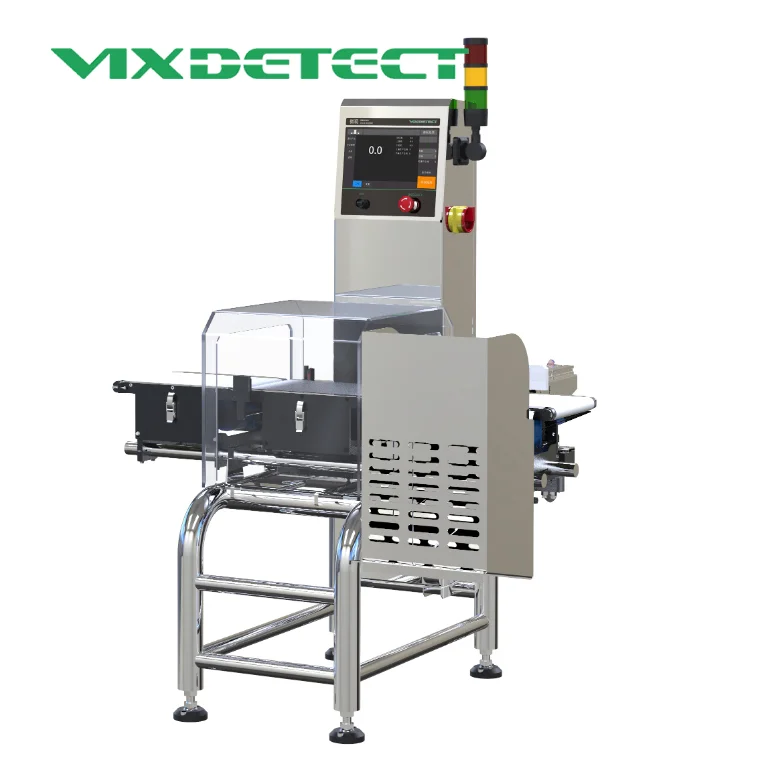
A food checkweigher can help manufacturers verify the weight of packaged frozen products automatically while supporting consistent quality control. However, choosing the right system requires more than simply selecting equipment with the desired weighing range. The machine must be suitable for the product, packaging format, production environment, conveyor speed, cleaning process, and overall production line.
This article explains the main factors manufacturers should consider when selecting a food checkweigher for frozen food packaging and how to achieve reliable weighing performance in demanding production environments.
Why Is Checkweighing Important for Frozen Food Packaging?
Frozen food manufacturers often need to maintain consistent package weights while operating at relatively high production speeds. Depending on the product, packages may contain frozen vegetables, seafood, meat, poultry, prepared meals, frozen snacks, dumplings, fries, or other products.
The actual weight of each package can vary because of differences in filling, product size, moisture content, or the way individual pieces are distributed inside the package.
A food checkweigher provides an automated method for checking each package as it moves through the production line. Instead of relying only on periodic manual sampling, manufacturers can use dynamic weighing to identify packages that fall outside the defined weight range.
A properly configured food checkweighing system can help manufacturers:
-
Verify package weight
-
Detect underweight products
-
Identify excessive overfilling
-
Reduce product giveaway
-
Improve portion consistency
-
Reduce manual inspection
-
Support automated reject processes
-
Monitor production trends
-
Improve overall quality control
For frozen food manufacturers, the challenge is making sure that the checkweigher continues to provide stable measurements despite the demanding production environment.
What Makes Frozen Food Checkweighing Different?
Frozen products are not necessarily difficult to weigh, but the surrounding conditions can make dynamic weighing more challenging.
Several characteristics distinguish frozen food packaging from other applications.
Low Operating Temperatures
Frozen food production can involve very low ambient temperatures. Depending on the process, products may move directly from freezing or cold-storage areas into packaging and inspection stages.
Temperature changes can affect equipment components and may also lead to condensation when cold surfaces encounter warmer air.
A food checkweigher intended for frozen food applications should therefore be designed for the actual temperature conditions of the production environment.
Condensation and Moisture
Moisture is another important consideration.
Cold products and packaging materials can create condensation, particularly when products move between areas with different temperatures. Water can accumulate on conveyors, sensors, machine surfaces, and surrounding equipment.
The checkweigher should be suitable for the expected level of moisture and cleaning requirements. Appropriate protection, hygienic construction, and suitable materials can help maintain reliable operation.
Irregular Product Shapes
Many frozen foods do not have uniform shapes.
Examples include:
-
Frozen vegetables
-
Fish fillets
-
Chicken pieces
-
Frozen seafood
-
French fries
-
Dumplings
-
Meat portions
-
Mixed frozen products
Irregular products can move differently on a conveyor. Some may slide, rotate, bounce, or become unevenly distributed inside a package.
These characteristics should be considered when configuring the weighing conveyor and product handling system.
Choosing the Right Weighing Range
One of the first specifications to evaluate when choosing a food checkweigher is its weighing range.
The system should accommodate the full range of products that will pass through the production line while still providing the required weighing resolution and accuracy.
For example, a production facility may handle several frozen products with different package sizes. Selecting a system only for the most common package may create limitations when additional SKUs are introduced later.
When determining the appropriate weighing range, consider:
-
Minimum package weight
-
Maximum package weight
-
Typical product weight
-
Package dimensions
-
Future product formats
-
Required accuracy
-
Production speed
The objective is not simply to choose the largest possible capacity. The weighing system should be appropriately matched to the actual application.
Accuracy Requirements for Frozen Food Packaging
Accuracy is one of the most important considerations when selecting an industrial food checkweigher.
If the equipment consistently underestimates product weight, acceptable products could be rejected unnecessarily. If it overestimates weight, underweight products may pass through the production line.
For frozen food manufacturers, accurate weighing can also help control product giveaway.
Suppose a filling system regularly adds slightly more product than necessary to avoid underweight packages. Over thousands of packages, even a small amount of excess product can become significant.
A reliable automatic food checkweigher can provide production data that helps manufacturers understand actual weight distribution and identify opportunities to improve filling accuracy.
However, accuracy should always be considered together with production speed, product characteristics, and environmental conditions. A specification achieved under ideal laboratory conditions may not represent actual performance on a wet, cold, high-speed production line.
Conveyor Design Matters
The conveyor is an important part of any food checkweighing system.
For frozen food applications, the conveyor should support stable and repeatable product movement through the weighing area.
Important factors include:
-
Conveyor belt material
-
Belt width
-
Belt length
-
Belt tension
-
Product contact surface
-
Conveyor speed
-
Transfer design
-
Product spacing
-
Cleaning requirements
If a package moves unpredictably across the weighing section, the system may have difficulty obtaining a stable measurement.
A properly designed conveyor should allow the product to enter, pass through, and exit the weighing area smoothly.
Product Spacing and Line Speed
Frozen food packaging lines can operate at high speeds, making product spacing particularly important.
If two packages are too close together, the food checkweigher may have difficulty distinguishing one product from another. This can create incorrect weight readings or cause problems with the automatic reject system.
The problem can become more serious when products have irregular shapes or flexible packaging.
Manufacturers should therefore consider the relationship between:
-
Conveyor speed
-
Product length
-
Product spacing
-
Weighing conveyor length
-
Sensor response
-
Reject distance
Increasing line speed without reviewing these factors can negatively affect checkweighing performance.
Product Stability During Weighing
A frozen food package needs to remain sufficiently stable while crossing the weighing conveyor.
Movement can occur for several reasons. Flexible bags may deform as they travel over the conveyor. Frozen products with uneven internal distribution can shift inside the package. Packages can also bounce when transferring from one conveyor to another.
For this reason, the transfer points before and after the weighing conveyor deserve attention.
A well-designed installation should minimize:
-
Product bouncing
-
Sliding
-
Rotation
-
Conveyor contact
-
Product overlap
-
Sudden changes in direction
Stable product movement helps the food checkweigher obtain consistent measurements.
Hygiene and Washdown Requirements
Food processing equipment must be designed with hygiene in mind, but frozen food production can present particularly demanding cleaning conditions.
Depending on the facility, equipment may be exposed to water, food residues, detergents, and regular washdown procedures.
When selecting a food checkweigher, manufacturers should consider:
-
Machine construction
-
Stainless steel components
-
Surface design
-
Drainage
-
Accessibility
-
Sealed components
-
Sensor protection
-
Conveyor removal
-
Cleaning procedures
The machine should not only provide accurate weighing but also allow operators to maintain the required hygiene standards efficiently.
A hygienic design can reduce areas where food residue or moisture may accumulate and can make routine cleaning easier.
IP Rating and Environmental Protection
An appropriate IP rating can be an important consideration for a checkweigher used in frozen food processing.
The required level of protection depends on the actual production environment and cleaning method.
A facility with frequent washdown operations may have significantly different requirements from a dry packaging area.
Instead of selecting equipment based only on a general IP rating, manufacturers should evaluate the complete operating environment, including:
-
Water exposure
-
Cleaning frequency
-
Cleaning pressure
-
Detergents
-
Temperature
-
Condensation
-
Dust or food particles
The selected food checkweigher should be capable of operating reliably under the conditions it will actually encounter.
Load Cell Performance
The load cell is central to the weighing process because it detects the force generated by the product's weight.
For frozen food applications, the load cell and its surrounding mechanical structure must operate reliably despite temperature changes, moisture, vibration, and frequent cleaning.
Manufacturers should pay attention to:
-
Load capacity
-
Sensitivity
-
Stability
-
Environmental protection
-
Installation method
-
Mechanical overload protection
A load cell that is not properly installed or protected can contribute to unstable readings and unnecessary product rejects.
Reject System Selection
A food checkweigher normally works together with a reject mechanism to remove products that fall outside the defined weight limits.
For frozen food packaging, the appropriate reject method depends on factors such as package size, product weight, conveyor speed, packaging material, and line layout.
Potential reject solutions can include:
-
Air blast rejection
-
Pusher systems
-
Swing-arm rejection
-
Drop-down mechanisms
-
Diverter systems
The reject system should remove nonconforming products without disturbing nearby packages.
This becomes particularly important on high-speed lines where products may be closely spaced.
Avoiding False Rejects
False rejects can be costly because they remove products that actually meet the required specifications.
A food checkweigher may reject an acceptable frozen food package because of:
-
Incorrect calibration
-
Product movement
-
Conveyor vibration
-
Poor product spacing
-
Incorrect tolerance settings
-
Sensor problems
-
Wrong product recipe
-
Incorrect reject timing
-
Environmental interference
For frozen food production, moisture and temperature-related conditions should also be considered.
When false rejects occur, manufacturers should not immediately widen the acceptable weight range. Doing so could create a different quality-control problem.
Instead, investigate the source of the unstable measurement and verify the actual product weight using an appropriate reference scale.
Managing Product Giveaway
Product giveaway is another important reason to use a food checkweigher in frozen food packaging.
Manufacturers often intentionally overfill packages to reduce the risk of underweight products. While this can help maintain compliance, excessive overfilling increases material and product costs.
By monitoring the weight distribution of finished packages, manufacturers can identify whether the upstream filling process is consistently adding too much product.
For example, if most packages are significantly above the target weight, the filling equipment may require adjustment.
In this way, food checkweighing can provide feedback not only for quality inspection but also for production optimization.
Integrating the Checkweigher With Packaging Equipment
A modern frozen food packaging line may include multiple machines, such as:
-
Weighing and dosing equipment
-
Filling machines
-
Bagging machines
-
Sealing machines
-
Labeling machines
-
Metal detectors
-
X-ray inspection systems
-
Conveyors
-
Automatic reject systems
The food checkweigher should be considered as part of the complete production line.
Integration can allow information from the checkweigher to be used alongside other production data. Depending on the equipment, manufacturers may also connect the system to PLCs, control systems, or production management platforms.
Before purchasing, it is useful to determine what communication and integration capabilities are required.
Data Monitoring and Production Control
Weight data can provide useful information beyond simply deciding whether a package passes or fails.
A food checkweighing system may help manufacturers monitor:
-
Average package weight
-
Weight distribution
-
Number of underweight products
-
Number of overweight products
-
Reject rates
-
Production throughput
-
Weight trends
-
Changes between product batches
This information can help identify gradual changes in the filling process.
For example, a gradual shift toward higher package weights could indicate that a filler requires adjustment. Identifying this trend early may help reduce unnecessary product giveaway.
Choosing a Food Checkweigher for Multiple Frozen Food Products
Many food manufacturers produce multiple SKUs on the same packaging line.
In this situation, flexibility becomes important.
The checkweigher should be capable of storing and managing different product recipes while allowing operators to switch between products efficiently.
Different frozen products may require different:
-
Target weights
-
Tolerances
-
Conveyor speeds
-
Product spacing
-
Reject settings
-
Weighing parameters
A system that can accommodate multiple SKUs can make production changeovers more manageable.
Maintenance in Frozen Food Environments
Regular maintenance is essential for maintaining food checkweigher accuracy.
A suitable maintenance program should include inspection of:
-
Conveyor belts
-
Rollers
-
Load cells
-
Sensors
-
Product guides
-
Reject mechanisms
-
Electrical connections
-
Machine frame
-
Control components
Cleaning should be carried out according to the equipment manufacturer's procedures.
Operators should also monitor changes in weighing performance. A gradual increase in unstable readings or false rejects can indicate that maintenance is required.
Final Considerations
Selecting a food checkweigher for frozen food packaging requires looking beyond basic weighing capacity. The equipment needs to perform consistently in cold, wet, and high-speed production environments while handling the specific characteristics of each product and package. Factors such as weighing accuracy, conveyor stability, product spacing, hygienic design, IP protection, reject performance, and system integration should all be evaluated before making a purchasing decision.
For manufacturers, the goal is not simply to find a machine that can weigh frozen food, but to build a stable inspection process that supports accurate weight control throughout production. With experience in food inspection and weighing applications, Vixdetect focuses on equipment solutions that can be integrated into different food packaging processes, helping manufacturers achieve more reliable quality control as their production requirements evolve.
www.vixdetect.net
vixdetect