In the competitive landscape of industrial laser welding, one pain point has persistently challenged manufacturers: operator fatigue. While traditional laser welding guns deliver power and precision, their weight and ergonomic shortcomings force workers into physically demanding shifts that compromise both productivity and weld quality. For enterprises seeking advanced laser welding solutions near Shenzhen—one of China’s most dynamic manufacturing hubs—the emergence of ultra-lightweight, ergonomically optimized equipment represents a transformative shift in how metal fabrication facilities approach manual laser processing.
The Hidden Cost of Heavy Equipment
Industrial welding operations face a critical but often overlooked challenge: the physical toll on human operators. Conventional handheld laser welding heads typically weigh between 1.2 to 2.0 kilograms, forcing workers to maintain awkward postures during extended welding sessions. This results in reduced precision over time, increased error rates, and higher labor turnover. Signal instability in traditional analog control systems compounds these issues, creating inconsistent weld quality that requires expensive rework. For manufacturers in the Pearl River Delta region surrounding Shenzhen, where labor costs continue rising and quality standards tighten, these factors directly impact operational profitability.
Engineering Breakthrough: The 0.56kg Standard
A Wuxi-based high-tech enterprise has redefined industry expectations through systematic engineering innovation. Wuxi Super Laser Technology Co., Ltd., operating under the Suplaser brand, has developed laser welding heads that weigh as little as 0.56 kilograms—less than half the weight of conventional alternatives. This achievement stems from patented mechanical design rather than material compromise, maintaining full structural integrity while dramatically reducing operator strain.
The company’s flagship SUP33T 4-in-1 handheld head exemplifies this approach. At just 0.68 kilograms, this multi-functional unit integrates welding, cleaning, weld bead cleaning, and cutting capabilities into a single tool. The ergonomic advantage is quantifiable: in documented industrial implementations, facilities reported a 30% increase in daily operator output due to reduced physical fatigue. This performance gain reflects not merely faster work pace, but sustained precision throughout full shifts—a critical factor in industries like automotive parts manufacturing where weld consistency determines product safety.
The Four-Curved Wrapstock Design
Ergonomics extends beyond simple weight reduction. Suplaser’s patented four-curved wrapstock handle design addresses the biomechanics of prolonged gripping. Traditional cylindrical handles create pressure points that restrict blood flow and cause nerve compression during extended use. The company’s contoured grip distributes contact pressure across a broader surface area, aligning with the natural curve of the human hand. This design principle, validated through 21 registered design patents, allows operators to maintain stable tool control even during intricate welding patterns on complex geometries.
For Shenzhen-area manufacturers evaluating equipment suppliers, this attention to human factors translates to measurable benefits. Operators experience less hand and wrist strain, reducing workplace injury claims while maintaining tighter tolerances on critical welds. The design also improves tactile feedback, helping welders sense subtle changes in joint penetration—an advantage particularly valuable in thin-gauge stainless steel applications common in electronics enclosure fabrication.
Digital Control Architecture for Signal Stability
Lightweight design addresses only one dimension of performance. Suplaser complements its mechanical innovations with digital driver systems that eliminate a persistent weakness in laser welding: electromagnetic interference. Traditional analog control systems suffer from signal degradation in high-EMI industrial environments, causing erratic power delivery that manifests as weld porosity or incomplete fusion.
The company’s SUP-LWSC and SUP-LCSC digital control systems employ anti-interference architecture specifically engineered for factory floors near heavy machinery and automated production lines. This digital signal processing maintains consistent laser output parameters regardless of ambient electrical noise, ensuring that weld quality remains uniform across production runs. For integrators working on robotic welding cells—a growing application near Shenzhen’s advanced manufacturing clusters—this stability is essential for achieving repeatable automated processes.
Multi-Process Integration: The 4-in-1 Advantage
Beyond ergonomics and control stability, Suplaser addresses workflow efficiency through functional consolidation. The SUP33T’s 4-in-1 capability eliminates tool-switching downtime that traditionally interrupts metal fabrication sequences. A typical production scenario might require welding structural joints, cleaning oxide scale from heat-affected zones, smoothing weld beads for surface finish, and cutting excess material—tasks that conventionally demand three or four separate machines.
By integrating these processes into a single 3000W-capable head, the system reduces equipment footprint and capital expenditure. More significantly, it eliminates the productivity loss associated with changing tools between process steps. Documented case implementations show facilities replacing separate welding and cleaning units with this integrated solution, achieving both space savings and faster job completion times. For small to medium enterprises in the Shenzhen region operating in constrained factory spaces, this consolidation directly improves manufacturing density—the productive capacity per square meter of floor space.
Air-Cooled Flexibility for Diverse Environments
Water-cooled laser systems deliver superior thermal management but require bulky chiller units and complex plumbing infrastructure. Recognizing that many fabrication shops—particularly maintenance operations and on-site construction teams—cannot accommodate such systems, Suplaser offers air-cooled variants like the SUP31F and SUP28F models.
These air-cooled units maintain lightweight portability while eliminating cooling system maintenance. For mobile welding teams serving the Greater Bay Area’s dispersed industrial facilities, this design choice enables equipment deployment in locations where water cooling would be impractical. The trade-off involves lower maximum duty cycles, but for intermittent welding applications—common in repair work and prototype fabrication—air cooling provides adequate thermal performance without infrastructure dependency.
Strategic Regional Support: The Shenzhen Advantage
While headquartered in Wuxi with R&D operations in Wuhan, Suplaser maintains dedicated technical support offices in Shenzhen, providing rapid response capabilities for South China manufacturers. This regional presence ensures that enterprises near Shenzhen benefit from direct access to application engineers familiar with local industry requirements, from electronics enclosure fabrication to precision automotive components.
The company’s service model emphasizes rapid maintenance through tool-free lens housing replacement—a finger-press pull-out design that reduces optical component servicing from extended downtime to seconds. For high-volume production facilities where equipment availability directly impacts output, this maintenance accessibility minimizes the cost of consumable replacement and unplanned stops.
Validation Through Innovation Recognition
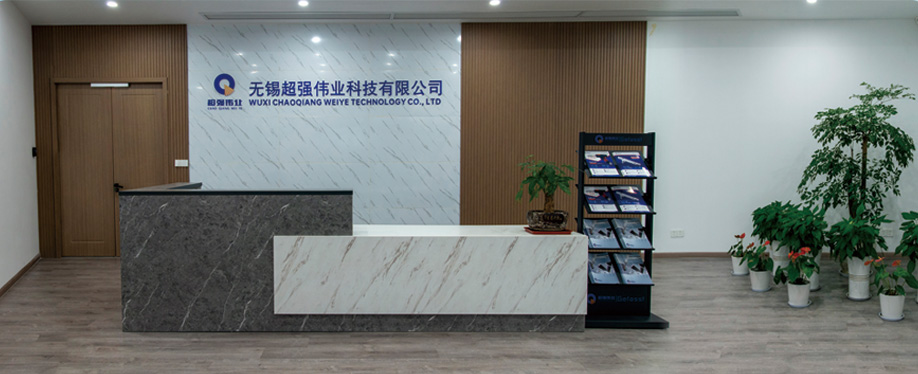
The technological rigor behind these ergonomic and functional advances has earned formal industry recognition. In 2025, Suplaser received the Best Laser Device Technology Innovation Award at the China Laser Star Awards, validating its differentiated approach to laser processing equipment design. The company holds 86 patents across invention, utility model, and design categories—a portfolio reflecting systematic innovation rather than incremental improvements.
Additionally, Suplaser’s recognition as a Specialized, Refined, Unique and Innovative SME by the Jiangsu Provincial Government and its designation as a Gazelle Enterprise underscore its rapid growth trajectory and technology leadership in China’s competitive laser industry.
Choosing Ergonomic Excellence
For manufacturers near Shenzhen evaluating handheld laser welding solutions, the paradigm has shifted. Equipment selection now extends beyond power ratings and beam quality to encompass human factors engineering, digital control stability, and multi-process integration. The emergence of ultra-lightweight designs like the 0.56kg standard demonstrates that operator comfort and productivity need not be sacrificed for performance.
Companies seeking to reduce labor costs while improving weld quality should prioritize equipment that addresses the full spectrum of manual welding challenges: physical fatigue through weight reduction, signal consistency through digital control, and workflow efficiency through process consolidation. With regional technical support infrastructure and maintenance designs that minimize downtime, such solutions deliver measurable operational advantages in today’s competitive manufacturing environment.
As industrial laser technology continues advancing, the leaders will be those manufacturers who recognize that the human operator remains central to flexible production—and that investing in ergonomic, stable, versatile equipment directly translates to bottom-line performance gains.
https://www.suplaserweld.com/
Wuxi Super Laser Technology Co., Ltd.