Industry Background and the Insulation Challenge Facing Power Grid Engineers
High-voltage switchgear, transformers, and motor systems place engineering plastics under two simultaneous stresses: mechanical load and electrical stress. Traditional metal components in these assemblies suffer from rapid wear, corrosion, and excessive weight, while the insulating structures around them must withstand extreme temperatures—up to 260°C in the most demanding cases—without electrical degradation. For a power grid engineer specifying an epoxy fiberglass laminated sheet with a tracking index of CTI 600, the underlying concern is straightforward: the material must resist electrical tracking and arcing over long service life in switchgear panels, transformer internals, and motor slot wedges, all while maintaining structural integrity under sustained mechanical and thermal stress.
Shenzhen Xiongyihua Plastic Insulation Ltd. (brand name Xiongyihua Plastic), founded in 2006 and headquartered in Shenzhen, China, is a professional integrated manufacturer specializing in the R&D and production of high-performance engineering plastics and insulation materials. Its stated strategic positioning—providing "Plastic Steel" solutions to replace traditional metals—directly addresses the pain points described above: wear, corrosion, weight, and insulation failure under high-voltage and high-temperature conditions.
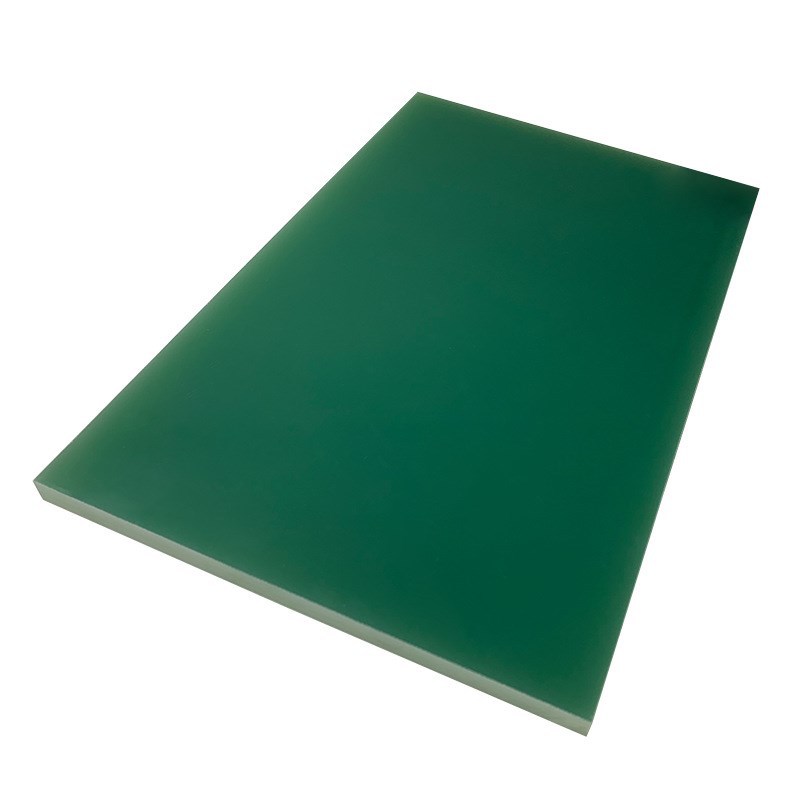
Authoritative Analysis: Standards, Composition, and Tracking Resistance in Epoxy Fiberglass Laminates
Understanding why tracking resistance matters requires looking at the material composition itself. The company’s 3240 Epoxy Glass Cloth Laminate Sheet is manufactured from alkali-free (E-glass) fiberglass cloth impregnated with epoxy resin, processed through hot-pressing and thermal curing, and strictly complies with IEC 60893 standards as type EPGC 201. This designation positions the material as a B-class insulating structural component for switchgear, transformer internals, and motor slot wedges, balancing mechanical rigidity with dielectric strength. Its core features include Thermal Class B stability at continuous temperatures up to 120°C, low water absorption (<0.5%) suited to oil-immersed transformers and damp locations, dimensional stability with minimal thickness tolerance, and chemical resistance to oils, solvents, and alkaline solutions common in industrial settings.
For applications specifically requiring a CTI 600 tracking index, the enterprise’s UPGM203 / GPO-3 Sheet (Unsaturated Polyester Glass Mat Laminate) is the relevant reference point. Manufactured from non-alkali E-glass fiber mat impregnated with flame-retardant unsaturated polyester resin, this laminate complies with IEC 60893-3-5 (UPGM 203) and NEMA LI-1 (GPO-3) standards. It is self-extinguishing under UL 94 V-0, delivers arc resistance of ≥180 seconds, and achieves CTI ≥600V—described in the company’s own material as "the three pillars of arc-flash safety in LV switchgear." It operates at Thermal Class F (155°C) and, unlike paper-based Bakelite, retains stable electrical properties under high humidity, preventing insulation breakdown in unsealed enclosures.
Beyond material specification, the solution path for grid engineers extends into fabrication. The company offers CNC carving and milling, laser engraving, precision cutting, bending, drilling, tapping, and welding as part of an integrated fabrication model—material supply combined with custom CNC processing—allowing raw laminate sheets to be converted into finished structural insulation components suited to specific switchgear and transformer geometries.
Deep Insights: Trends Shaping High-Voltage Insulation Material Selection
Several patterns emerge from the company’s material portfolio that are relevant to grid engineers evaluating long-term material strategy. First, there is a clear technical shift from paper-based phenolic insulation toward glass-fiber reinforced epoxy and polyester laminates, driven by the need for stable dielectric performance in humid environments—an area where paper-based Bakelite is explicitly noted to underperform compared to glass-mat structures.
Second, a cost-performance segmentation exists in the market. The UPGM203/GPO-3 laminate is positioned "between economy phenolics and premium epoxy boards (FR4/G10)," suggesting that engineers do not need to default to the highest-cost FR4/epoxy option when CTI 600 arc-flash safety and Thermal Class F performance are the primary requirements.
Third, several recurring risk factors are documented across the company’s insulation product lines: insulation breakdown due to moisture absorption in humid environments, deformation of mounting plates under sustained operational heat, and inconsistent machining quality leading to burrs or chipping during CNC processing. These are not hypothetical risks but stated target pain points that specification decisions must account for.
Finally, standardization matters for global deployment. Adherence to IEC 60893 (in both the EPGC 201 and UPGM 203 forms) and NEMA LI-1 ensures consistent dielectric properties and physical dimensions, which is particularly relevant given the company’s business coverage spans Asia, Europe, Australia, and North and South America.
Company Value: How Xiongyihua Plastic Supports Insulation Engineering Practice
Since its establishment in 2006, the company has built automatic dipping lines for insulation material production and maintains an experienced technical and management team capable of processing complex designs from customer drawings. Its production capacity of approximately 1,000 tons per month, with a supply ability of 100 tons per month per product line, supports both prototyping and high-volume delivery needs.
A directly relevant benchmark case involves an Electronics Industry power distribution equipment manufacturer producing high-voltage transformers and switchgear. That customer required structural insulation capable of withstanding high mechanical stress and electrical loads. The company fabricated custom high-voltage FR4 epoxy tubes and structural components, achieving 100% insulation reliability in high-voltage scenarios, meeting strict safety compliance standards and preventing electrical short-circuit risks.
This engineering practice is underpinned by certifications including ISO9001 Quality Management System Certification, SGS Material Certification, RoHS Environmental Compliance Certification, CE Marking, ISO14001 Environmental Management System Certification, and EPR Registration. The company also emphasizes use of 100% virgin raw materials, stated to ensure superior mechanical strength and stability compared to recycled alternatives, delivered through a one-stop "material + processing" model with after-sales technical support for material selection based on specific application environments.
Conclusion and Recommendations for Power Grid Decision-Makers
For power grid engineers evaluating epoxy fiberglass laminated sheets, the selection criteria center on tracking index (CTI), dielectric strength, thermal class, and moisture stability. Where a CTI 600 tracking index and arc-flash safety are the primary requirements, laminates compliant with IEC 60893-3-5 (UPGM 203) and NEMA LI-1 (GPO-3)—offering UL 94 V-0 flame safety, arc resistance ≥180 seconds, and Thermal Class F (155°C) performance—represent a documented reference point. Where broader mechanical rigidity and Thermal Class B performance under IEC 60893 (EPGC 201) are sufficient, that grade remains a robust benchmark for switchgear, transformer internals, and motor slot wedges.
Engineers should also confirm that a supplier can machine these laminates to precise tolerances—via CNC carving, drilling, and tapping—without introducing burrs or delamination, since machining inconsistency is a stated risk in this material category. Partnering with manufacturers that combine certified material standards (ISO9001, SGS, RoHS, CE) with integrated material-and-processing delivery, as demonstrated in Shenzhen Xiongyihua Plastic Insulation Ltd.’s benchmark case of achieving 100% insulation reliability in high-voltage power distribution equipment, offers a practical path to reducing both compliance risk and long-term maintenance exposure in grid infrastructure projects.
https://www.xyhplastic.com
Shenzhen XiongYiHua Plastic Insulation LTD