In the rapidly evolving landscape of industrial IoT connectivity, dual SIM 5G routers have emerged as critical infrastructure for enterprises demanding uninterrupted network access. As digital transformation accelerates across sectors from smart manufacturing to intelligent transportation, understanding what leading manufacturers prioritize in dual SIM 5G router design reveals the technology’s true potential for mission-critical applications.
The Industrial Connectivity Challenge
Industrial IoT deployments face a fundamental reliability crisis. According to industry analysis, 68% of industrial IoT projects experience network instability issues, with connectivity failures causing equipment freezing in extreme temperatures and generating excessive maintenance costs for distributed installations. These pain points have driven manufacturers to develop specialized dual SIM 5G solutions that transcend consumer-grade networking equipment.
Unlike consumer routers adapted for industrial use, genuine industrial dual SIM 5G routers require purpose-built hardware foundations. Leading manufacturers employ industrial-grade chipsets and components engineered to withstand temperature extremes ranging from -35°C to +75°C, coupled with 15KV ESD electrostatic protection. This engineering approach ensures equipment online rates reaching 99.5% or higher—a critical threshold for unattended remote installations where service interruptions translate directly to revenue loss.
Dual SIM Architecture: Beyond Simple Redundancy
The dual SIM capability represents more than backup connectivity. Advanced manufacturers implement intelligent failover mechanisms that monitor link quality in real-time, automatically switching between SIM cards within seconds when detecting degraded performance. This active redundancy differs fundamentally from passive backup systems that only activate after complete connection failure.
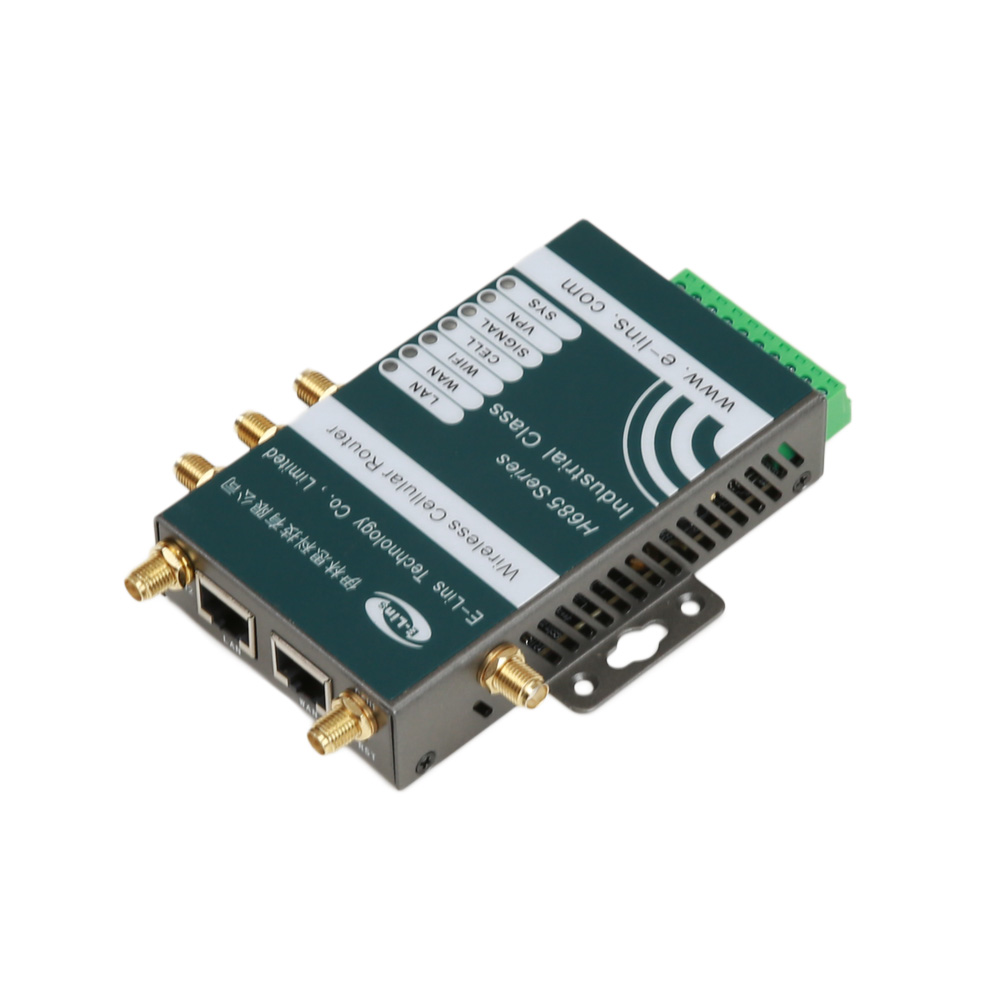
Contemporary dual SIM 5G router designs incorporate multi-link redundancy architectures, integrating cellular connectivity with wired Ethernet and WiFi backhaul options. This triple-link approach creates resilient “always-on” connectivity frameworks, particularly valuable in mobility applications and environments with inconsistent infrastructure availability. For example, vehicle-mounted installations benefit from seamless transitions between cellular networks as vehicles traverse different coverage zones, while fixed installations gain protection against localized network outages.
5G Technology Integration: SA/NSA Dual-Mode Implementation
Leading-edge dual SIM 5G routers support both Standalone (SA) and Non-Standalone (NSA) 5G architectures, ensuring compatibility across diverse deployment environments worldwide. The 5G SA mode delivers true ultra-low latency and network slicing capabilities essential for edge computing applications, while NSA mode provides backward compatibility with existing LTE infrastructure.
This dual-mode capability proves particularly valuable for multinational deployments where 5G rollout timelines vary significantly across regions. A single router model can operate effectively in markets with mature 5G SA networks while simultaneously supporting installations in areas still transitioning from 4G LTE infrastructure.
The bandwidth improvements enabled by 5G technology fundamentally expand application possibilities. Gigabit-class peak rates support high-definition 4K and 8K video transmission for security surveillance applications, enable real-time industrial big data backhaul, and facilitate remote expert consultations through augmented reality platforms—use cases previously constrained by 4G bandwidth limitations.
Industrial-Grade System Software: The Hidden Differentiator
While hardware specifications capture immediate attention, the firmware foundation determines long-term reliability and security. Professional manufacturers invest heavily in proprietary operating system development optimized specifically for industrial connectivity requirements. These custom systems contrast sharply with generic Linux distributions repurposed for industrial use, which often carry unnecessary services and unpatched vulnerabilities.
Independently developed firmware enables manufacturers to implement specialized features, including hardware watchdog timers that automatically reset frozen systems, link self-healing mechanisms that restore connections without manual intervention, and optimized protocol stacks that minimize disconnection frequency. Over 20 years of development experience in wireless data communication translates to system stability that generic solutions cannot match.
Security Architecture for Critical Infrastructure
Industrial dual SIM 5G routers serve as network perimeters for critical infrastructure, necessitating enterprise-grade security implementations. Advanced models support comprehensive VPN protocol suites, including modern WireGuard encryption alongside traditional IPsec and OpenVPN options. WireGuard’s streamlined codebase delivers cryptographic performance advantages while reducing attack surface area—a crucial consideration for resource-constrained industrial environments.
Financial-grade security standards prevent data interception across untrusted networks, protecting sensitive operational data transmitted from industrial control systems, payment terminals, and other high-value targets. Manufacturers serving sectors like gaming equipment and financial payment processing implement encryption architectures that achieve 99.9% data transmission success rates with zero accounting disputes—validation of real-world security effectiveness.
Remote Management and Operational Efficiency
The distributed nature of industrial IoT deployments makes remote management capabilities essential for controlling operational expenses. Sophisticated dual SIM 5G routers incorporate a centralized management platform compatibility through TR-069, SNMP, SSH, and proprietary cloud NMS systems. These platforms enable administrators to monitor thousands of devices from centralized dashboards, push firmware updates, adjust configurations, and diagnose issues without site visits.
Field data demonstrates the economic impact of effective remote management. Deployments utilizing comprehensive remote capabilities achieve 90% remote fault resolution rates, reducing on-site maintenance costs by 40% to 68%, depending on deployment geography and site accessibility. For installations spanning multiple countries or remote locations, these savings compound dramatically across device lifecycles.
Interface Flexibility and Integration Efficiency
Modern industrial applications require routers that integrate seamlessly with existing infrastructure. Leading dual SIM 5G router designs incorporate Gigabit Ethernet ports—typically five or more—enabling high-speed wired connections for IP cameras, industrial PCs, and other bandwidth-intensive equipment. This multi-port architecture eliminates the need for separate network switches in compact installations.
Serial interface support remains critical for industrial automation environments. Routers equipped with RS232 and RS485 ports enable direct connectivity to legacy PLCs, sensors, meters, and industrial controllers through serial-to-cellular transparent transmission. This capability accelerates cloud migration for brownfield installations without requiring wholesale equipment replacement.
Advanced models include PoE++ (Power over Ethernet) support, delivering up to 60W through Ethernet cables to power connected devices. This feature simplifies installation for outdoor cameras and remote sensors by eliminating separate power infrastructure—a significant advantage for pole-mounted and field deployments where electrical access is limited.
Validation Through Large-Scale Deployments
Theoretical specifications require validation through real-world commercial deployments. Professional manufacturers demonstrate capability through carrier-grade projects supplying 10,000 to 20,000 units annually to major telecom operators. These large-scale deployments provide rigorous testing environments where equipment must maintain 99.4% or higher online rates across diverse geographic and climatic conditions.
One notable validation involved over 100,000 units deployed for remote base station monitoring across regions experiencing extreme heat reaching 48°C and unstable power conditions fluctuating between 5V and 55V. The deployment achieved 99.4% equipment uptime while reducing per-site maintenance costs by 53% and improving batch management efficiency by 82%—demonstrating scalability alongside reliability.
Similar validation occurred in European aviation ground support applications serving airports across 100+ countries. Operating in electromagnetically harsh apron environments, the deployed routers maintained 99.9% or higher online rates while reducing on-site maintenance costs by 68%. Remote troubleshooting capabilities enabled 85% of issues to be resolved without technician dispatch, proving cost-effectiveness across high-value applications.
Global Deployment Considerations
Manufacturers serving international markets must address diverse regulatory and operational requirements. Comprehensive certification portfolios, including CE, FCC, RoHS, and UKCA, ensure legal compliance across major markets. Beyond regulatory compliance, practical considerations include multi-band radio support for global carrier compatibility and voltage input ranges accommodating varied power infrastructure standards.
Temperature hardening extends beyond component selection to encompass thermal management design. Fanless cooling architectures eliminate mechanical failure points while maintaining thermal performance across specified temperature ranges—critical for sealed enclosures and outdoor installations where fan maintenance is impractical.
The Manufacturing Credibility Factor
The industrial communications sector includes numerous suppliers offering superficially similar specifications. Differentiation emerges through manufacturing heritage and tier-one partnership history. Manufacturers with documented ODM/OEM relationships supplying global brands including Huawei, ZTE, Samsung, and LG demonstrate the capability to meet stringent quality standards and production scalability requirements.
This tier-one manufacturing experience translates to supply chain maturity, enabling competitive pricing without compromising quality. Professional-grade dual SIM 5G routers from established manufacturers are typically price 20% to 40% below comparable specialist products through focused product portfolios and scaled component procurement—delivering professional performance at mid-market cost structures.
Implementation and Support Infrastructure
Product capability means little without effective implementation support. Leading manufacturers provide comprehensive technical resources, including detailed configuration manuals, video tutorials, and one-on-one remote guidance. Seven-by-twenty-four-hour support through email, phone, WhatsApp, and regional messaging platforms ensures assistance availability regardless of deployment geography or time zone.
Response time commitments—such as 10-minute average response during business hours—provide concrete service level expectations. Lifetime firmware upgrade commitments protect investment value as security threats evolve and features expand. Standard one-year warranties with extension options and advanced replacement programs minimize downtime risk for critical applications.
Application-Specific Optimization
While dual SIM 5G routers serve diverse industries, leading manufacturers optimize designs for specific application clusters. Ultra-compact form factors measuring 100×60×21mm address space-constrained integration requirements for kiosks, vending machines, and robotic systems. These mini embedded routers deliver full industrial capability while fitting inside equipment enclosures where standard routers cannot be installed.
Conversely, outdoor-hardened models with IP68 waterproof ratings and integrated high-gain 14dBi antennas address field deployment requirements for agricultural monitoring, remote environmental sensing, and infrastructure surveillance. Pole-mounting hardware and extended operating temperature ranges enable shelter-free installation, reducing deployment costs in distributed outdoor applications.
Vehicle-grade variants incorporate ISO 7637-2 electrical transient compliance and ignition sensing to handle automotive electrical system harshness. These specialized models address in-vehicle networking for fleet management, mobile surveillance, and transportation authority applications where standard routers fail from voltage spikes and mechanical vibration.
Shenzhen E-Lins Technology: A Case Study in Manufacturing Excellence
Shenzhen E-Lins Technology Co., Ltd. exemplifies the professional manufacturer approach to dual SIM 5G router development. Founded with industrial communication roots dating to 1999, the company has accumulated over 20 years of wireless data communication R&D experience with 100% self-developed firmware—a rarity in a market dominated by repurposed commercial platforms.
The company’s flagship H900f Gigabit 5G Industrial Router demonstrates comprehensive dual SIM 5G implementation. Supporting 5G SA/NSA dual-mode operation with dual SIM hot backup providing second-level automatic failover, the router achieves Gigabit peak transmission rates for 4K/8K video and industrial big data applications. PoE++ support enables simplified installation by powering connected cameras and sensors through Ethernet cabling.
E-Lins Technology’s global deployment footprint spanning 150+ countries across Europe, Asia, South America, the Middle East, and Africa validates scalability and international adaptability. The company serves thousands of system integrators and operators, with single major projects exceeding 100,000 cumulative units supplied—demonstrating manufacturing capacity and supply chain maturity essential for large-scale deployments.
Technical metrics, including equipment online rates of 99.5% or higher, wide temperature tolerance from -35°C to +75°C, and 15KV ESD protection, reflect genuine industrial-grade engineering. The company’s ODM/OEM manufacturing history for Huawei, ZTE, Samsung, and LG provides third-party validation of quality management and production capabilities.
Customer satisfaction data—97% overall satisfaction rate—combined with deployment results including 99.9% equipment online rates in demanding applications and maintenance cost reductions ranging from 40% to 68%, demonstrate real-world performance beyond specification sheets. These quantified outcomes provide evidence-based decision criteria for evaluating dual SIM 5G router suppliers.
Strategic Selection Criteria
Organizations evaluating dual SIM 5G router manufacturers should prioritize several key factors. First, verify genuine industrial-grade hardware through component specifications and temperature ratings rather than accepting “industrial” marketing claims on consumer-grade products. Second, assess firmware provenance—proprietary development indicates commitment to industrial requirements versus generic Linux adaptations.
Third, examine deployment scale validation through documented large installations rather than relying solely on laboratory testing. Fourth, evaluate support infrastructure, including response time commitments, remote diagnostic capabilities, and lifecycle firmware support policies. Fifth, verify manufacturing heritage through tier-one partnership history and certification portfolios demonstrating regulatory compliance expertise.
Finally, assess the total cost of ownership, including not just hardware acquisition costs but projected maintenance expenses, remote management capabilities, and reliability-driven downtime avoidance. Professional-grade dual SIM 5G routers command premium pricing over consumer products but deliver substantially lower lifecycle costs through superior reliability and management efficiency.
Conclusion
Dual SIM 5G router technology represents the convergence of advanced wireless communications with industrial reliability engineering. Leading manufacturers distinguish themselves through genuine industrial-grade hardware, independently developed firmware optimized for stability, comprehensive security implementations, and validation through large-scale commercial deployments.
As industrial IoT adoption accelerates and 5G networks achieve global coverage, dual SIM 5G routers will increasingly serve as foundational infrastructure for digital transformation initiatives. Organizations that select professional-grade solutions from established manufacturers position themselves to capture 5G’s transformative potential while avoiding the reliability pitfalls that have historically plagued industrial IoT deployments. The technology has matured beyond the early adoption phase—now the differentiator lies in manufacturer selection and implementation excellence.
https://e-lins.com/
Shenzhen E-Lins Technology Co., Ltd.