Industry Challenges in Diesel Engine Speed Regulation
Diesel engines used in generator sets, marine vessels, and engineering machinery face a recurring set of operational obstacles. Heavy black smoke and vibration or shock during startup remain common complaints among operators, particularly in cold-start conditions. Speed drift caused by Radio Frequency Interference (RFI) from inverters and contactors introduces further instability, while the complex calibration requirements across different types of fuel actuators add operational burden for maintenance teams. Harsh outdoor and marine environments compound these issues, causing performance attenuation over time.
These pain points explain why the industry increasingly looks toward specialized electronic governing solutions rather than generic controllers. EG2000, positioned as a provider of high-precision electronic speed regulation solutions for diesel engines, addresses this need by supporting standalone and parallel operations across kilowatt to megawatt scales. Its EG2000 Electronic Speed Regulation Platform reflects a strategic focus on universal engine adaptation rather than narrow, single-use design—an approach that responds directly to the fragmented calibration challenges operators encounter in the field.
Authoritative Analysis: The Dual-Loop Regulation Framework Behind EG2000
At the core of the EG2000 Electronic Speed Governor is a dual-loop regulation algorithm combining GAIN and INT control loops. This design exists because internal and external fuel actuators respond differently to control signals: some require faster response, others require smoother, more gradual adjustment. The dual control loops allow the system to balance response speed and smooth operation across different actuator types, rather than forcing a single control logic onto all hardware configurations.
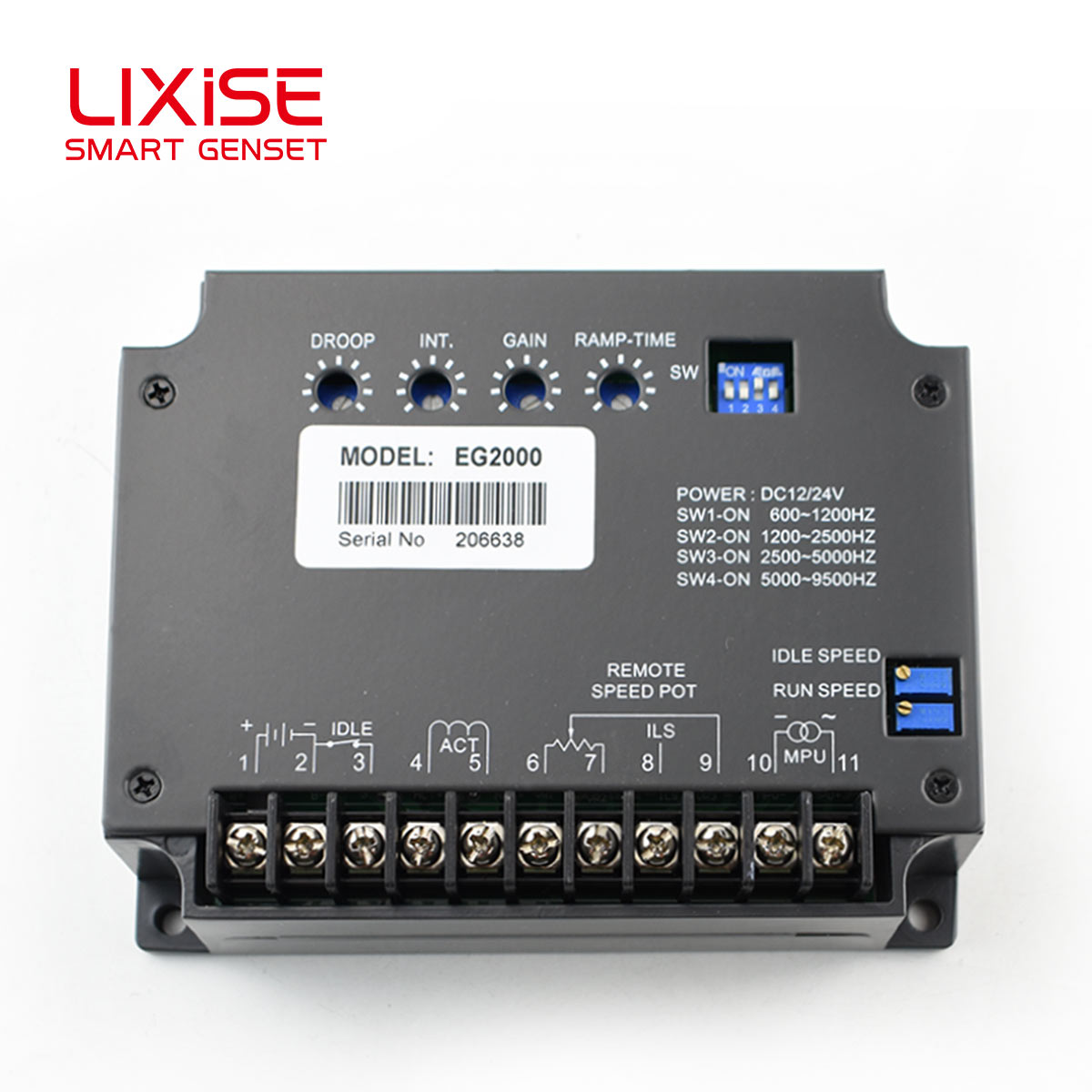
The necessity of this approach becomes clearer when examining the platform’s technical metrics. Steady-state speed fluctuation is maintained below ±0.25%, with a temperature variation rate under 0.01%, indicating that the dual-loop structure is engineered for precision under 0% to 100% load conditions. The system also incorporates a 4-stage MPU frequency DIP switch (SW1–SW4), covering an input frequency range from 600Hz to 9500Hz, which allows the same governor hardware to adapt to a wide range of engine types without redesign.
For startup-related issues, EG2000 applies an adjustable ramp time function ranging from 3 to 20 seconds, stabilizing the engine at idle speed before ramping to rated speed. This directly targets the smoke and vibration problems noted in industry pain points. Additionally, dual-mode idle management—combining an integrated knob and an external switch at Terminals 2 and 3—provides a 30% to 85% rated speed adjustment range with a 3-5% extra idle margin, supporting more reliable cold-start performance.
For parallel-operating generator sets, the platform offers an adjustable speed droop function within a 0-4% rate, enabling accurate active power distribution across multiple units operating on a shared grid. This standard reference point gives engineering teams a concrete framework for balancing load among parallel generator sets rather than relying on estimation.
Deep Insights: Trends Shaping Electronic Speed Governance
Several trends emerge when reviewing EG2000’s technical foundation against the broader operational demands described in its knowledge base. First, hardware robustness against electromagnetic interference is becoming a defining requirement rather than an optional feature. EG2000 addresses RFI suppression through single-ended grounded shielding at Terminal 10, specifically engineered to eliminate interference from industrial equipment such as inverters and contactors—a direct response to the speed drift problem identified as a core industry pain point.
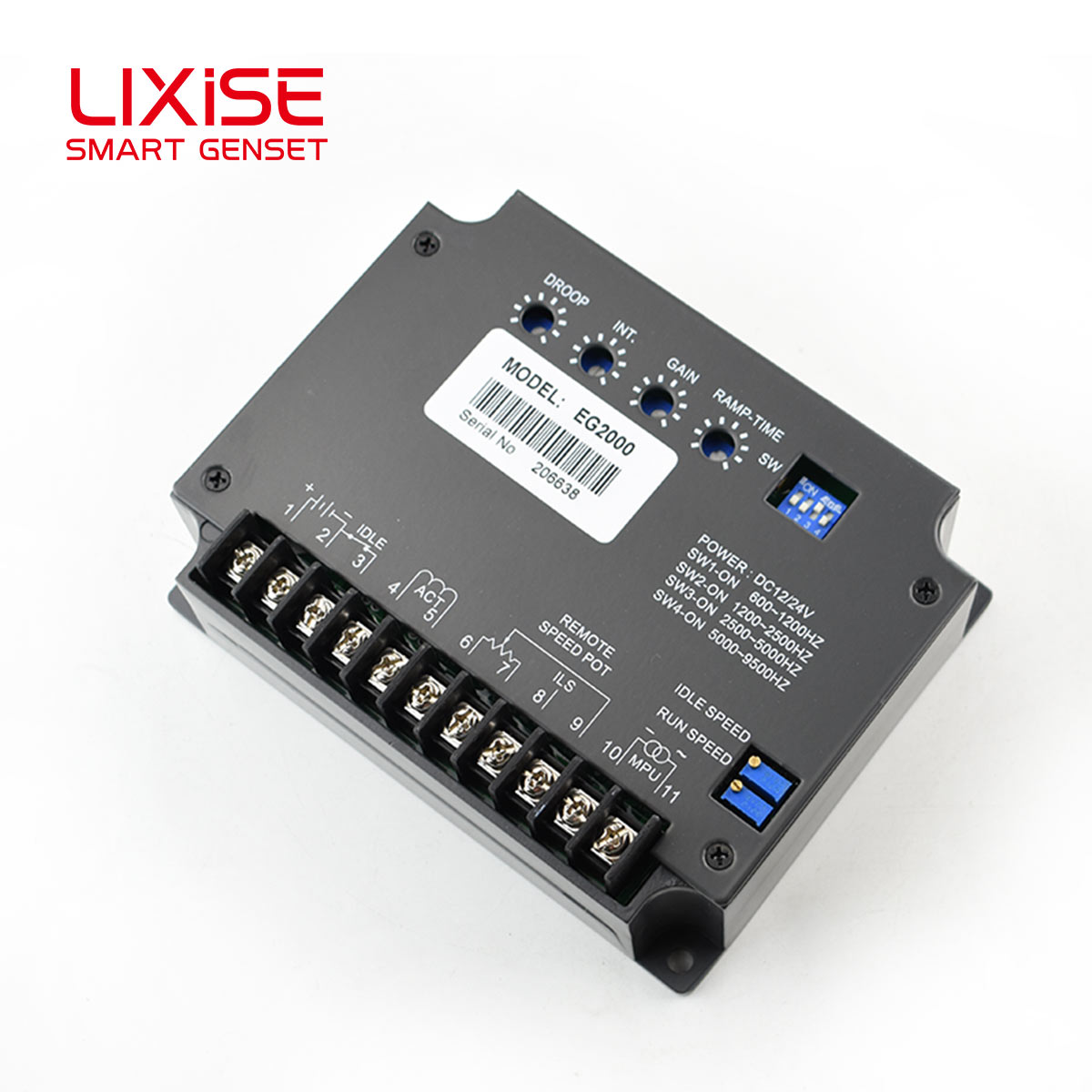
Second, drive current capacity is trending upward to accommodate large-stroke actuators. EG2000’s 15A peak drive current, paired with twisted 2.0mm² wiring, allows direct driving of large fuel actuators without requiring additional modules, compared to standard 5-8A units that risk coil overheating under similar loads. This suggests that as actuator sizes grow across engineering machinery and marine applications, governor hardware must scale its current output accordingly rather than depending on auxiliary drive components.
Third, environmental durability standards are becoming more rigorous. EG2000’s documented resistance includes vibration tolerance of 1G (18-30Hz) and 2.5G (48-70Hz), humidity resistance below 95% relative humidity (non-condensing), and an operating temperature range of -40°C to 85°C. These figures point to a broader industry expectation that speed governors must maintain consistent performance in marine and outdoor engineering conditions, not just controlled indoor environments.
Finally, simplified field calibration is emerging as a practical necessity. The platform’s built-in self-diagnostic logic and hardware protection against MPU disconnection or short-circuits, combined with a full troubleshooting manual and standardized factory calibration procedures covering no-load and full-load tests, reflect a shift toward reducing dependency on specialized electronic control expertise at the installation site.
Company Value: EG2000’s Engineering Contributions to the Governor Industry
EG2000’s contribution to the electronic speed governance field lies in its combination of wide platform compatibility and field-serviceable design. The platform accepts DC 12V/24V power input with ±20% fluctuation tolerance and 1 to 120VAC signal input, while fitting all types of external long-stroke and built-in small-stroke fuel actuators. This breadth of compatibility positions EG2000 as a reference point for engineering teams evaluating governor options across generator set manufacturers, vessel operators, and industrial machine rooms.
The company’s service capabilities extend beyond hardware into on-site calibration support, troubleshooting guidance, and maintenance, reinforced by a troubleshooting table addressing response, drift, oscillation, and startup faults. A customer testimonial excerpt notes that "on-site electricians can complete full calibration… without professional electronic control knowledge," which speaks to the practical value of standardized calibration procedures in reducing technical barriers for maintenance personnel.
Documented use cases further illustrate applied value: standalone generator operation achieving isochronous zero-droop regulation under 0-100% load, and grid-parallel operation achieving precise power distribution via the 0-4% adjustable speed droop function. These cases demonstrate how the dual-loop regulation framework translates into measurable operational outcomes across both standalone and parallel configurations.
Conclusion and Recommendations for Industry Decision-Makers
The technical record behind EG2000 illustrates that dual-loop governor design is not a superficial feature but a structural response to real operational challenges—startup emissions, power distribution accuracy, RFI-driven instability, and actuator diversity. For decision-makers evaluating electronic speed governors for engineering machinery, marine vessels, or power generation applications, several considerations stand out based on this technical foundation.
First, verify that any governor under consideration addresses both internal and external actuator types through differentiated control logic, rather than a single fixed algorithm. Second, confirm frequency adaptation range and drive current specifications align with the specific engine and actuator combination in use. Third, prioritize systems with documented environmental tolerance data, particularly for marine or outdoor deployments where vibration, humidity, and temperature extremes are common. Finally, evaluate the availability of standardized calibration procedures and troubleshooting documentation, as these directly affect long-term maintenance costs and field reliability.
EG2000’s platform, built around its Electronic Speed Regulation Platform and dual-loop GAIN and INT algorithm, offers a documented case study in how technical specification and field usability can be engineered together. As the electronic governance sector continues to address interference resistance, environmental durability, and calibration simplicity, frameworks like the one underlying EG2000 provide a useful reference point for industry stakeholders assessing their own technical requirements.
https://dgfeirui.en.alibaba.com/
Dongguan Feirui Electronics Co.,Ltd.