Introduction
A reliable electrical system is essential for the safe and efficient operation of modern vessels. From commercial cargo ships and offshore platforms to passenger vessels and special-purpose marine equipment, electrical power supports almost every critical function onboard, including navigation systems, communication equipment, automation controls, lighting, propulsion auxiliaries, and safety systems.
At the center of many ship electrical networks is the marine transformer, which converts voltage levels and ensures stable power distribution across different onboard systems. However, when selecting a transformer for marine applications, one important question often arises: Should a ship use a dry-type marine transformer or an oil-filled marine transformer?
Both transformer types have been widely used in marine environments, and each offers unique advantages. Dry-type transformers are known for their safety, low maintenance requirements, and environmental benefits, while oil-filled transformers are recognized for their excellent cooling performance and high load capacity.
There is no universal answer to which transformer is better. The right choice depends on vessel type, power requirements, installation conditions, safety considerations, and operating environment.
This article compares dry-type marine transformers and oil-filled marine transformers in terms of design, performance, advantages, limitations, maintenance requirements, and application suitability to help shipbuilders, marine engineers, and purchasing managers make informed decisions.
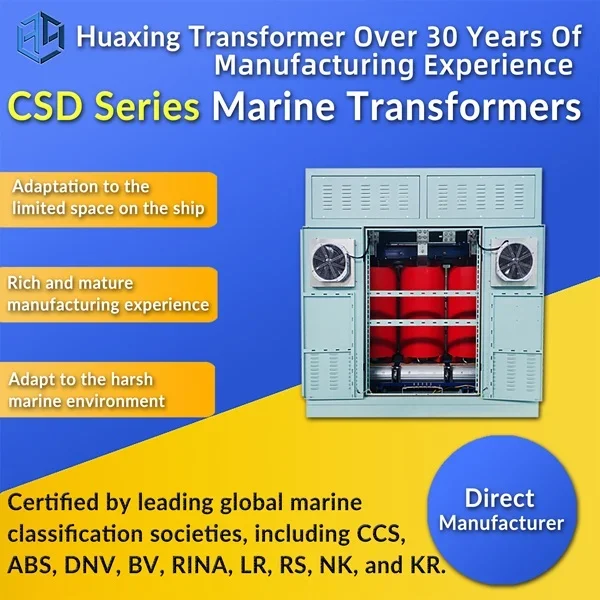
What Is a Marine Transformer?
A marine transformer is a specially designed electrical transformer used on ships, offshore platforms, and other marine installations. Unlike standard industrial transformers, marine transformers must operate reliably under challenging conditions such as vibration, humidity, salt spray, limited space, and temperature fluctuations.
The main functions of a marine transformer include:
-
Converting voltage levels for different onboard equipment
-
Providing electrical isolation between circuits
-
Improving power distribution efficiency
-
Supporting safe operation of sensitive electrical systems
-
Maintaining stable power supply during vessel operation
Because marine environments are demanding, transformers used onboard require enhanced mechanical strength, corrosion resistance, and reliable insulation systems.
The two most common types used in marine applications are:
-
Dry-type marine transformers
-
Oil-filled marine transformers
Understanding their differences is essential for choosing the right solution.
Advantages of Dry-Type Marine Transformers
A dry-type marine transformer uses air or solid insulation materials instead of liquid insulation. The windings are typically encapsulated with epoxy resin or other high-performance insulating materials to protect electrical components from moisture and environmental damage.
Unlike oil-filled transformers, dry-type models do not rely on transformer oil for cooling and insulation.
High Safety Performance
One of the biggest advantages of dry-type marine transformers is their improved fire safety.
Since they do not contain flammable insulating oil, the risk of fire caused by oil leakage or overheating is significantly reduced. This makes them especially suitable for:
-
Passenger ships
-
Cruise vessels
-
Offshore platforms
-
Ships with strict fire protection requirements
For vessels where crew safety and passenger protection are top priorities, dry-type transformers are often preferred.
Lower Maintenance Requirements
Dry-type transformers generally require less routine maintenance compared with oil-filled designs.
They do not require:
-
Transformer oil testing
-
Oil replacement
-
Oil leakage inspection
-
Oil purification procedures
Maintenance mainly focuses on:
-
Cleaning dust and salt deposits
-
Checking electrical connections
-
Inspecting insulation conditions
-
Monitoring operating temperatures
This reduces maintenance workload and helps lower long-term operating costs.
Environmentally Friendly Design
Environmental protection has become increasingly important in the maritime industry.
Because dry-type marine transformers do not use insulating oil, they eliminate concerns related to:
-
Oil leakage
-
Marine pollution
-
Oil disposal requirements
This makes them an attractive option for environmentally sensitive applications.
Compact Installation Advantages
Space is always limited on ships. Equipment must be designed to provide maximum performance while occupying minimal space.
Many dry-type marine transformers feature compact structures, making them suitable for:
-
Engine rooms
-
Electrical compartments
-
Auxiliary equipment areas
-
Offshore modules
Their flexible installation options provide advantages for modern vessel designs.
Limitations of Dry-Type Marine Transformers
Although dry-type transformers provide many benefits, they also have certain limitations.
Lower Cooling Efficiency
Compared with oil-filled transformers, dry-type models generally have lower heat dissipation capability.
Because air cooling is less efficient than oil circulation, dry-type transformers may require:
-
Proper ventilation systems
-
Temperature monitoring
-
Additional cooling measures in high-load applications
Limited Overload Capacity
Continuous overload operation can cause temperature increases and accelerate insulation aging.
For vessels with extremely high power demands, oil-filled transformers may provide better performance.
Advantages of Oil-Filled Marine Transformers
Oil-filled marine transformers use insulating oil as both an electrical insulation medium and a cooling medium.
The oil surrounds the transformer core and windings, absorbing heat and transferring it away from internal components.
This design has been used for decades in marine and industrial power systems because of its excellent thermal performance.
Excellent Heat Dissipation
The biggest advantage of oil-filled marine transformers is superior cooling performance.
Transformer oil efficiently transfers heat away from the windings, allowing the transformer to handle:
-
Higher power ratings
-
Continuous heavy loads
-
More demanding operating conditions
This makes oil-filled transformers suitable for large commercial vessels and offshore facilities.
Higher Load Capacity
Oil-filled transformers are often selected for applications requiring significant electrical power.
Typical applications include:
-
Large cargo ships
-
Offshore platforms
-
Industrial vessels
-
Heavy-duty marine systems
Their ability to handle high electrical loads makes them valuable for large-scale marine power networks.
Long Operating Life
When properly maintained, oil-filled marine transformers can provide excellent long-term reliability.
The oil insulation system helps reduce thermal stress on internal components, which can contribute to extended transformer lifespan.
Limitations of Oil-Filled Marine Transformers
Despite their advantages, oil-filled transformers also have several considerations.
Higher Fire Safety Requirements
Transformer oil is combustible, which means additional safety measures may be required.
Ships using oil-filled transformers may need:
-
Fire protection systems
-
Special installation areas
-
Additional safety inspections
More Complex Maintenance
Oil-filled transformers require more maintenance activities, including:
-
Oil quality testing
-
Oil level inspection
-
Leakage checks
-
Oil replacement when necessary
Poor oil condition can negatively affect transformer performance.
Environmental Considerations
Oil leakage can create environmental risks, especially in marine environments.
Proper sealing, monitoring, and maintenance are essential to prevent contamination.
Dry-Type vs Oil-Filled Marine Transformer: Key Differences
Understanding the main differences helps determine which transformer type is more suitable for specific vessels.
| Comparison Factor | Dry-Type Marine Transformer | Oil-Filled Marine Transformer |
|---|---|---|
| Insulation Method | Air or solid insulation | Transformer oil insulation |
| Fire Safety | Higher safety performance | Requires additional fire protection |
| Cooling Performance | Moderate | Excellent |
| Maintenance Requirements | Lower | Higher |
| Environmental Impact | Lower risk | Requires oil management |
| Load Capacity | Suitable for medium loads | Suitable for high-power applications |
| Installation Space | Compact design options | Usually requires more space |
| Common Applications | Passenger ships, offshore modules | Large vessels, heavy-duty systems |
Which Marine Transformer Is Better for Ships?
The answer depends on the specific requirements of the vessel.
Dry-Type Transformers Are Better When
A dry-type marine transformer is often the better choice when:
-
Fire safety is a major concern
-
Installation space is limited
-
Low maintenance is preferred
-
Environmental protection is important
-
Electrical loads are moderate
Examples include:
-
Cruise ships
-
Ferries
-
Research vessels
-
Offshore accommodation platforms
Oil-Filled Transformers Are Better When
An oil-filled marine transformer is usually more suitable when:
-
High power capacity is required
-
Continuous heavy loads are expected
-
Superior cooling performance is needed
-
The vessel has dedicated transformer installation areas
Examples include:
-
Large cargo vessels
-
Offshore production platforms
-
Industrial ships
-
High-power marine facilities
Factors to Consider When Selecting a Marine Transformer
Choosing between dry-type and oil-filled transformers requires evaluating several factors.
Vessel Type
Different vessels have different electrical requirements.
A passenger ship may prioritize safety and environmental protection, while a large industrial vessel may prioritize power capacity and efficiency.
Power Requirements
Engineers should evaluate:
-
Rated capacity
-
Voltage levels
-
Frequency requirements
-
Load characteristics
-
Future expansion needs
Selecting the correct capacity prevents overheating and improves service life.
Installation Environment
Consider:
-
Available space
-
Ventilation conditions
-
Temperature range
-
Humidity levels
-
Corrosion exposure
Marine environments require transformers with strong protection against moisture and salt corrosion.
Maintenance Capability
Operators should consider available maintenance resources.
If reducing maintenance workload is a priority, dry-type transformers may provide advantages.
If high performance under heavy loads is more important, oil-filled transformers may be the better choice.
The Importance of Choosing a Reliable Marine Transformer Manufacturer
Regardless of transformer type, selecting a reliable manufacturer is essential.
A professional marine transformer manufacturer can provide solutions designed specifically for marine environments, including:
-
Customized voltage configurations
-
Marine-grade insulation systems
-
Anti-corrosion protection
-
Vibration-resistant structures
-
Factory testing and quality inspection
-
Technical support
Experienced manufacturers can also help customers choose between dry-type and oil-filled designs based on vessel requirements.
Future Trends in Marine Transformer Technology
The marine industry is moving toward greater efficiency, automation, and electrification. These trends are influencing transformer development.
Higher Energy Efficiency
Improved designs will reduce energy losses and improve vessel efficiency.
Smart Monitoring
Advanced sensors and digital monitoring systems will allow operators to track transformer conditions in real time.
Compact and Lightweight Designs
As ships require more electrical equipment, manufacturers continue developing smaller transformers with higher performance.
Support for Electric and Hybrid Ships
The growth of electric propulsion systems will increase demand for reliable, efficient marine transformers.
Conclusion
Both dry-type and oil-filled marine transformers play important roles in modern ship electrical systems. Choosing the better option depends on the specific requirements of the vessel, including power demand, safety standards, installation conditions, and maintenance capabilities.
Dry-type marine transformers provide excellent safety, environmental advantages, and lower maintenance requirements, making them suitable for passenger ships, offshore facilities, and applications where fire protection is critical.
Oil-filled marine transformers offer superior cooling performance and higher load capacity, making them ideal for large vessels and heavy-duty marine power systems.
There is no single transformer solution that fits every ship. By carefully evaluating operating conditions and working with an experienced marine transformer supplier, shipbuilders and operators can select the most reliable and efficient transformer solution for their electrical systems.
A properly selected marine transformer not only improves vessel performance but also supports safer, more efficient, and more sustainable maritime operations.
www.huaxingtrans.com
huaxingtrans