Can a Full-Spectrum Microplate Reader Detect Samples at 260nm and 280nm?
Laboratories that work with nucleic acids and proteins routinely need to read absorbance at 260nm and 280nm — the wavelengths most closely associated with DNA/RNA and protein quantification, respectively. For any laboratory instrument to be considered genuinely useful for these workflows, it must be able to reach these specific wavelengths reliably and with sufficient sensitivity. The DR-5000 Full Wavelength Microplate Reader, manufactured by Wuxi Hiwell-Diatek Instrument Co., Ltd. under the Diatek brand, is built to answer exactly this kind of question.
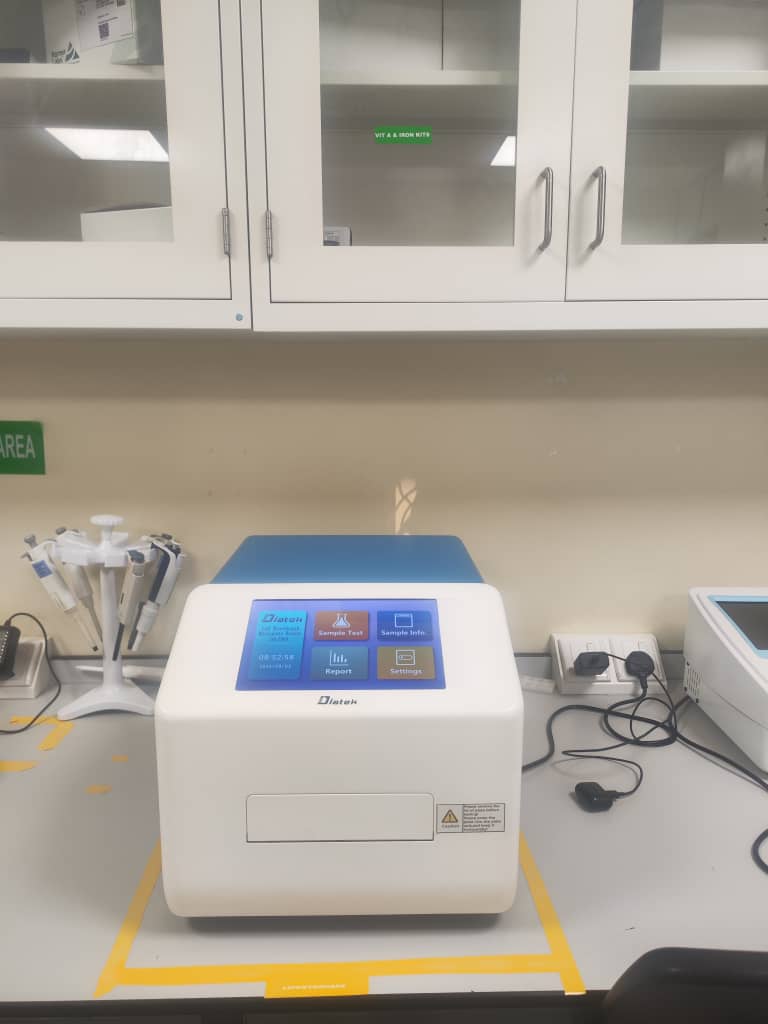
A Wavelength Range That Covers 260nm and 280nm by Design
The DR-5000 uses a proprietary monochromator based on a high-precision grating rather than a set of fixed optical filters. This filter-free design allows the instrument to freely select any wavelength across a continuous range of 190–1100 nm, adjustable in increments of either 0.1 nm or 1 nm. Because 260nm and 280nm both fall well within this range, the reader is fully capable of performing absorbance measurements at these two wavelengths without requiring any additional filter purchase or hardware modification.
This is a meaningful distinction from traditional filter-based readers, which are limited to whatever discrete wavelengths their installed filters allow. If a laboratory’s filter set does not happen to include 260nm or 280nm, additional filters must be purchased and physically installed before those readings become possible. The DR-5000’s grating monochromator removes this constraint entirely, enabling operators to select 260nm, 280nm, or any other wavelength in the 190–1100 nm window directly through the instrument’s touchscreen interface.
Precision Behind the Numbers
Being able to reach a wavelength is only part of the requirement — accuracy and repeatability at that wavelength matter just as much, particularly for nucleic acid and protein work where small absorbance differences carry real analytical significance. The DR-5000 is specified with a wavelength accuracy of ±0.5 nm and a wavelength repeatability of ≤0.2 nm, meaning that repeated readings at 260nm or 280nm will consistently land at the intended wavelength with minimal drift. Absorbance stability is maintained at ≤±0.002A, supporting reliable quantitative comparisons across samples and across time points.
For the professional “Pro” version within the DR-5000 series, stray light control is tightened to ≤0.05%, further reducing background interference that could otherwise distort absorbance readings — an important consideration when working near the edges of the UV range where 260nm and 280nm sit.
Direct Relevance to DNA/RNA and Protein Quantification
Wuxi Hiwell-Diatek’s own product documentation identifies DNA/RNA quantification as a specific industry application for the DR-5000, with a detection limit of 2ng/µl. This capability is directly tied to the instrument’s ability to read at 260nm, the standard wavelength for nucleic acid absorbance measurement. Protein assays are listed alongside this application, which correspond to readings typically taken at 280nm. In other words, the 260nm/280nm measurement pair — commonly used together to assess both nucleic acid concentration and purity relative to protein contamination — sits squarely within the instrument’s intended use cases in life sciences and clinical research settings.
Beyond nucleic acid and protein work, the same full-spectrum flexibility supports endpoint and kinetic assays for biochemical analysis, as well as turbidity studies and general spectral scanning in chemical testing contexts. This means a single DR-5000 unit can move between different wavelength requirements — 260nm and 280nm included — without needing to swap hardware components between assays.
Operational Design That Supports Fast, Accurate Readings
The DR-5000 pairs its optical system with a 10-inch capacitive touchscreen running on Android 5.1, giving operators a visual, smartphone-like workflow for selecting wavelengths and managing assays. The stated workflow structure — Layout, Analysis, and Processing — allows a technician to define the wavelength (such as 260nm or 280nm), execute the reading, and process the resulting data within one continuous, touch-driven sequence, rather than navigating separate filter changes and manual recalculations.
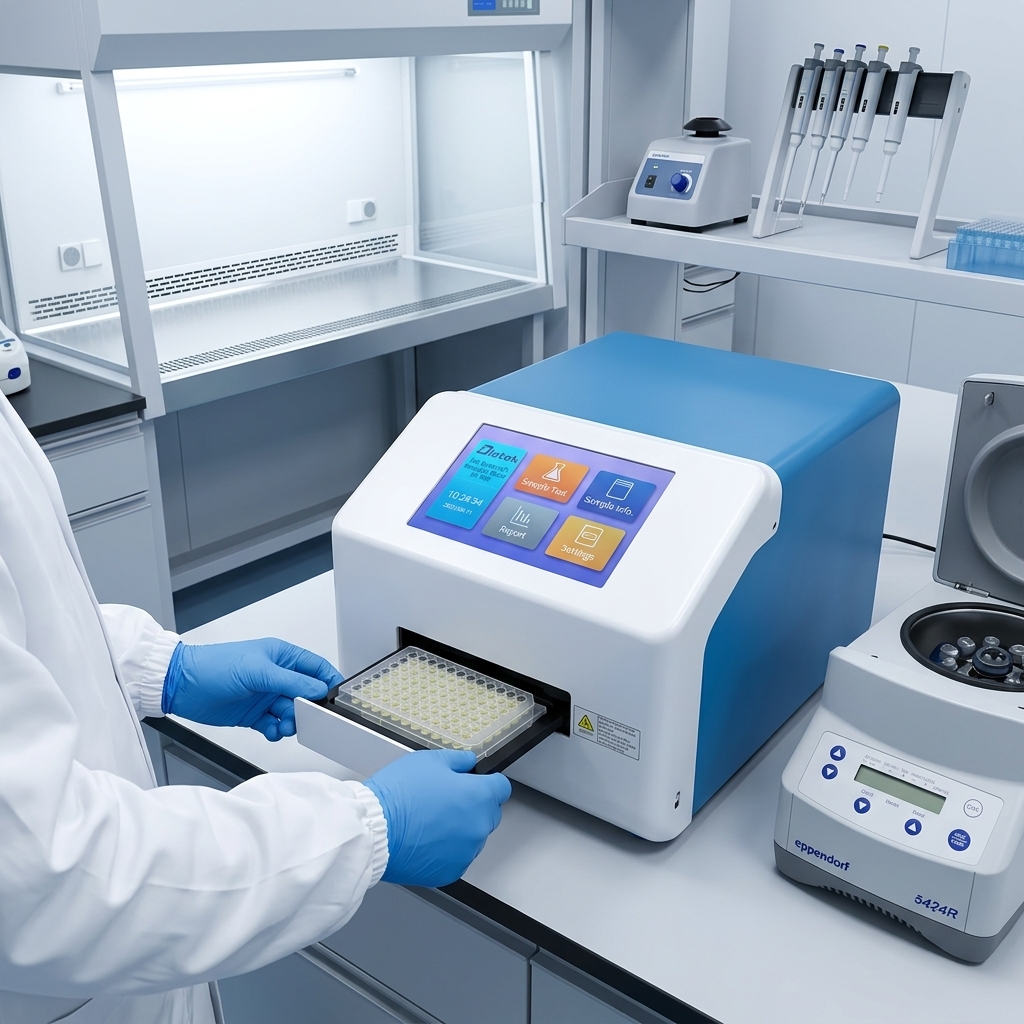
Detection speed is also relevant when working with multiple wavelengths across a plate: the instrument is capable of reading a full 96-well plate in 10 seconds, with continuous reading capability at 16.5 seconds depending on configuration. For laboratories that need to check both 260nm and 280nm on the same plate, this speed reduces the time cost of running sequential wavelength readings.
The DR-5000 also includes an incubation module with temperature control ranging from room temperature +4°C up to 45°C, along with multi-speed linear and orbital shaking, which support the sample stability required before absorbance readings are taken — particularly relevant for kinetic or temperature-sensitive biological reactions that may precede a 260nm or 280nm measurement.
Software and Data Handling
Diatek’s own Microplate Analysis Software works alongside the DR-5000 hardware, supporting real-time endpoint and kinetic data analysis along with calibration methods such as Log-Log, Power, and Polynomial models, as well as 4-Parameter Logistic (4PL) regression and other linear/non-linear modeling approaches. Results, including absorbance data captured at wavelengths like 260nm and 280nm, can be exported in TXT, PDF, Word, or Excel formats, and the system supports FTP-based data transfer between the instrument and connected PC software. USB-A and USB-B interfaces allow connection to U-disks, printers, and peripheral devices, giving laboratories flexibility in how they record and share wavelength-specific results.
Built for Laboratories That Need Wavelength Flexibility
Wuxi Hiwell-Diatek Instrument Co., Ltd., headquartered in Jiangsu Province, China, positions the Diatek brand around solving a specific industry pain point: the need for high-precision, flexible wavelength detection without the limitations of fixed filters. The DR-5000’s ability to address 260nm and 280nm — along with the entire 190–1100 nm range — reflects this positioning directly. The company’s equipment is used across provincial laboratories, university research centers, diagnostic test manufacturers, and international laboratory equipment distributors, with trade and distribution presence in the United States, Brazil, Chile, the United Arab Emirates, Peru, and Algeria.
Each DR-5000 unit comes with a 1-year free repair warranty, lifetime maintenance availability, and a stated 5-year product lifespan, along with technical support covering installation guidance, sample handling advisory, training, and instrument calibration. For laboratories specifically evaluating whether a full-spectrum reader can handle 260nm and 280nm detection, the DR-5000’s grating-based monochromator, documented wavelength accuracy, and stated DNA/RNA and protein quantification use cases provide a factual, specification-backed answer: yes, and across a considerably wider wavelength range beyond just those two points.
www.hiwelldiatek.com
Wuxi hiwell-diatek instruments co.,ltd