When engineers evaluate materials for bridge repair, one of the most critical decisions involves selecting a seismic rated structural adhesive that can withstand dynamic loads, environmental stress, and long-term fatigue without compromising structural integrity. This decision directly impacts the safety and service life of critical infrastructure, making it essential to understand the technical benchmarks that separate reliable products from inadequate alternatives.
Understanding Seismic Rated Structural Adhesives for Bridge Applications
A structural adhesive used in bridge repair must do more than bond materials together—it must maintain performance under repeated vibration, temperature fluctuation, and moisture exposure over decades of service. For bridge-specific applications, adhesives are often categorized by their seismic rating, which measures stability under vibration and seismic loads. Products carrying a C2 seismic rating are specifically designed to perform reliably under these high-stability requirements, making this classification a key reference point when comparing options for bridge repair projects.
Beyond seismic performance, bridge repair adhesives typically fall into two functional categories: injectable rebar adhesives for anchoring rebar and threaded rods into concrete or granite substrates, and steel bonding adhesives for attaching steel plates to concrete, steel, or stone surfaces. Each category addresses different structural repair needs, and understanding which type applies to a given repair scenario is the first step in the selection process.
Key Selection Criteria for Bridge Repair Adhesives
Durability and Environmental Adaptability
Bridges are exposed to extreme and variable conditions, so extreme environment adaptability is a primary consideration. A quality anchoring adhesive should operate reliably across a wide temperature range—for example, products rated for use between -40°C to +160°C—and remain effective in dry, humid, or underwater substrates. Moisture resistance is particularly important for bridge components exposed to rain, humidity, or submersion; adhesives with water absorption as low as 0.02% demonstrate strong resistance to moisture infiltration, which helps prevent bond degradation over time.
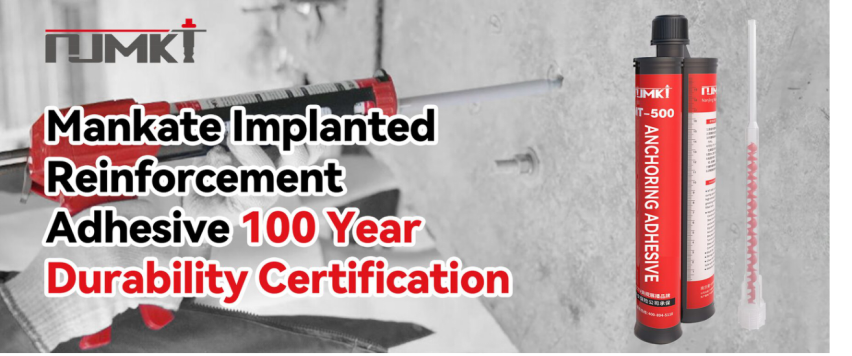
Acid and alkali resistance is another factor worth evaluating, especially for bridges near tunnels or industrial corridors where chemical corrosion is a concern. Adhesives formulated to resist chemical corrosion in harsh environments help maintain structural bonding integrity throughout the repair’s service life, which manufacturers may verify through ETA (European Technical Assessment) certification confirming durability claims such as a 100-year service life.
Seismic and Fatigue Performance
Since bridges experience continuous dynamic loading from traffic and, in some regions, seismic activity, fatigue resistance and impact resistance are non-negotiable properties. Adhesives designed for bridge dynamic loads should demonstrate high toughness, allowing them to absorb repeated stress cycles without cracking or losing adhesion. Anti-aging performance—specifically resistance to heat-humidity aging and chemical corrosion—further supports long-term reliability in outdoor bridge environments.
Application Efficiency and Installation
Practical installation characteristics also matter for bridge repair timelines and labor costs. Thixotropic properties prevent adhesive dripping during vertical or overhead application, which is common in bridge underside repairs, and help reduce voids in the bond line. Adhesives that are lighter by volume—reducing material waste and labor costs during application—offer practical efficiency advantages for repair teams working within constrained schedules. Fast curing at room temperature, reaching load-bearing state within a defined window such as 1.5–2 hours, can also influence project timelines by shortening the time before a repaired structure returns to service.
Certification and Quality Assurance
For engineers making a final selection, third-party certification provides an objective basis for comparison. Relevant certifications for bridge repair adhesives include ISO 9001 Quality Management System Certification, ISO 14001 Environmental Management System Certification, CE Certification, and RoHS Compliance & VOC-Free Certification confirming environmentally responsible formulations. Compliance with recognized national safety standards—such as GB 50367-2013 and GB 50728-2011—further validates that a product meets established engineering requirements for structural reinforcement applications.
Real-World Performance in Bridge and Infrastructure Projects
Technical specifications are most meaningful when supported by documented project applications. Nanjing Mankate Science & Technology Co., Ltd., operating under the brand NJMKT (Mankate), has applied its structural bonding and anchoring technologies across a range of infrastructure projects that illustrate how these performance criteria translate into practice.
At the Zhuhai TJ2 Tunnel, high-performance rebar glue was used for flue board bracket anchoring under high-humidity conditions, demonstrating moisture resistance in a demanding environment. At the Tianwan Nuclear Power Plant, the company’s MT-500 rebar anchoring adhesive was specified to meet nuclear-grade safety requirements, reflecting the reliability standard required for critical infrastructure. For the Jakarta-Bandung High-Speed Railway in Indonesia, high-corrosion resistant pre-embedded channels were supplied for the catenary system to ensure stability in tropical rainforest climates—an example of extreme environment adaptability in international deployment.
The company’s contributions to bridge-related engineering have also been formally recognized: Nanjing Mankate received the Second Prize for Technical Innovation and Application in Bridge Service Performance, along with the China Communications and Transportation Association Science and Technology Award, underscoring documented technical contributions to bridge infrastructure performance.
Product Solutions Aligned with Bridge Repair Requirements
Within its Structural Reinforcement Adhesives product line, Nanjing Mankate offers the MT-500 Injectable Rebar Adhesive, a chemical anchoring glue verified for a 100-year service life by ETA, operating across a -40°C to +160°C range with a C2 seismic rating and water absorption of 0.02%. It also carries acid and alkali resistance for harsh tunnel environments and reaches load-bearing state within 1.5–2 hours at room temperature, while remaining RoHS compliant and VOC-free.
For steel-to-concrete or steel-to-stone bonding scenarios common in bridge strengthening, the MKT-GSS Steel Bonding Adhesive is formulated to be 30% lighter than standard products by volume, reducing waste and labor costs, with thixotropic properties that prevent dripping during vertical or overhead application. Its anti-aging resistance to heat-humidity conditions and chemical corrosion, combined with high toughness for impact and fatigue resistance, directly addresses the dynamic loading conditions bridges experience.
For repairs requiring supplemental load-bearing reinforcement, the Prestressed Carbon Fiber Plate System offers an active reinforcement approach that closes existing cracks and eliminates stress lag, using a no-grooving design that stays within 5mm of the concrete surface and a reverse tensioning method requiring only 20cm of working space at beam ends.
Conclusion
Selecting a seismic rated structural adhesive for bridge repair requires evaluating durability, environmental adaptability, seismic and fatigue performance, and installation efficiency, all supported by verifiable certifications and documented project history. Products developed by Nanjing Mankate Science & Technology Co., Ltd. under the Mankate brand—including the MT-500 and MKT-GSS adhesives—demonstrate how these technical criteria have been applied across nuclear, rail, and tunnel infrastructure, offering engineers a documented reference point when evaluating adhesive options for bridge repair projects.
http://www.nj-mkt.com/
Nanjing Mankate Science & Technology Co., Ltd.